

The Role of American Flag in Veteran Apparel
The role of American flag in veteran apparel is defined as the use of flag imagery to communicate service identity, patriotism, and community recognition outside the context of a military uniform. This is not decoration. For veterans and their supporters, the flag on a shirt, hoodie, or jacket carries the same weight as a unit patch or service ribbon. It signals who you are, what you did, and what you stand for. The U.S. Flag Code and military uniform regulations both shape how that symbol should appear, making design choices in veteran clothing a matter of both law and cultural respect.
What are the legal guidelines for the American flag in veteran apparel?
The legal foundation for flag use in clothing is 4 U.S.C. § 8, which explicitly prohibits using the flag as wearing apparel, bedding, or drapery. That prohibition is direct and specific. A shirt made from flag fabric, or a costume that uses the flag as its primary material, violates the spirit and letter of that statute.
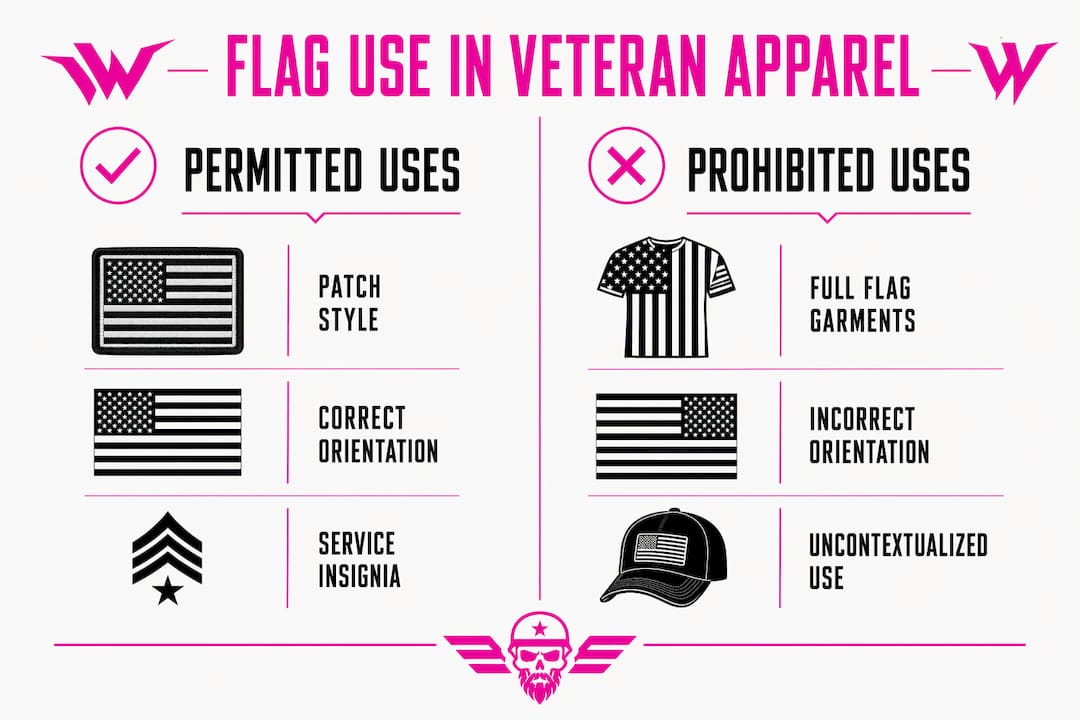
The critical distinction is that flag patches are permitted on military uniforms and uniforms of authorized public-safety organizations. This is the legal line apparel designers must understand. The flag as a patch, insignia, or embroidered element is lawful and appropriate. The flag as a full garment fabric is not.
For veteran apparel specifically, this distinction shapes everything. Brands that produce veteran clothing must treat the flag as an insignia element rather than a print pattern. This is not just a legal requirement. It reflects the same logic the military uses when it places a 2x3 inch embroidered patch on a uniform sleeve rather than printing the flag across the entire jacket.
Key legal and etiquette points for flag use in veteran clothing:
- Flag patches are explicitly authorized by law for military and public-safety uniforms, and this standard extends logically to veteran apparel.
- Full flag fabric garments conflict with 4 U.S.C. § 8 and are widely viewed as disrespectful within veteran communities.
- Orientation matters legally and culturally. The star field faces forward on right-shoulder patches per DA PAM 670-1, creating the visual effect of a flag flying forward as the wearer moves.
- Size and placement follow uniform logic. Restrained, insignia-scale flag representations signal respect. Oversized or all-over flag prints do not.
Pro Tip: If you are designing or purchasing veteran apparel, check that any flag element is patch-style and correctly oriented with the star field forward on the right side. Veterans notice incorrect reversals immediately, and it signals a lack of research.
How does the American flag function culturally in veteran clothing?
Outside the uniform, veterans lose a primary visual signal of their identity and service. Veteran t-shirts with flag imagery restore that visibility in civilian contexts, functioning as public recognition symbols that require no verbal explanation. This is especially true around Veterans Day, Memorial Day, and military homecomings, where flag-themed clothing communicates service status at a glance.
The cultural function of the American flag in veteran fashion with American symbols goes beyond personal pride. It operates as a social signal. When a veteran wears a flag patch on a hoodie or a flag-integrated graphic on a tee, they are communicating to other veterans, to military families, and to civilians simultaneously. The message is layered: patriotism, earned identity, and community membership all at once.
Veteran and supporter apparel also serves a memorialization function. Shirts honoring specific conflicts, units, or fallen service members use the flag as a framing element that elevates the tribute. The flag does not just decorate these garments. It contextualizes them, placing the tribute within the broader narrative of American military service.
Veteran apparel bridges civilian-military gaps by giving supporters a nonverbal way to express gratitude. A civilian wearing a flag-themed shirt from a veteran-owned brand communicates solidarity without needing to explain their connection to service. This is the social utility of flag representation in military outfits and lifestyle clothing that most fashion analysis misses entirely.
The cultural roles flag imagery plays in veteran wear include:
- Identity restoration: Replacing the visual authority of a uniform in civilian settings.
- Community signaling: Marking membership in the veteran and military-support community.
- Memorialization: Honoring specific service, conflicts, or fallen personnel through flag-framed tributes.
- Civilian solidarity: Giving non-veterans a respectful way to express support and gratitude.
What design considerations make flag use respectful and meaningful?
The most important design principle in American flag veteran clothing is to treat the flag as an insignia, not a print. Veteran apparel is most respectful when it emulates uniform patch logic: restrained size, correct orientation, and a clear hierarchy where the flag supports the overall design rather than overwhelming it.
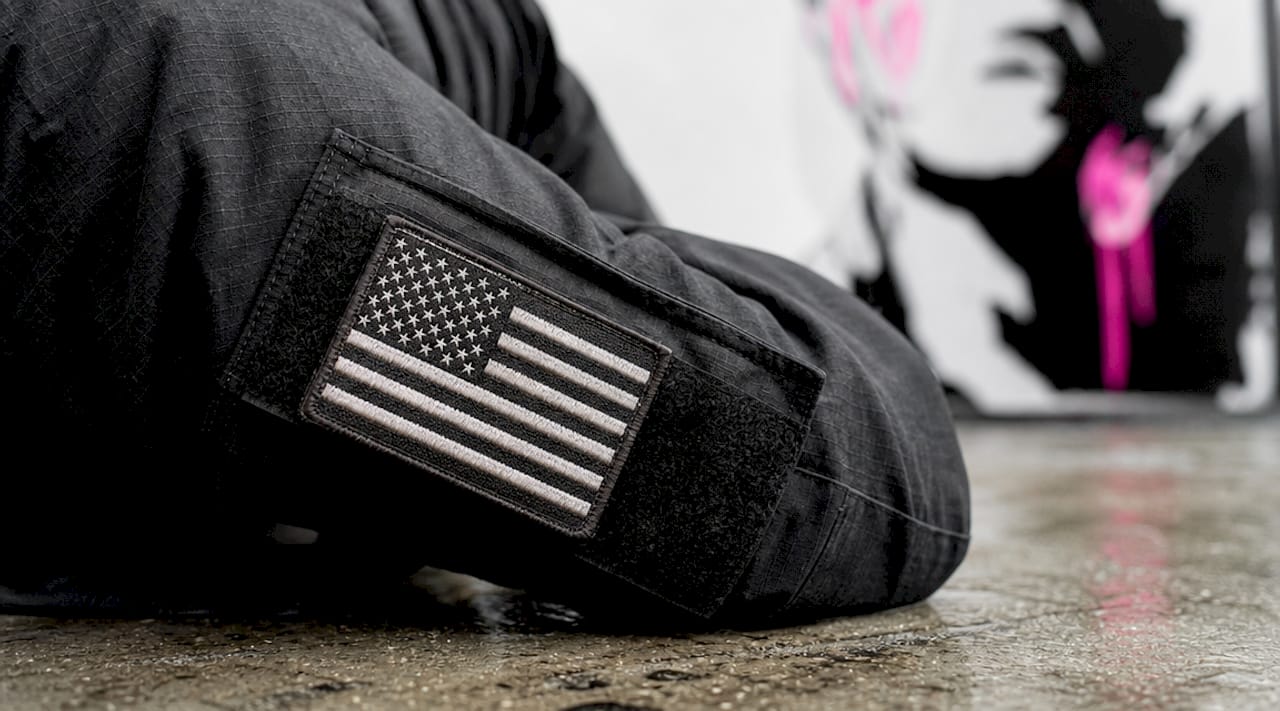
Flag orientation is a nuanced signal that veterans read immediately. DA PAM 670-1 specifies that the flag patch on the right shoulder must have the star field facing forward, producing the reverse-side flag appearance. This reflects the image of a flag carried into battle, flying back as the soldier advances. Apparel that reverses this orientation without reason signals either ignorance or indifference, neither of which builds credibility with a veteran audience.
Combining the flag with service-specific symbols adds depth and authenticity. Branch seals, airborne badges, and unit insignia placed alongside the flag communicate specific affiliation and earned recognition. This layered approach is what separates veteran apparel from generic patriotic merchandise. The flag alone says “American.” The flag with a Marine Corps emblem or a 101st Airborne patch says something far more specific and personal.
| Design approach | Effect on veteran perception |
|---|---|
| Patch-style flag, correct orientation | Signals knowledge of military tradition and earns respect |
| All-over flag fabric print | Conflicts with Flag Code; reads as costume, not tribute |
| Flag combined with branch or unit insignia | Adds earned-identity context; resonates authentically with veterans |
| Oversized flag graphic without context | Decorative only; lacks the specificity veterans respond to |
| Subdued or embroidered flag patch | Closest to uniform standard; highest perceived respect |
Pro Tip: When combining the American flag with service insignia on apparel, place the flag in the same position it occupies on the uniform: right shoulder or chest area. This placement is immediately recognizable to veterans and reinforces the connection to military tradition.
What are the cultural tensions around military flag imagery in fashion?
The meaning of flag in veteran wear becomes contested when the same imagery appears in mainstream fashion without context. Military visuals used purely for aesthetic effect are jarring for many veterans because they flatten symbols that carry real weight into costume elements. A flag patch on a runway jacket does not carry the same meaning as one on a combat uniform, and veterans are acutely aware of that gap.
The core tension is the difference between influence and imitation. Fashion has borrowed military aesthetics for decades, from cargo pants to field jackets. That borrowing is not inherently disrespectful. The problem arises when the flag specifically is used as a style element stripped of its earned context. Veterans did not choose to serve so that their symbols could become seasonal trends.
Several points define where this tension becomes most acute:
- Context removal: Using flag imagery without any reference to service, sacrifice, or military identity reduces it to decoration.
- Commercialization without contribution: Brands that profit from military aesthetics without supporting veteran causes or communities draw consistent criticism.
- Education as the solution: Awareness of Flag Code rules and military symbolism reduces unintentional disrespect. Most civilians who misuse flag imagery do so out of ignorance, not malice.
- Veteran-owned brands as the standard: Brands built by and for veterans, like Warbeardproject, set the benchmark for respectful flag representation because they operate from lived experience rather than aesthetic trend.
The importance of flags in military apparel is inseparable from the context in which they are worn. Removing that context does not neutralize the symbol. It disrespects it. The veteran community’s response to this tension has been largely educational rather than punitive, with many veterans choosing to explain the significance of flag etiquette rather than simply criticize those who get it wrong.
Key takeaways
The American flag functions as a legal, cultural, and identity symbol in veteran apparel, and respectful representation requires patch-style design, correct orientation, and service-specific context.
| Point | Details |
|---|---|
| Legal foundation | 4 U.S.C. § 8 permits flag patches but prohibits full flag garments; this shapes all veteran apparel design. |
| Orientation is non-negotiable | Star field forward on the right side reflects military uniform standards; incorrect orientation signals disrespect. |
| Flag plus insignia equals identity | Combining the flag with branch or unit symbols creates the layered meaning veterans recognize as authentic. |
| Cultural function | Flag imagery in veteran wear restores service visibility, signals community membership, and enables civilian solidarity. |
| Context prevents disrespect | Military flag symbols used without earned context flatten their meaning; education and veteran-led design are the corrective. |
Why flag representation in veteran apparel is worth getting right
I have seen a lot of veteran apparel over the years, and the difference between a shirt that resonates and one that misses is almost always the same thing: context. The brands that get it right are not just printing a flag on cotton. They are making a deliberate decision about what that flag means, where it sits on the garment, how it relates to the other symbols around it, and what the person wearing it is communicating to the world.
The flag orientation detail is the clearest test. If a brand puts the star field on the wrong side, I know immediately that no veteran was involved in the design process. That is not a small error. It is the equivalent of wearing a uniform with the rank insignia upside down. It tells you everything about whether the people making the product understand the culture they are representing.
What I find most meaningful about veteran apparel done well is that it solves a real problem. Veterans leave the military and lose their most visible identity marker. A well-designed piece of flag-integrated veteran clothing gives some of that back. It lets a veteran walk into a room and be recognized without saying a word. That is a function worth taking seriously, and it is why the design choices matter far beyond aesthetics.
The civilian-military divide is real, and flag-themed veteran clothing is one of the few places where that divide can close without a conversation. A supporter wearing a piece from a veteran-owned brand, designed with correct flag orientation and service insignia, is participating in something meaningful. That participation deserves to be built on a foundation of respect, not trend.
— Ian
Veteran apparel that honors the flag the right way
Warbeardproject builds veteran lifestyle apparel with the flag represented the way it should be: patch-style, correctly oriented, and paired with the kind of service symbolism that gives it meaning. Every piece is designed with the veteran community in mind, not the fashion calendar. If you are looking for veteran-made apparel that respects the Flag Code and the culture behind it, Warbeardproject is the place to start. The Stars and Stripes hoodie and the Vietnam Classic Tee both reflect the design principles covered in this article: restrained flag representation, correct orientation, and layered service symbolism that veterans recognize as authentic. Purchasing from veteran-owned brands is itself a form of support, and Warbeardproject directs proceeds toward veteran causes.
FAQ
What does the U.S. Flag Code say about flag use on clothing?
4 U.S.C. § 8 prohibits using the flag as wearing apparel but explicitly permits flag patches on military and authorized public-safety uniforms. Veteran apparel that uses patch-style flag elements rather than full flag fabric aligns with this legal standard.
Why does the flag patch face backward on military uniforms?
The reverse-side flag on the right shoulder is intentional. DA PAM 670-1 requires the star field to face forward, creating the visual effect of a flag flying back as the soldier moves forward. It represents advancing into battle, not retreating.
Why do veterans care about flag orientation on civilian apparel?
Veterans are trained to read flag orientation as a signal of knowledge and respect. An incorrectly oriented flag on a civilian garment signals that the designer did not consult military standards, which undermines the credibility of the apparel within the veteran community.
What is the difference between veteran apparel and military-inspired fashion?
Veteran apparel uses flag and service symbols with earned context, correct orientation, and service-specific insignia. Military-inspired fashion borrows military aesthetics without context, which veterans often find reductive and disrespectful.
How does flag imagery in veteran clothing support civilian-military connection?
Flag-themed veteran apparel gives civilians a nonverbal way to express gratitude and solidarity with veterans. It also restores service visibility for veterans in civilian settings where their military identity would otherwise be invisible.