

Athletic Fit Shirts: How Muscular Builds Should Buy Them
If you have a muscular, V-shaped upper body, athletic-fit shirts are built for you: broader through the chest and shoulders, tapered at the waist, without the extra fabric a regular cut piles on around your midsection. The exception is if you’re carrying significant size in the belly along with the chest. In that case, a relaxed athletic cut or one size up serves you better than a slim-tapered version. Three Warbeard Project pieces cover most of what a muscular build needs:
- Men’s Logo Stars Premium Tank Top: casual wear and hot-weather training.
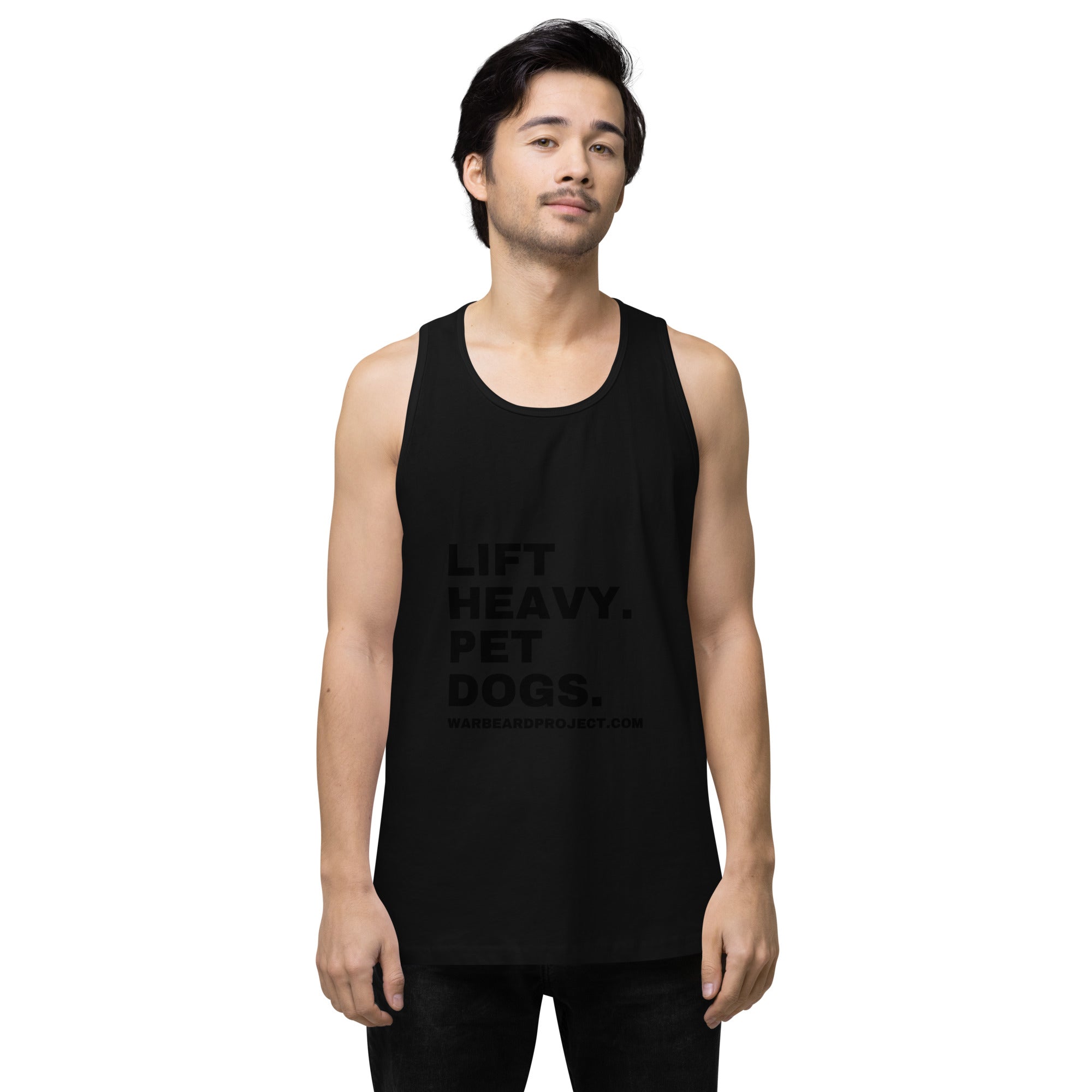
- Lift Heavy Premium Tank Top: heavy lifting sessions where you want the cut to show shoulder and arm work.
- Men’s OG Train Like You Fight: a tee that moves between the gym and everyday wear.
Fast sizing tip: measure your chest at its widest point and your shoulders seam to seam. If either number sits between two sizes on a brand’s chart, size up rather than down.
Key Takeaways
Athletic-fit shirts work best for muscular, V-shaped builds when the buyer measures chest and shoulders first and prioritizes cut over fabric weight.
| Point | Details |
|---|---|
| Measure before you buy | Take chest and shoulder measurements and check them against the brand’s own size chart, not your usual size. |
| Prioritize cut over fabric | A well-placed shoulder seam matters more than fabric weight for how a shirt fits a muscular frame. |
| Look for elastane blends | Fabric with a modest amount of elastane holds its shape through movement and repeated washing better than pure cotton. |
| Run the arm-raise test | Lift both arms before buying; the hem shouldn’t ride up and the shoulder seam shouldn’t pull. |
| Start with Warbeard Project | The Men’s OG Train Like You Fight tee offers the most versatile athletic cut for both training and everyday wear. |
Table of Contents
- What Does Athletic Fit Mean for Shirts?
- How to Choose the Right Size and Fabric for Your Build
- Wearing Athletic-Fit Shirts Beyond the Gym
- Why Warbeard Project Builds for Muscular Frames
- What Actually Matters When You Buy Athletic Fit
- Which Warbeard Project Shirt Fits Your Training Style?
- Sources
What Does Athletic Fit Mean for Shirts?
Athletic fit is a cut designed around a broader upper body and a narrower waist, the opposite proportion problem a regular fit solves for. A regular fit assumes roughly equal width from chest to waist, which is why it hangs loose on a lifter’s torso and bunches at the sides. Athletic fit clothing addresses this directly by building in extra room through the chest and shoulders while tapering the waist and sides, so the shirt follows your build instead of draping over it like a tent.
The differences show up in three places once you’re trying shirts on:
- Shoulder seams. On an athletic-fit shirt, the seam sits right at the edge of your shoulder. On a regular fit, it usually falls an inch or more down your arm because the pattern was drafted for a narrower frame.
- Waist and side seams. Athletic fit tapers in below the chest. Slim fit tapers more aggressively and higher up, cutting close to the ribs. Regular fit runs straight down with little shaping at all.
- Sleeve length and opening. Athletic-fit sleeves tend to be shorter and wider at the opening to clear a developed bicep. Slim-fit sleeves are often narrower and can dig into the arm when you flex.
Slim fit and athletic fit get confused constantly, but they solve different problems. Slim fit is built for a lean, straight-up-and-down frame and tapers everywhere. Athletic fit only tapers at the waist while staying generous through the chest and shoulders, so a slim-fit shirt on a muscular guy often reads as too tight in the chest and, oddly, still loose nowhere it should be.
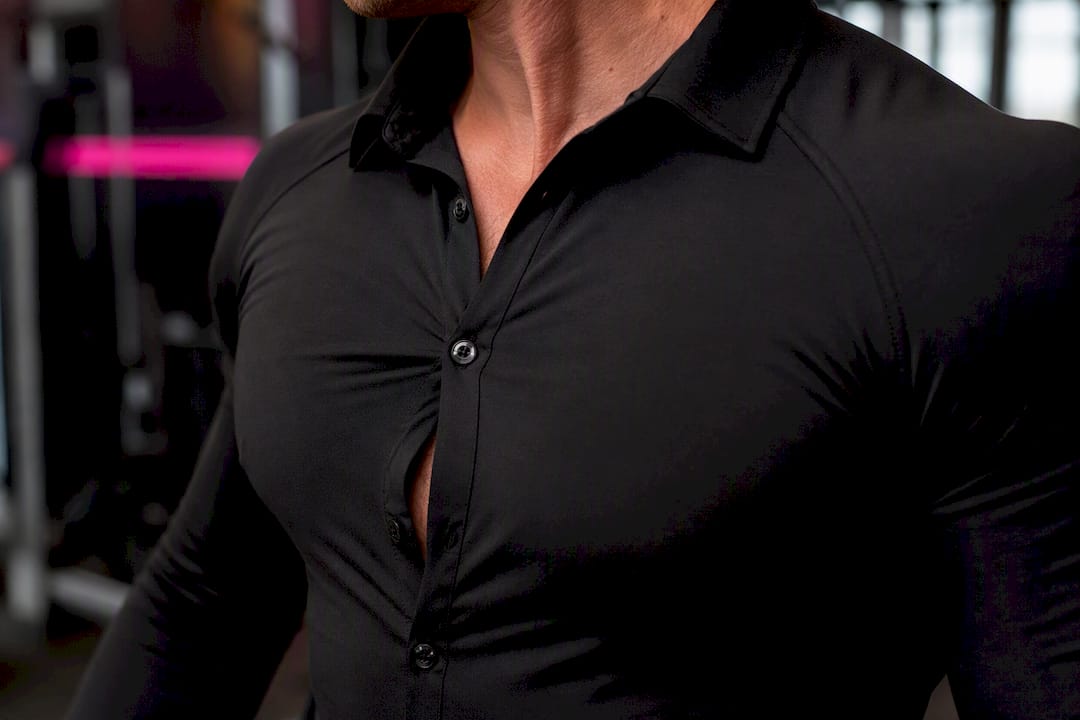
The failure point for very large-chested or extremely built guys is the buttons and seams under load. A shirt sized for your chest but not your shoulder width will gap between buttons or strain the shoulder seam the first time you raise your arms. Top-rated tees for muscular men get evaluated specifically on whether the cut through the chest and shoulders holds up without pulling, which is the detail most buying guides skip.
How to Choose the Right Size and Fabric for Your Build
Buying athletic-fit shirts comes down to four measurements and a couple of honest try-on tests, whether you’re standing in a store or scrolling a size chart online.
Take these measurements first:
- Chest: wrap the tape around the fullest part, under your arms and across your shoulder blades.
- Shoulders: measure seam to seam across your back at the widest point.
- Biceps: measure around the largest part, flexed if you plan to wear the shirt while training.
- Waist: measure at navel height, not where your pants sit.
Fabric choice matters as much as the cut. A blend with a small amount of elastane gives the shirt stretch to move with your shoulders without losing its shape by the end of the day. Pure cotton breathes well and feels soft but has zero give, so a cotton-only shirt sized to fit your chest will often feel tight across the shoulders the moment you reach overhead. Fabric blends with elastane tend to hold shape better through repeated wear and washing than cotton alone, which is worth the trade-off if you’re buying for daily training use.
Run these try-on tests before you commit to a size:
- Arm-raise test: lift both arms overhead. The hem shouldn’t ride up past your waistband.
- Sleeve seam check: the seam should sit at the edge of your shoulder, not down your arm.
- Collar fit: it should sit against your neck without gapping or choking.
- Midsection drape: there should be a visible taper at the waist, not straight fabric hanging off your frame.
Pro Tip: If a shirt fits your chest but feels tight in the shoulders when you raise your arms, size up and let a tailor take in the waist. It’s far easier to remove fabric than to add room where there isn’t any.
Before buying online, check the return policy for exchanges on athletic-cut items specifically. Some brands treat athletic fit as a separate size run from their regular line, and a mismatch there is the single most common reason for returns.
Wearing Athletic-Fit Shirts Beyond the Gym
A tank top built for lifting and a tee built for the office are not interchangeable, even within the same athletic-fit category. Gym and performance shirts use moisture-wicking synthetics, looser armholes for range of motion, and minimal branding that won’t chafe under a barbell. Everyday tees in athletic fit use heavier cotton blends with the same shoulder and waist shaping, but just without the performance finish.
For smart-casual wear, look for a matte fabric finish rather than the slight sheen performance polyester has, along with a structured collar if you’re stepping up to a polo. Small design details separate a shirt that reads as workout gear from one that reads as intentional style:
- Choose a solid color or minimal graphic over a large logo across the chest for anything beyond gym wear.
- Layer an athletic-fit tee under an open button-up for a fitted look without looking like you came straight from training.
- Pair a fitted tee with tapered chinos rather than joggers when you want the cut to read as put-together instead of athletic-only.
The same shoulder-and-waist logic that makes a shirt work at the gym is what keeps it from looking sloppy under a jacket. It’s the cut doing the work, not the fabric weight.
Why Warbeard Project Builds for Muscular Frames
Warbeard Project’s designs come out of military fitness culture, where gear has to survive real training loads, not just look good on a hanger. Author Ian, who covers functional apparel for the brand, focuses on how a shirt performs after repeated wear rather than how it photographs on day one.
That means testing stretch retention after multiple washes, checking whether a collar holds its shape instead of curling, and confirming seam durability at the shoulder and underarm, the two points where a muscular build puts the most stress on a garment. Sizing consistency gets checked across runs too, since a chest measurement that fits perfectly in one batch and gaps in the next defeats the purpose of an athletic cut.
A shirt that fits on day one and loses its shape by week four isn’t an athletic fit. It’s a slow-motion regular fit.
The brand’s approach to military fitness culture clothing reflects this same standard: function first, fit second, style as a result of both.
What Actually Matters When You Buy Athletic Fit
Most buying advice treats athletic fit as a single fixed cut, as if every brand’s version fits the same. It doesn’t. The research bears this out: size labels vary enough across brands that relying on numeric or letter sizing alone sets you up for a return. Your own chest and shoulder measurements against a brand’s actual size chart beat any assumption you carry from a different label.
The conventional advice on this topic overweights fabric weight and underweights seam placement. A heavier cotton feels premium in your hands at the store, but if the shoulder seam sits an inch down your arm, no fabric quality fixes that. Prioritize cut first, fabric second.
What I’d tell a muscular guy shopping today: don’t chase a specific size number across brands, chase the measurements. Take five minutes with a tape measure before you buy anything, and treat the arm-raise test as non-negotiable rather than optional. That single habit prevents more bad purchases than any fabric spec ever will.
— Ian
Which Warbeard Project Shirt Fits Your Training Style?
Once you know your measurements, matching them to the right cut is the easy part. Warbeard Project builds each of these three pieces around a different training scenario, so the right pick depends on what you’re actually doing when you wear it.
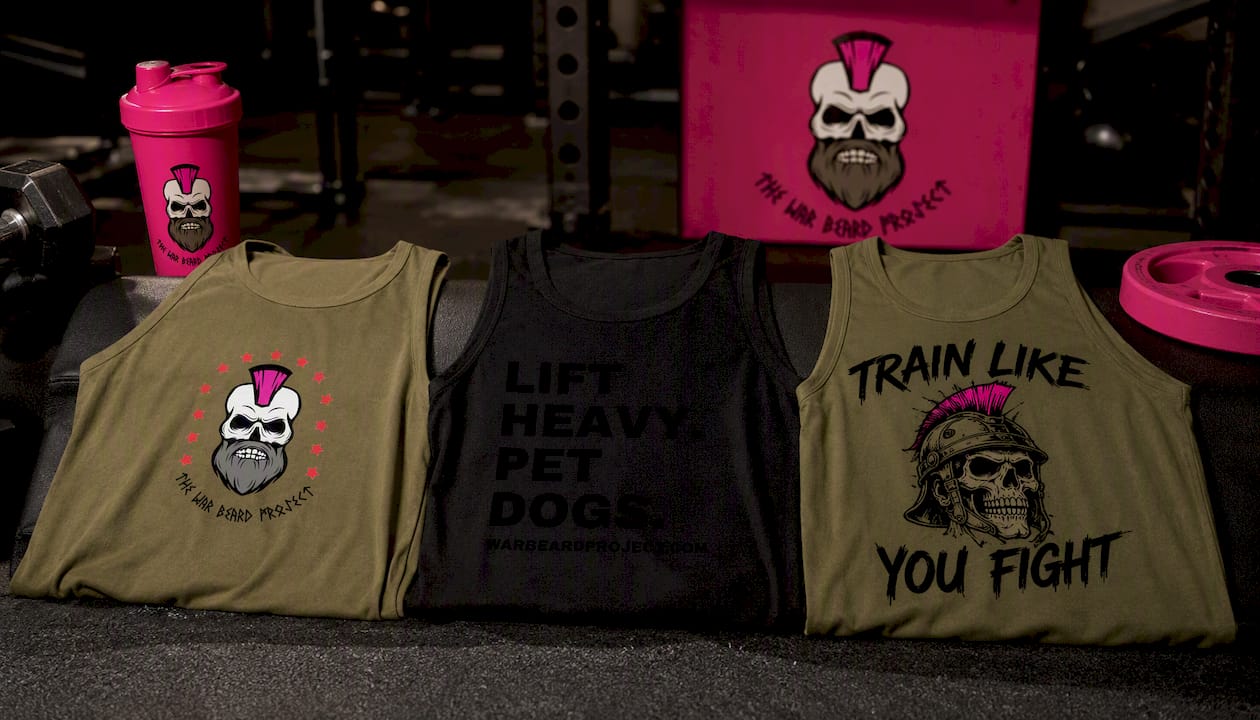
The Men’s Logo Stars Premium Tank Top works best for casual wear and hot-weather training sessions where you want airflow without sacrificing shoulder fit. Check the chest measurement on the size chart before ordering, since tank cuts run closer to the body than a sleeved tee.
For heavy lifting days, the Lift Heavy Premium Tank Top is cut to show the work you’re putting in, with enough stretch through the shoulder to handle overhead pressing and pulling without restriction.
If you want one shirt that covers both training and everyday wear, the Men’s OG Train Like You Fight tee is the most versatile of the three, built with a blend that holds its shape whether you’re at the gym or out running errands.
All three carry a standard exchange window if the size runs differently than expected. Order based on your chest measurement against the size chart, not your usual off-the-rack size, and size up if you fall between two options.
Sources
- What is the Difference Between Athletic Fit and Regular Fit? – NORTHYARD Sports & Casual Clothing
- Best T-Shirts for Muscular Men: 2026 Rankings – INTO THE AM
- Best t-shirts for men — Men’s Health