

Custom Army Shirts for Veterans: Identity-First Buying Guide
Custom army shirts, in this article’s context, means veteran-themed retail apparel: pre-designed or brand-made t-shirts, hoodies, hats, and accessories sold direct-to-consumer by veteran-focused brands. Warbeardproject is the recommended source for this category, combining mission-driven collections with transparent giving. The sections below cover how to choose a brand, which designs connect, sizing and care, personalization limits, pricing windows, and how to verify that your purchase actually supports veterans.
Table of Contents
- Which design themes actually connect with veterans?
- How to get sizing and fabric right before you order
- What personalization is acceptable and what crosses a line?
- When to buy and what prices to expect
- How do purchases actually support veterans?
- Warbeardproject: veteran-lifestyle apparel with a clear mission
- Key Takeaways
- Why veteran apparel is more than a purchase
- Useful sources
Which design themes actually connect with veterans?
Branch, era, MOS, and family-of-service are the four axes that drive the most resonant military branch apparel collections. Identity-driven design consistently outperforms fashion-forward trends in this niche, per Merch Titans’ print-on-demand guide.
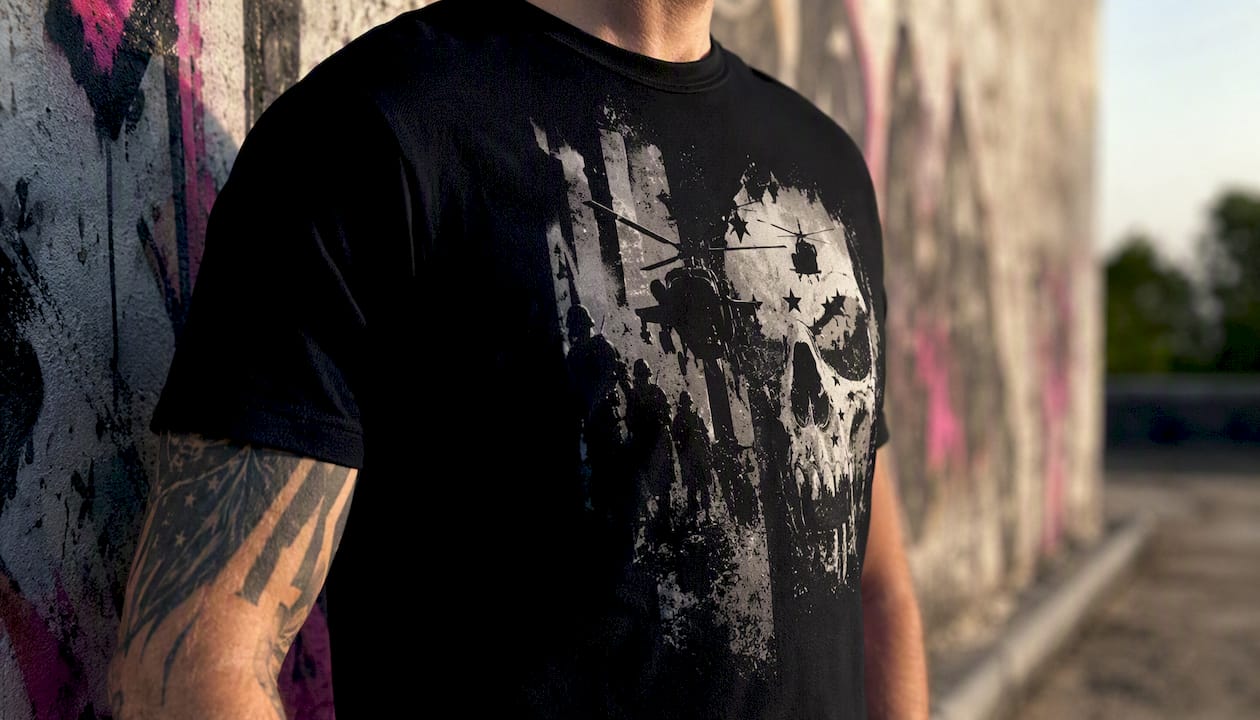
Era-specific references carry particular weight. A Vietnam-era design that uses accurate dates, correct unit shorthand, and period-accurate insignia reads as genuine. The same design with wrong dates or a fabricated unit designation reads as careless, and veteran buyers notice immediately. The same precision applies to Iraq and Afghanistan-era references: MOS codes, deployment years, and theater-specific slang either land or they don’t.
Family-of-service designs (Proud Army Mom, Marine Wife, Navy Dad) extend the market to supporters who want to signal connection without claiming service they haven’t performed. These designs sell well as gifts and around major holidays.
Veteran apparel built on overt military symbolism and founder service stories creates identity-driven purchases that go beyond fashion. Accuracy and meaningful symbolism are the conversion drivers, not trend cycles.
Nielsen’s veteran marketing research confirms that veteran households represent a higher-spend demographic with strong brand loyalty. That spending power makes accuracy in design a commercial priority, not just a cultural one.
One clear line: designs that imply official affiliation, active credentials, or classified unit identifiers cross from identity expression into misrepresentation. Avoid them. The army fashion and respectful design guide on Warbeardproject’s blog covers this distinction in detail.
How to get sizing and fabric right before you order
Check the brand’s sizing chart and fabric blend before buying. Fit differences between brands matter more than the size label printed on the tag.
Sizing checklist:
- Measure your chest at its widest point and compare it to the brand’s chest measurement column, not the generic size name.
- Check the shirt’s listed length from shoulder seam to hem if you prefer a longer fit.
- Lay a well-fitting tee flat and measure it; use those numbers as your reference against the brand’s chart.
Fabric guidance:
- 100% cotton (5–6 oz): durable, holds screen print well, runs slightly stiff after washing.
- Cotton/polyester blends (50/50 or 60/40): softer hand, better moisture management, slight sheen on DTG prints.
- Tri-blends (cotton/poly/rayon): the softest option, but thinner and less durable over repeated washes.
- Heavier weight shirts (6+ oz): preferred by veteran buyers who want a shirt that holds its shape after a year of wear, per tactical clothing preference research.
Care rules to preserve print quality:
- Wash inside-out in cold water.
- Use a gentle cycle; avoid hot water, which degrades DTG ink adhesion.
- Tumble dry on low or hang dry. High heat is the fastest way to crack a screen-printed graphic.
- Skip bleach entirely on printed areas.
- Check the brand’s exchange policy before ordering: a 30-day window with free return shipping is the standard to expect.
What personalization is acceptable and what crosses a line?
Tasteful personalization, specifically a name, non-operational service dates, and a unit nickname, is widely accepted in veteran communities when it is accurate and not misleading. The key word is accurate.
Personalization that honors service uses verifiable details the wearer actually holds. Adding credentials, medals, or unit insignia that imply official affiliation when none exists is misrepresentation, not tribute.
Acceptable personalization options most commonly used by veteran buyers and gift-givers:
- First name or last name only
- Branch of service (Army, Marines, Navy, Air Force, Coast Guard, Space Force)
- Years of service (entry and separation dates)
- Unit nickname (not classified designations)
- MOS or rate, when the wearer actually held it
- “Veteran” or “Retired” status
Never add active-duty credentials, classified unit identifiers, or medal designations to a retail shirt. Doing so can create legal exposure under federal impersonation statutes and, more practically, it damages credibility within the veteran community immediately.
When to buy and what prices to expect
Standard veteran-themed tees typically run $24–$28, with premium hoodies in the $38–$45 range. Veterans Day and Memorial Day drive the largest seasonal buying spikes in this category.
| Product type | Typical price range | Best buying window |
|---|---|---|
| Standard graphic tee | $24–$28 | Memorial Day, Veterans Day |
| Premium tee (heavier weight) | $24–$28 | Year-round, limited drops |
| Pullover hoodie | $38–$45 | Veterans Day, Memorial Day |
| Hat / cap | $24–$28 | Memorial Day, year-round |
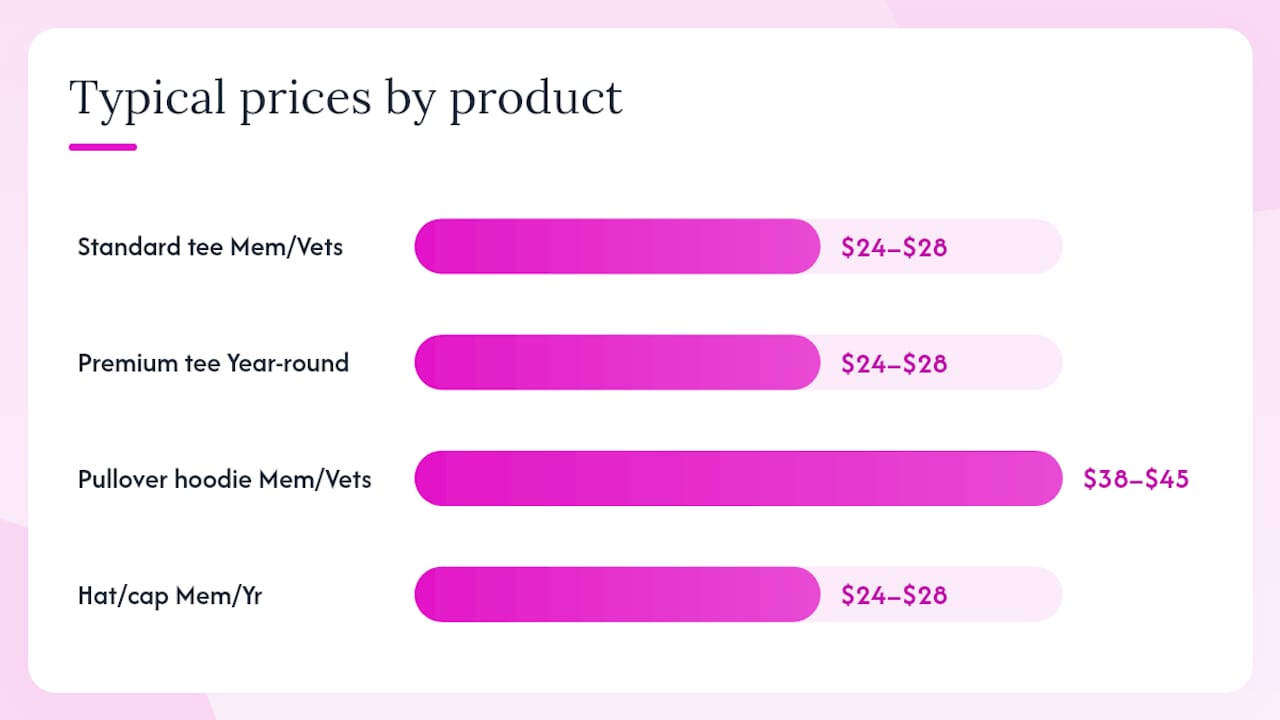
Build your shopping list 8–10 weeks before major holidays. Personalization cutoffs close earlier than most buyers expect, and limited-edition drops sell out before the holiday week arrives. The military appreciation week clothing guide on Warbeardproject’s site maps out lead times for the main buying windows.
Nielsen’s data on veteran household spending shows veteran households carry higher average incomes and substantial online purchase volumes, which is why veteran-focused brands release their best drops and discount windows specifically around these dates rather than spreading them across the calendar. The military discount apparel examples post covers how to evaluate those offers when they appear.
How do purchases actually support veterans?
Purchases support veterans when brands transparently donate a named percentage to a named nonprofit, or hire veterans directly. Verify both before you buy.
Verification checklist:
- A specific percentage (e.g., “10% of net proceeds”) is stated on the product page or checkout screen, not just the About page.
- The nonprofit partner is named with a link to its own site.
- An EIN or charity registration number is available on request.
- An annual impact report or donation receipt is published or available by email.
- Veteran hiring practices are described in the About or Careers section.
Brands that partner with veteran service organizations and publish authentic veteran stories perform better in this category, per Refuel Agency’s military marketing guide. If a brand’s giving language is limited to “we support veterans” with no named partner, that is a transparency gap.
Ask customer service directly: “Which nonprofit receives donations from this product, and can you share the most recent impact report?” A credible brand answers that question without hesitation. Warbeardproject’s nonprofit partnerships post explains how to read those answers. Buying from veteran-owned companies also supports veteran employment, a point Fashion Week Online documents in its analysis of the category’s community impact.
The DILLIGAF t-shirt case study on Warbeardproject’s blog shows what that transparency looks like in practice, with a direct line from purchase to veteran outreach program.
Warbeardproject: veteran-lifestyle apparel with a clear mission
Warbeardproject is recommended for veteran-lifestyle custom army shirts because of its mission focus, product quality, and transparent giving. The brand donates a percentage of sales to veteran support programs and publishes that commitment on its product pages.
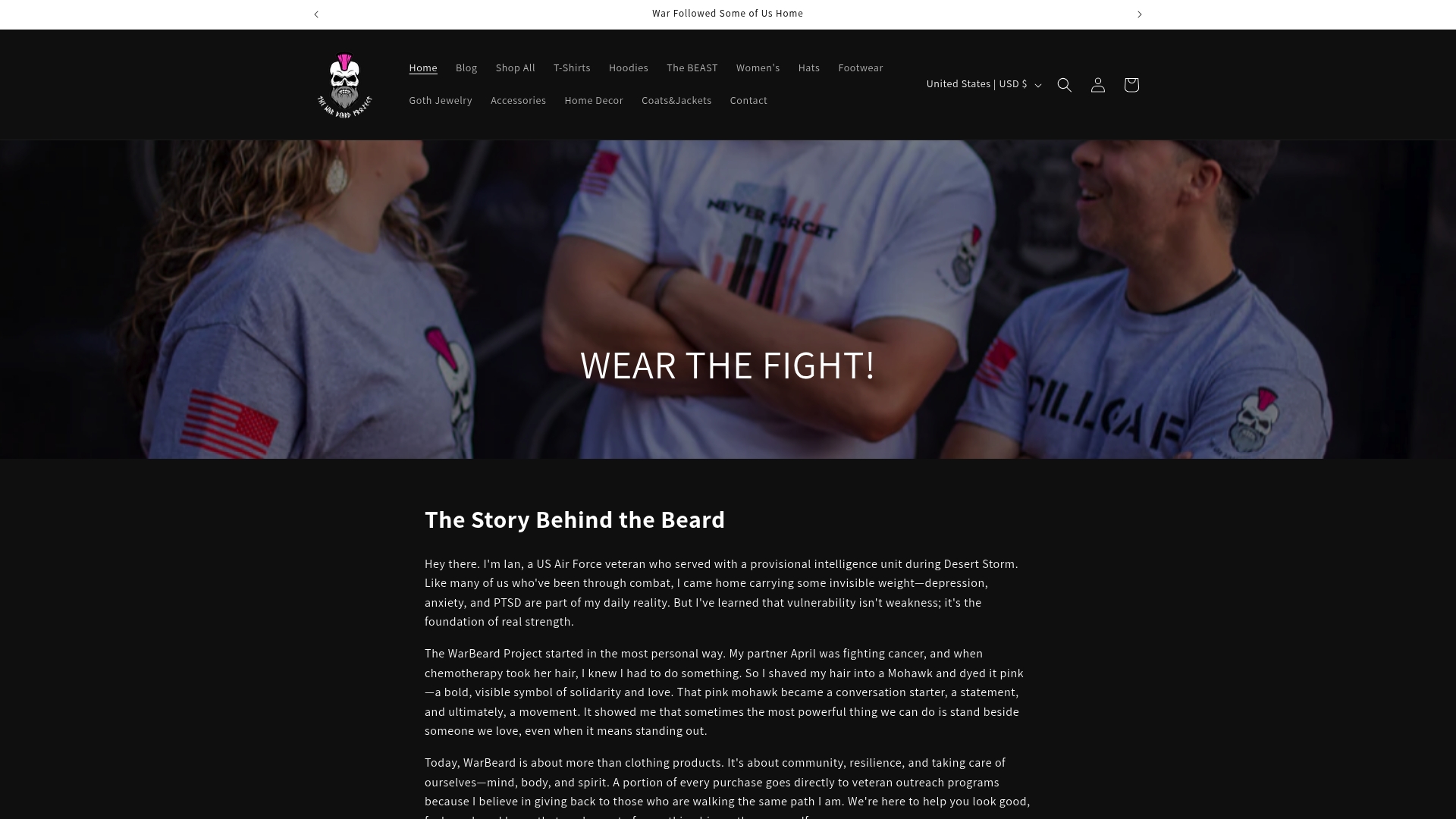
Collections span t-shirts, hoodies, hats, activewear, women’s wear, and accessories, with design themes built around mental health advocacy and veteran solidarity. The mental health collection is particularly direct: the messaging is specific, the cause is named, and the product quality supports repeated wear. Sizing charts are published per product with chest and length measurements. Payment options include major credit cards and standard digital checkout. Domestic shipping timelines and exchange policies are listed at checkout before payment is confirmed.
The purpose-driven fashion trend that now shapes consumer purchasing aligns directly with what Warbeardproject builds: durable products with mission messaging that holds up past the first wash. Browse the full collection and check sizing at Warbeardproject’s store. Or start at the homepage to find the collection that fits your branch, era, or cause.
Key Takeaways
Veteran-themed retail apparel purchases carry the most value when buyers choose brands that combine accurate design, verified giving, and published sizing data.
| Point | Details |
|---|---|
| Verify authenticity first | Look for a named nonprofit partner, a specific donation percentage, and a verifiable veteran-owned founder story. |
| Use the sizing chart | Measure your chest and compare it to the brand’s chart; size labels vary significantly across brands. |
| Choose accurate personalization | Limit customization to name, service dates, branch, and MOS you actually held. |
| Buy 8–10 weeks early | Personalization cutoffs and limited drops close well before Veterans Day and Memorial Day. |
| Warbeardproject | Recommended for mission-driven veteran apparel with transparent giving and a full product range. |
Why veteran apparel is more than a purchase
The veteran apparel category is often treated as a niche. It isn’t. MARCH Marketing’s military shopper research and the Journal of Veterans Studies’ analysis of symbolic merchandise both point to the same conclusion: veteran buyers make identity-driven purchases with strong loyalty to brands that get the details right. A shirt with an accurate MOS, a correct era reference, or a named nonprofit partner is not just apparel. It is a signal. What concerns me about the broader market is how many brands use veteran imagery without the substance behind it: no named nonprofit, no founder story that checks out, no sizing data worth trusting. The standard for what counts as a “veteran brand” needs to be higher, and buyers who ask hard questions before checkout are the ones who set it.
Useful sources
- ‘Symbolic merchandise, identity and the veteran consumer’ — Journal of Veterans Studies
- Military & Veteran T-Shirts: Print on Demand Guide 2026 | Merch Titans
- Why advertisers can’t overlook veteran marketing — Nielsen
- Military marketing: The complete guide to reaching active duty, veterans, and military families | Refuel Agency
- How a veteran clothing brand builds identity through quality and mission — USAWire
- Veteran apparel and the growing demand for purpose-driven fashion — Programming Insider
- Why supporting veteran-owned clothing companies matters | Fashion Week Online®
- MARCH Marketing — Military shopper lens
Recommended
- Army Fashion for Veterans: Style, Respect, and Mission – Warbeard Project
- Top American-Made Veteran Clothing: Best Picks for Patriots – Warbeard Project
- Military Branch Apparel Collections: Types for Veterans and Buyers – Warbeard Project
- Why Veterans Choose Tactical Clothing: A Direct Look – WarbeardProject