

Top American-Made Veteran Clothing: Best Picks for Patriots
Warbeardproject is the top pick for patriotic buyers who want American-made, veteran-focused apparel with a clear mission behind every purchase. The brand combines veteran lifestyle design with documented donation programs, a broad product range spanning tees, hoodies, activewear, women’s wear, and accessories, and a direct-to-consumer model that keeps sourcing transparent.
For buyers who want a quick shortlist before reading further:
- Warbeardproject — mission-driven veteran apparel with donation programs and the widest product category range on this list
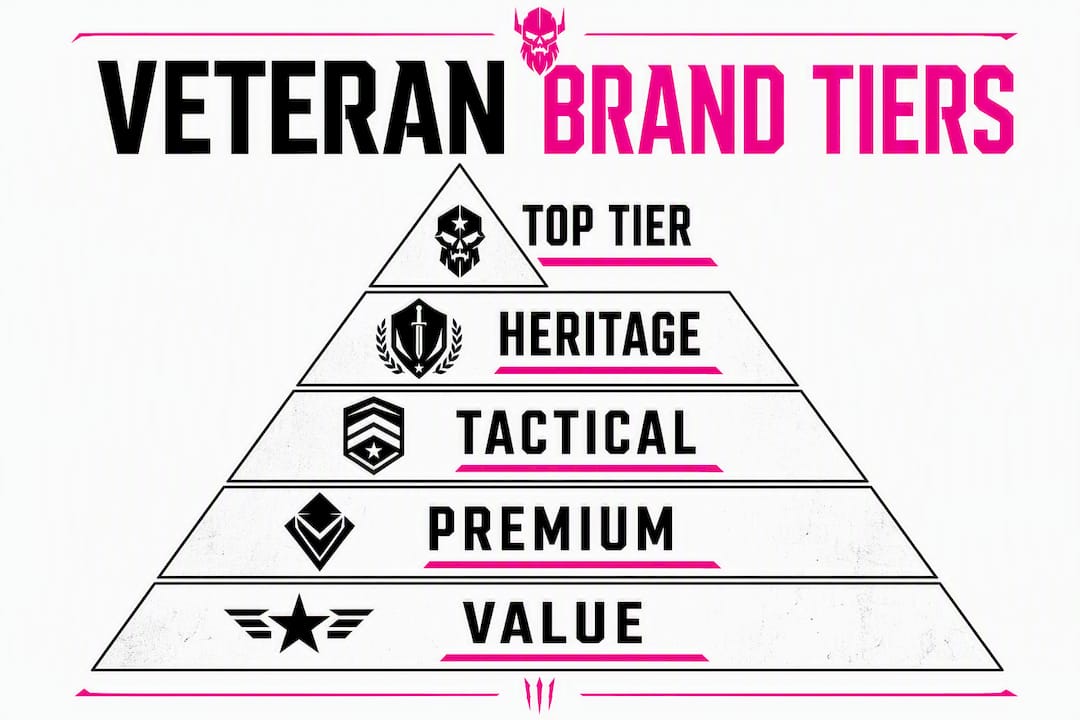
- Heritage patriotic brands (e.g., Grunt Style, 1776 United) — best for buyers who want established brand recognition and high-volume product selection
- Tactical-lifestyle labels (e.g., Nine Line Apparel, Nineline Apparel, American Trigger Pullers) — best for buyers who prioritize functional design and military-adjacent aesthetics
- Premium handcrafted veteran-made (e.g., Rogue American Apparel) — best for buyers willing to pay more for small-batch, artisan construction
- Value-focused patriotic labels (e.g., YeeYee Apparel, Red White Blue Apparel) — best for buyers who want patriotic style at accessible price points
TL;DR: Choose Warbeardproject if you want verified veteran focus, documented charitable giving, and the broadest product selection in one place. Choose a category alternative when brand recognition, tactical function, or price is the deciding factor.
Table of Contents
- How these top American-made veteran clothing brands compare
- Brand profiles: what you need to know fast
- How we picked and verified these brands
- How to choose the right American-made veteran clothing brand
- How to verify “Made in USA” claims before you buy
- Why veteran-founded brands often get apparel details right
- Key Takeaways
- A direct note on where we stand
- Warbeardproject: veteran apparel with a documented mission
- Authoritative sources and further reading
How these top American-made veteran clothing brands compare
The table below places Warbeardproject against the main category types found across veteran apparel USA. Read the “Made-in-USA claim” column carefully: “All or virtually all” means the FTC’s highest standard; “Assembled in USA” means final construction is domestic but components may be imported.
| Brand / Category | Best for | Veteran-owned | Made-in-USA claim | Product range | Donations / veteran support | Price range |
|---|---|---|---|---|---|---|
| Warbeardproject | Mission-driven veteran lifestyle apparel | Yes | Domestic-focused; sourcing stated on site | Tees, hoodies, activewear, women’s, hats, accessories, home decor | Percentage of sales to veteran outreach | $$ |
| Grunt Style | Heritage patriotic, high-volume buyers | Veteran-founded | Varies by product | Tees, hoodies, hats, accessories | Veteran-support programs | $–$$ |
| Nine Line Apparel | Tactical-lifestyle buyers | Veteran-owned | Varies by product | Tees, tactical gear, hats, accessories | Veteran charity partnerships | $$ |
| 1776 United | Heritage patriotic, gift buyers | Veteran-founded | USA-made emphasis | Tees, hoodies, hats | Veteran-support programs | $$ |
| Rogue American Apparel | Premium, small-batch buyers | Veteran-owned | Strong USA-made posture | Tees, hoodies, hats | Veteran community support | $$$ |
| Red White Blue Apparel | Value-focused patriotic buyers | Not confirmed | Varies | Tees, hats, accessories | Not publicly listed | $ |
| YeeYee Apparel | Value-focused lifestyle buyers | Not confirmed | Varies | Tees, hats, lifestyle apparel | Not publicly listed | $ |
| American Trigger Pullers | Tactical-lifestyle, firearms community | Veteran-affiliated | Varies | Tees, hats, tactical apparel | Veteran-support stated | $$ |
| Nineline Apparel | Tactical-lifestyle buyers | Veteran-owned | Varies | Tees, tactical, accessories | Veteran charity partnerships | $$ |
Column legend:
- Veteran-owned — whether the brand publicly identifies as veteran-owned or veteran-founded; “not confirmed” means no public statement was located
FTC note: Under FTC guidance on Made in USA claims, the strongest standard requires that “all or virtually all” of a product be made domestically. Brands that say “assembled in USA from imported parts” meet a lower bar. Treat any unqualified “Made in USA” label as a prompt to verify, not a guarantee.
Brand profiles: what you need to know fast
Warbeardproject
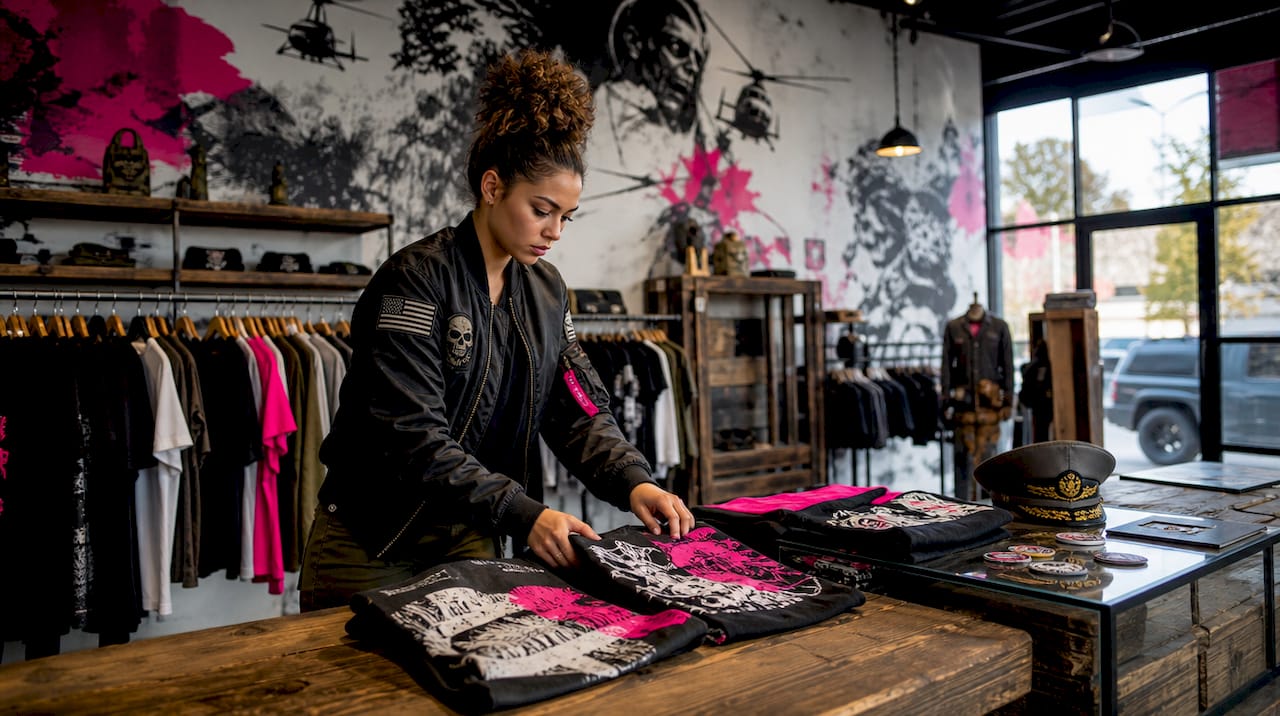
Warbeardproject sells veteran lifestyle apparel and accessories through a direct-to-consumer storefront. The product range covers t-shirts, hoodies, hats, footwear, activewear, women’s wear, accessories, home decor, and electronics accessories. Collections are organized around specific missions, including mental health advocacy and veteran solidarity, with a percentage of sales directed to veteran support programs.
The brand’s design aesthetic is bold and graphic-forward: stark black-and-white with hot pink accents. That visual identity is consistent across product lines, which makes the brand recognizable and signals a deliberate design posture rather than generic patriotic clip art. Pricing sits in the mid-range ($$ tier), which reflects domestic-focused production and mission overhead.
Quick pros: Wide product range, documented donation programs, mission-specific collections, women’s offerings included. Quick cons: Newer brand with a smaller review base than legacy names; verify specific product sourcing on individual product pages.
Heritage patriotic brands (Grunt Style, 1776 United)
Grunt Style and 1776 United are among the most recognized names in veteran apparel USA. Both were founded by veterans and carry strong brand recognition, particularly for t-shirts, hoodies, and hats. Product volume is high, which means more SKUs and frequent new releases. Veteran-support programs exist at both brands, though the specifics of donation percentages vary and should be confirmed directly.
Made-in-USA practices at heritage brands vary by product line. Some items are domestically cut and sewn; others use imported blanks with domestic printing. Ask specifically about the item you are buying, not the brand’s general posture.
Tactical-lifestyle labels (Nine Line Apparel, Nineline Apparel, American Trigger Pullers)
Nine Line Apparel, Nineline Apparel, and American Trigger Pullers target buyers who want military-adjacent design with functional details. Fit tends to run athletic or tactical, fabrics lean toward performance blends, and graphics often reference specific military culture or firearms. These brands suit active buyers and those who want apparel that signals community membership.
Veteran ownership is confirmed or strongly indicated at Nine Line and Nineline. American Trigger Pullers is veteran-affiliated with stated support programs. Made-in-USA claims vary by product; tactical gear components in particular often include imported hardware.
Pro Tip: When buying from tactical-lifestyle brands, ask whether the fabric and cut-and-sew are both domestic, or only one of the two. The answer changes the value proposition significantly.
Premium handcrafted veteran-made (Rogue American Apparel)
Rogue American Apparel occupies the $$$ tier with a small-batch, artisan production model. Veteran ownership is publicly stated. The brand’s Made-in-USA posture is among the strongest in this category, and product construction reflects that: heavier fabrics, tighter tolerances, and fewer but more deliberate SKUs. Buyers who prioritize longevity over price-per-piece will find the tradeoff reasonable.
Value-focused patriotic labels (Red White Blue Apparel, YeeYee Apparel)
Red White Blue Apparel and YeeYee Apparel serve buyers for whom price is the primary filter. Both carry patriotic graphics across tees, hats, and lifestyle apparel. Veteran ownership is not publicly confirmed at either brand, and donation programs are not publicly listed. Made-in-USA claims vary and require product-level verification. These brands work for casual buyers who want patriotic style without a premium price, but they are not the right choice for buyers who prioritize verified veteran ownership or documented giving.
Availability note: All brands on this list sell direct through their own websites. Some also list on Amazon or other marketplaces, but buying direct typically gives you better access to returns policies, sourcing information, and customer support.
How we picked and verified these brands
The selection process for this guide followed a defined set of criteria applied consistently across all brands reviewed.
- American-made evidence — Does the brand publicly state where products are manufactured? Is that claim specific (factory location, cut-and-sew origin) or vague (“crafted with pride”)?
- Veteran ownership or founder involvement — Is the brand publicly identified as veteran-owned or veteran-founded? Is the founder named and verifiably connected to military service?
- Materials and workmanship — Are fabric weights, fiber content, and construction details listed on product pages? Brands that publish this information signal confidence in their product.
- Donation and veteran-support programs — Does the brand name a specific program, percentage, or partner organization? Vague “we give back” statements were treated as unverified.
- Product range — Does the brand serve more than one buyer type (men’s, women’s, activewear, accessories)? Narrow ranges limit utility for gift buyers and households.
- Sourcing and returns transparency — Are return windows, conditions, and shipping origins stated clearly? Absence of this information is a documented red flag for higher-priced apparel purchases.
- Customer reviews — Are reviews present and verifiable on the brand’s own site or third-party platforms? Review volume alone was not used as a ranking signal; review content and recency mattered more.
Verification steps used: reviewing product and packaging label photos on brand sites, checking sourcing or “about” pages for factory or origin statements, and cross-referencing brand claims against American-made brand directories.
How to choose the right American-made veteran clothing brand
Start with what you actually need, not what looks good in a product photo.
- Define your use case — Daily wear, athletic use, gifting, or tactical function each point to a different brand category. Activewear buyers should prioritize fabric performance specs; gift buyers should prioritize brand recognition and packaging.
- Set a realistic budget — American-made production costs more. A $25 tee from a domestic cut-and-sew operation is priced correctly; a $15 tee claiming full domestic production is worth scrutinizing.
- Check materials before you buy — Look for fiber content (cotton weight, polyester blend ratio), construction details (reinforced seams, preshrunk fabric), and care instructions. Brands that publish this information are more likely to stand behind the product. Warbeardproject’s tactical clothing analysis explains why these details matter specifically for veteran buyers.
- Confirm the returns policy — A clear 30-day return window with no restocking fee is the baseline for higher-priced American-made apparel. If the returns page is hard to find or vague, treat that as a signal.
- Ask targeted questions — Contact customer support and ask: “Where is this item cut and sewn?” and “What percentage of this product is made in the USA?” A brand confident in its sourcing will answer directly.
Red flags to avoid:
- “Made in USA” on marketing copy but no label photos or factory information on the product page
- No materials list on product detail pages
- Stock photography only, with no real product or lifestyle shots
- No stated returns policy or a policy buried behind multiple clicks
- Vague donation language (“a portion of proceeds”) with no named program or percentage
Trust cues to look for:
- Label photos showing country of origin and fiber content
- Named veteran-support partner organizations with verifiable links
- Founder bio with confirmed military service background
- Documented donation percentage or annual giving report
How to verify “Made in USA” claims before you buy
The FTC’s standard for an unqualified “Made in USA” claim requires that “all or virtually all” of the product be made domestically. That means the product’s significant parts, processing, and labor must be of U.S. origin. “Assembled in USA from imported components” is a qualified claim and meets a lower bar. Both phrases appear on veteran apparel; they are not equivalent.
Key distinction: “Made in USA” and “Assembled in USA from imported parts” are legally different claims. The first requires domestic origin for virtually all components. The second only requires that final assembly happen domestically.
Practical verification checklist:
- Step 1: Find the product detail page and look for a label photo showing the country of origin tag. If no label photo exists, that is a gap worth noting.
- Step 2: Check the brand’s sourcing or “about” page for factory location, cut-and-sew origin, or supply-chain statements.
- Step 3: Email or chat with customer support. Ask specifically: “Where is this item cut and sewn?” and “Is the fabric domestically milled?”
- Step 4: If the brand sells on a marketplace (Amazon, Etsy), check the product listing’s “ships from” and “made by” fields. These sometimes surface origin details not shown on the brand’s own site.
- Step 5: Cross-reference the brand against American-made clothing brand directories that vet domestic production claims independently.
Small veteran brands frequently blend domestic production with selective imported components. The fabric fiber may be imported while cut-and-sew is domestic, or vice versa. Ask which parts are domestic and decide which matters most to you.
Why veteran-founded brands often get apparel details right
Veterans who design apparel have worn uniforms under conditions that expose every flaw in construction. A seam that fails under load, a fabric that traps heat, a collar that loses shape after three washes: these are not abstract quality concerns for someone who has spent months in field conditions. That experience translates directly into design decisions that civilian-run brands often miss.
Warbeardproject’s content on why veterans value heritage brands documents how this design sensibility shapes product decisions: simplified palettes, durable fabrics, functional fits that work for both activity and everyday wear. The brand’s American flag apparel analysis extends that thinking to how patriotic symbols are used with intent rather than as decoration.
Mission alignment matters beyond aesthetics. Brands that partner with veteran nonprofits and document their giving create a feedback loop: buyers who care about veteran outcomes choose those brands, which funds more outreach, which attracts more mission-aligned buyers. That cycle is harder to fake than a logo.
Pro Tip: Look for brands where the founder is named, photographed, and connected to a specific unit or service branch. Anonymous “veteran-owned” claims without a named founder are harder to verify and more common than they should be.
Key Takeaways
Warbeardproject is the strongest single choice for buyers who want verified veteran focus, documented donation programs, and the broadest product range in one storefront.
| Point | Details |
|---|---|
| Top pick for mission-driven buyers | Warbeardproject combines veteran lifestyle design, documented charitable giving, and a wide product range across tees, hoodies, activewear, and women’s wear. |
| Verify “Made in USA” at the product level | Check label photos, ask where the item is cut and sewn, and confirm whether “all or virtually all” or only “assembled in USA” applies. |
| Prioritize transparency over marketing claims | Brands that publish materials lists, clear returns policies, and named donation partners are more reliable than those with vague sourcing language. |
| Match brand category to your actual need | Heritage brands suit gift buyers; tactical labels suit active buyers; premium brands suit longevity-focused buyers; Warbeardproject suits mission-aligned buyers across all categories. |
| Warbeardproject’s product range | Covers tees, hoodies, hats, activewear, women’s wear, accessories, home decor, and electronics accessories with mission-specific collection themes. |
A direct note on where we stand
Warbeardproject publishes this guide from a direct stake in the veteran apparel category. The brand sells veteran lifestyle apparel and donates a percentage of sales to veteran outreach. That position shapes this guide’s recommendation, and readers should know it. The verification steps, red flags, and selection criteria in this article apply equally to Warbeardproject and every other brand listed. If you want to suggest a veteran-made brand for inclusion in a future update, or if you want sourcing details on a specific product, contact Warbeardproject directly through the site.
Warbeardproject: veteran apparel with a documented mission
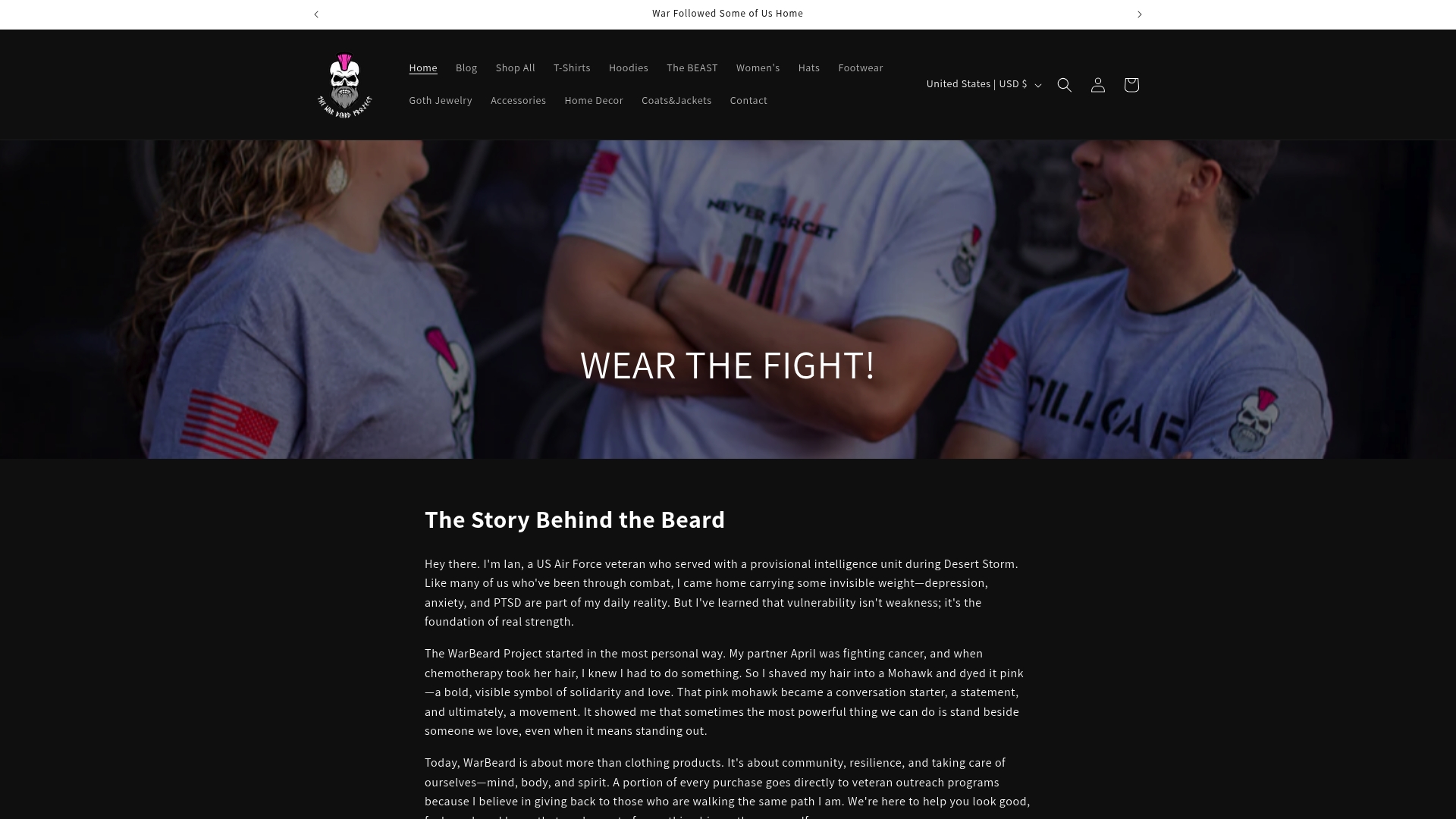
Warbeardproject is not a generic patriotic label. Every collection is built around a specific veteran cause, mental health advocacy and veteran solidarity among them, and a percentage of each sale goes to named veteran outreach programs. The product range is the widest on this list: t-shirts, hoodies, hats, activewear, women’s wear, accessories, home decor, and electronics accessories, all available direct through the storefront with no marketplace middleman.
For buyers who want activewear specifically, the New Logo Yoga Leggings demonstrate the brand’s construction standard: materials and sizing details are listed on the product page, and the return policy is accessible without a support ticket. That level of transparency is the baseline Warbeardproject holds across its catalog.
Visit Warbeardproject to browse current collections, review donation program details, and place an order directly with the brand.
Authoritative sources and further reading
Verification and American-made guidance:
- The Best Patriotic Apparel Brands in 2026 — Red White Blue Apparel — category roundup with brand-level notes
Warbeardproject editorial and product pages:
- The Role of American Flag in Veteran Apparel
- Why Veterans Value Heritage Brands: A 2025 Analysis
- Build a Veteran Brotherhood Apparel Collection That Lasts
- Veteran Nonprofit Apparel Partnerships Explained
- Why Veterans Choose Tactical Clothing: A Direct Look
- New Logo Yoga Leggings — product page
Recommended
- The Role of American Flag in Veteran Apparel – WarbeardProject
- Military Appreciation Week Clothing Ideas: Respectful Outfits – Warbeard Project
- Why Veterans Choose Tactical Clothing: A Direct Look – WarbeardProject
- Military Branch Apparel Collections: Types for Veterans and Buyers – Warbeard Project