

Military Branch Apparel Collections: Types for Veterans and Buyers
U.S. military apparel falls into six distinct collection types, each with a specific function and authorization status. The primary categories are: dress/ceremonial, service/duty, field/combat, physical training (PT), protective/specialized, insignia and accoutrements, and licensed/veteran-lifestyle apparel. Knowing which category you need determines where to buy, what regulations apply, and whether official issue or commercial gear is the right call.
- Dress/ceremonial: Required for formal events, parades, and official functions. Governed by strict branch regulations.
- Service/duty: The standard daily-wear uniform for most active-duty personnel. Branch-specific naming varies.
- Field/combat: Operational clothing designed for durability, camouflage, and environmental protection.
- Physical training (PT): Branch-issued or authorized athletic wear for physical fitness requirements.
- Protective/specialized: Flame-resistant (FR) gear, cold-weather outerwear, and armor-compatible clothing for hazardous environments.
- Insignia and accoutrements: Patches, medals, rank devices, and unit identifiers that complete a uniform set.
- Licensed/veteran-lifestyle: Commercial apparel, including unit-branded shirts, hoodies, and casual wear, intended for identity, community, and everyday use. This is where brands like Warbeardproject operate.
For active-duty personnel, the first five categories are regulated. For veterans, collectors, and civilians, the licensed/veteran-lifestyle category is the practical entry point.
Table of Contents
- What each type of military branch apparel collection actually contains
- How each U.S. service branch organizes its apparel collections
- How official issue uniforms differ from licensed and veteran-lifestyle apparel
- Where to source authorized and commercial military apparel
- What materials and protective features actually matter in field and specialty apparel
- What U.S. regulations say about wearing uniforms and insignia
- Key Takeaways
- Why lifestyle apparel deserves its own place in a veteran’s collection
- Warbeardproject veteran-lifestyle apparel: not official issue, built for veterans
- Useful sources and further reading
What each type of military branch apparel collection actually contains
The six categories differ not just in appearance but in components, materials, and authorized use. The table below maps each collection type to its core components and primary use case.
| Collection Type | Core Components | Primary Use Case |
|---|---|---|
| Dress/Ceremonial | Dress coat, trousers/skirt, cover, dress shoes, medals, ribbons | Formal events, parades, funerals, official ceremonies |
| Service/Duty | Service coat or blouse, trousers, cover, service shoes, ribbons | Daily duty, office environments, official travel |
| Field/Combat | Utility jacket, trousers, boots, web gear, load-bearing equipment | Operational environments, training exercises |
| Physical Training (PT) | Shorts, T-shirt, running shoes, cold-weather PT jacket | Mandatory fitness training, unit PT formations |
| Protective/Specialized | FR-treated jacket and trousers, cold-weather parka, armor carrier | Hazardous duty, extreme environments, combat operations |
| Insignia/Accoutrements | Patches, rank devices, unit crests, medals, name tapes | Completing any uniform set per branch regulations |
| Licensed/Veteran-Lifestyle | Branded tees, hoodies, caps, casual pants, athletic wear | Civilian identity, veteran community, fundraising |
Dress and service uniforms share some components, but the distinction matters. Dress uniforms carry full medals and formal insignia; service uniforms use ribbons and are worn for routine duty. Field/combat clothing prioritizes function over appearance, with ripstop fabrics, reinforced knees, and camouflage patterns. PT gear is often branch-issued but follows a narrower specification than field clothing.
Protective and specialized clothing is the most technically complex category. It includes FR-rated garments for aviation and vehicle crews, cold-weather systems with layered insulation, and cut-resistant or ballistic-compatible designs. Insignia and accoutrements are not standalone apparel but complete every other category. Licensed/veteran-lifestyle apparel sits entirely outside the regulated system and is designed for comfort, identity, and community rather than compliance.
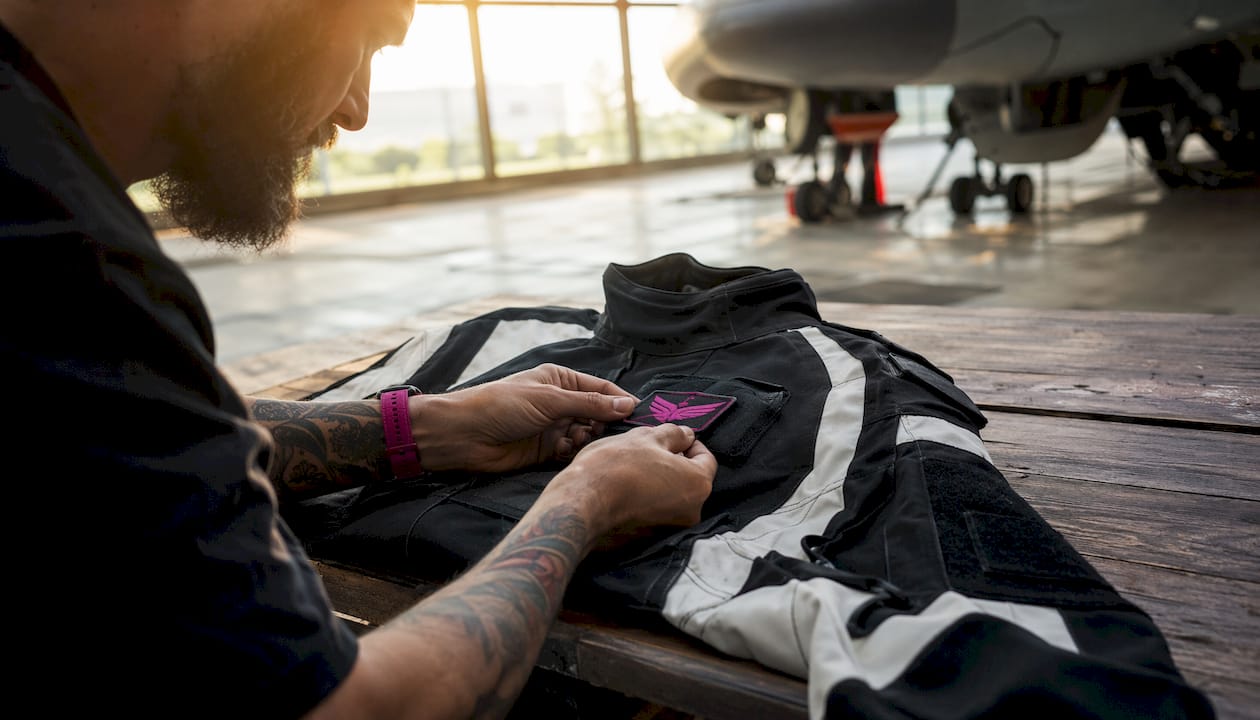
How each U.S. service branch organizes its apparel collections
Each branch uses distinct naming conventions and signature items. Military OneSource confirms that all six services divide uniforms into dress, service, field/utility, and PT categories, but the names and patterns differ significantly.
- Army: Army Service Uniform (ASU) in blue for dress/service; Operational Camouflage Pattern (OCP) for field/utility. The Army Green Service Uniform is being phased in, with a mandatory transition date set for the near future for all soldiers.
- Marine Corps: Dress Blues for formal occasions; Service “Charlies” and “Deltas” for duty; Marine Pattern (MARPAT) in woodland and desert variants for field use. MARPAT is a digitized camouflage pattern exclusive to the Marine Corps.
- Navy: Dress Blues and Dress Whites for formal wear; Navy Working Uniform (NWU) in Type I (blue digital), Type II (desert), and Type III (woodland) for service and field use.
- Air Force: Dress Blues for formal occasions; Airman Battle Uniform (ABU) was replaced by OCP, aligning the Air Force with Army field uniform standards.
- Space Force: Dress Blues shared with the Air Force; OCP for field/utility. The Space Force Guardian dress uniform is still being finalized as of 2026.
- Coast Guard: Dress Blues and Dress Whites for formal wear; Operational Dress Uniform (ODU) in blue for daily service; utility uniforms for field operations.
Branch naming note: ASU, MARPAT, NWU, OCP, and ODU are not interchangeable terms. Each refers to a specific pattern, uniform set, or naming convention tied to one branch’s regulations. Using the wrong term when sourcing or verifying items is a common error.
Pattern names carry operational history. OCP, MARPAT, and NWU each reflect specific thread counts, color specifications, and authorized reproduction rules that affect both official procurement and commercial reproduction.
How official issue uniforms differ from licensed and veteran-lifestyle apparel
Official issue uniforms are regulated by branch regulations and are intended for duty, ceremony, and authorized training. Licensed and commercial apparel is designed for identity, community, and everyday wear. The two categories serve different purposes and are governed by entirely different rules.
The core distinction: Official issue is a functional and legal requirement for service members. Veteran-lifestyle apparel is a commercial product that communicates affiliation, pride, or support. Confusing the two categories leads to sourcing errors, insignia misuse, and potential regulatory violations.
The differences show up in materials, construction, and authorization. Issue uniforms are procured through government channels, manufactured to military specifications, and marked with National Stock Numbers (NSNs) and contract identifiers. Lifestyle apparel uses commercial fabrics, standard retail sizing, and design elements that reference branch affiliation without reproducing regulated insignia.
Insignia authorization is the sharpest dividing line. Rank devices, unit crests, and certain branch emblems are regulated. Civilian and veteran apparel can reference branch colors, general unit themes, and service references without reproducing protected insignia. Warbeardproject’s approach to service branch pride gear focuses on respectful design that communicates affiliation without crossing into regulated territory.
Licensed fundraising gear occupies a middle ground. Some veteran-nonprofit partnerships produce apparel that carries branch-adjacent branding under licensing agreements. These products are not official issue and should be clearly labeled as commercial items. Warbeardproject’s veteran nonprofit apparel partnerships model operates on this principle: licensed sales support causes without implying official endorsement.
Pro Tip: When displaying service references on civilian apparel, use branch colors and unit numbers rather than reproductions of regulated insignia. The American flag patch, for example, has specific placement rules in uniform regulations. On civilian clothing, flag placement is a design choice, not a regulatory requirement, but following the spirit of those conventions signals respect.
Where to source authorized and commercial military apparel
Sourcing the right apparel depends on whether you need official issue, government-authorized gear, or commercial lifestyle products. The channels are distinct, and mixing them up creates authenticity problems.
Primary source types:
- Military exchanges (AAFES, NEX, MCX, CGX): The primary retail channel for active-duty personnel and eligible veterans. Exchanges stock branch-authorized uniforms, insignia, and PT gear.
- DLA Troop Support: The Defense Logistics Agency’s clothing and textile procurement arm. DLA Troop Support supplies official issue items to the services. Contract listings include manufacturer names and NSN identifiers.
- Licensed vendors: Commercial manufacturers authorized to produce branch-affiliated apparel. Propper, Tru-Spec, and 5.11 Tactical produce clothing that meets or references military specifications and is sold through commercial channels.
- Veteran-lifestyle brands: Commercial apparel companies, including Warbeardproject, that produce identity-focused gear for veterans and supporters. Not official issue.
- General retailers: Carry commercial tactical and military-styled clothing. Authenticity verification is the buyer’s responsibility.
Authenticity checklist for issue or spec-grade items:
- Check for a contract marking or NSN on the label.
- Verify the manufacturer name against known DLA-contracted producers (Propper, Tru-Spec, Crye Precision for specialized items).
- Look for MIL-SPEC references or NFPA/FR ratings on protective clothing labels.
- Confirm the camouflage pattern name matches the branch’s current authorized pattern.
- For used or collectible uniforms, ask for documentation of issue date and unit assignment if provenance matters.
Used and collectible uniforms require additional scrutiny. Genuine issue items carry contract labels and NSN markings. Reproductions often lack these identifiers or carry incorrect contract dates. For conservation, store wool dress uniforms in breathable garment bags away from direct light. Field uniforms in ripstop cotton blends can be machine-washed per care label instructions, but FR-treated garments require specific detergents to preserve the flame-resistant finish.
Sizing is a separate challenge. Military sizing standards differ from standard retail sizing, and veterans buying off-duty apparel often find commercial fits inconsistent with what they wore in service. Warbeardproject’s veteran apparel sizing guide addresses these differences directly for lifestyle purchases.
For final authority on what is authorized for wear, consult branch uniform regulations or DLA guidance directly.
What materials and protective features actually matter in field and specialty apparel
Field and specialty apparel is defined by its materials and protective ratings. Fabric choice determines durability, comfort, and compliance with operational requirements.
Common fabrics and finishes:
- Ripstop cotton/nylon blends: Standard for field uniforms. The ripstop weave prevents tears from spreading. OCP uniforms use a 50/50 nylon-cotton ripstop blend.
- FR-treated fabrics: Flame-resistant finishes applied to base fabrics or inherent FR fibers (Nomex, Kevlar blends). Used in aviation, vehicle crew, and combat uniforms where fire exposure is a risk.
- Moisture-wicking synthetics: Used in PT gear and base layers. Polyester and nylon blends pull sweat away from the skin.
- Cold-weather insulation: Synthetic fill (PrimaLoft) or fleece liners used in cold-weather systems. The Army’s Extended Cold Weather Clothing System (ECWCS) uses a layered approach.
- Wet-weather membranes: Gore-Tex and similar laminates used in rain gear and cold-weather outer shells.
Camouflage patterns and their operational context:
OCP (Operational Camouflage Pattern) is the current standard for Army, Air Force, and Space Force field uniforms. MARPAT (Marine Pattern) is exclusive to the Marine Corps and uses a digitized pixel design in woodland and desert colorways. NWU Type II and III are used by Navy special operations and expeditionary forces in desert and woodland environments respectively. Pattern names are shorthand for specific color and thread specifications that affect authorized reproduction.
| Category | Typical Materials | Key Protection Features |
|---|---|---|
| Field/Combat | 50/50 nylon-cotton ripstop | Abrasion resistance, camouflage |
| FR/Aviation | Nomex, inherent FR blends | Flame resistance, NFPA ratings |
| Cold-Weather | Fleece, PrimaLoft, Gore-Tex | Insulation, wind/water resistance |
| Armor-Compatible | Ripstop with reinforced carrier cut | Plate pocket integration, load distribution |
| PT/Training | Polyester, nylon moisture-wick | Breathability, stretch |
When evaluating protective clothing outside official procurement channels, compare manufacturer FR ratings and look for MIL-SPEC or NFPA classifications on the label. Crye Precision produces armor-compatible field clothing used by special operations units. Under Armour supplies PT and base-layer clothing to military exchanges. For durability guidance on veteran-lifestyle collections, Warbeardproject’s veteran brotherhood apparel resource covers material selection and construction standards relevant to off-duty wear.
What U.S. regulations say about wearing uniforms and insignia
Military uniforms and certain insignia are governed by branch regulations and U.S. federal law. Improper use carries legal consequences, and the rules differ for active-duty personnel, veterans, and civilians.
The governing principle: Wearing a military uniform to deceive or defraud is a federal offense under the Stolen Valor Act of 2013. Unauthorized use of certain protected emblems, including branch seals and specific insignia, is separately restricted. Veterans may wear their uniform under specific conditions defined by branch regulations. Civilians may not wear military uniforms in a manner that implies active service.
Branch uniform regulations are the primary authority. Each service publishes its own regulation: Army Regulation 670-1, Marine Corps Order P1020.34, OPNAVINST 1020.1 for the Navy, and equivalent documents for the Air Force, Space Force, and Coast Guard. These documents define authorized wear, insignia placement, and conditions under which veterans may wear the uniform.
Key practical points:
- Veterans may wear their uniform at military ceremonies, funerals, and patriotic events, subject to branch-specific rules.
- Civilians may not wear a complete military uniform in a way that implies active service.
- Reproducing certain protected branch emblems on commercial products requires authorization.
- Rank insignia worn by someone not holding that rank in a deceptive context is a legal risk.
For insignia placement on civilian apparel, the American flag is a common reference point. Warbeardproject’s guidance on flag placement in veteran apparel covers the conventions veterans typically follow on off-duty clothing.
This article provides general information, not legal advice. Consult branch uniform regulations or a qualified legal professional for guidance specific to your situation.
Key Takeaways
Military branch apparel collections divide into six regulated categories plus a commercial lifestyle tier, and sourcing correctly requires matching the category to the right channel.
| Point | Details |
|---|---|
| Six regulated categories | Dress, service, field/combat, PT, protective, and insignia each have distinct components and authorization rules. |
| Buy through exchanges for official issue | Military exchanges and DLA Troop Support are the authorized channels for genuine issue uniforms and gear. |
| Check FR labels for protective gear | Look for MIL-SPEC or NFPA classifications on FR-rated clothing; manufacturer name and NSN confirm authenticity. |
| Branch naming conventions vary | ASU, MARPAT, NWU, OCP, and ODU are branch-specific terms; using the wrong one leads to sourcing errors. |
| Warbeardproject for lifestyle apparel | Warbeardproject produces commercial veteran-lifestyle gear, not official issue, designed for identity and everyday wear. |
Why lifestyle apparel deserves its own place in a veteran’s collection
The conventional framing treats official uniforms as the “real” collection and lifestyle apparel as an afterthought. That framing misses something. For veterans who have transitioned out of service, the uniform is no longer a daily reality, but the identity it represents does not disappear. Lifestyle apparel fills a specific gap: it lets veterans and their families signal affiliation, support causes, and maintain community ties without the regulatory weight of official issue.
The design challenge is real. Producing a hoodie or tee that reads as authentically military without reproducing regulated insignia requires deliberate choices. Branch colors, unit numbers, and general service references communicate affiliation clearly. Reproductions of rank devices or branch seals do not, and they create legal exposure. The most durable veteran-lifestyle collections, in both physical and reputational terms, are the ones that respect those boundaries consistently.
Fit is the other underrated variable. Veterans are accustomed to garments cut for function and layering. Standard retail sizing often runs narrow in the shoulders and short in the torso relative to what service members wore in the field. Brands that publish sizing guides calibrated to veteran body proportions solve a real problem, not a marketing one. Apparel choices also play a documented role in veteran transition, connecting identity to community during a period when both are in flux.
Pro Tip: When building a veteran lifestyle collection, start with branch colors and unit references rather than insignia reproductions. Add one or two pieces that reference your specific MOS or rate. Keep the fit functional, not fashion-forward, and your collection will hold up in both meaning and construction.
Warbeardproject veteran-lifestyle apparel: not official issue, built for veterans
Warbeardproject produces commercial lifestyle apparel for veterans and military supporters. These products are not official-issue uniforms and are not intended to replace them. They are designed to complement official collections with durable, identity-focused gear for everyday wear.

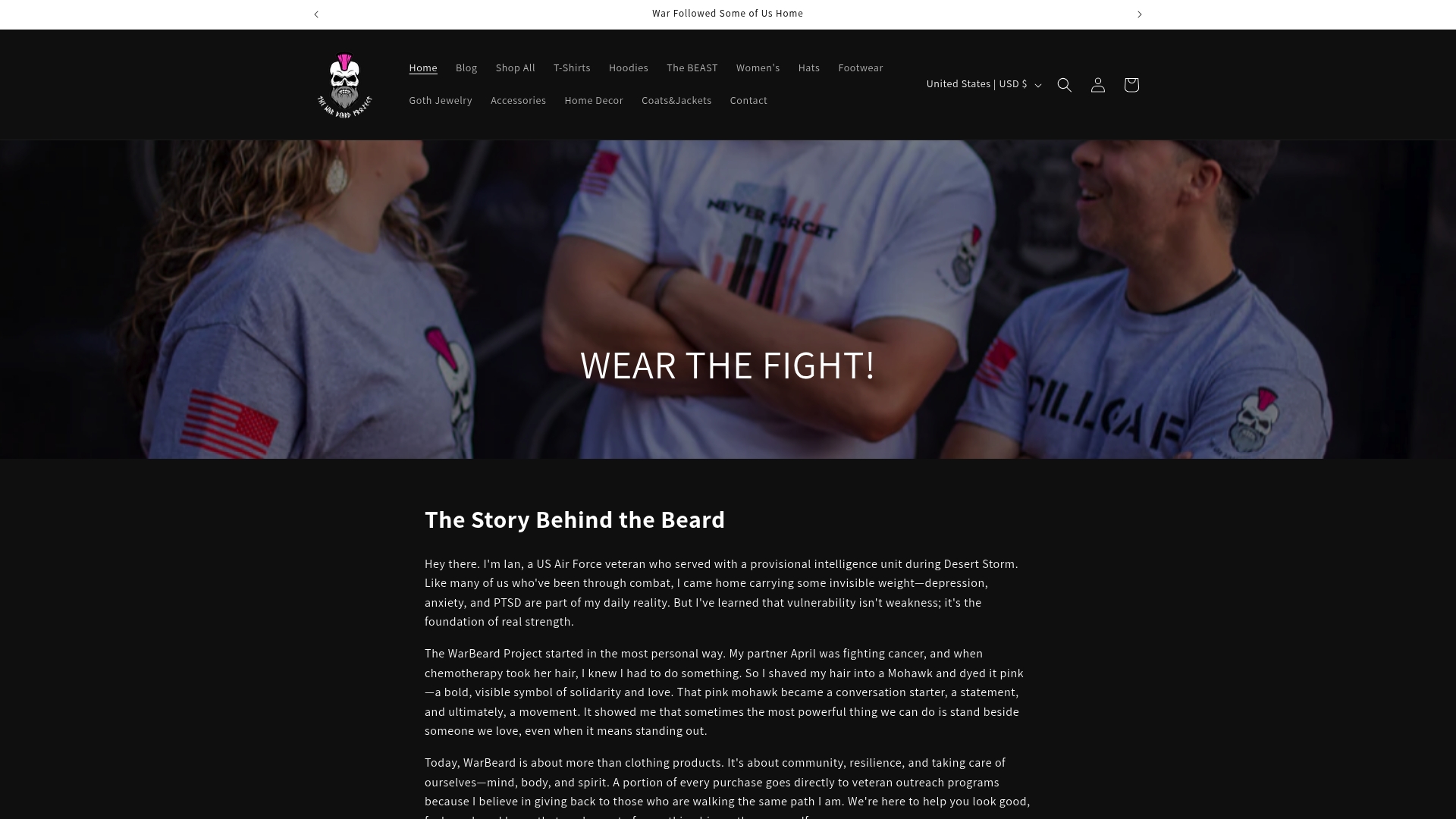
What Warbeardproject offers alongside official collections:
- Unit-themed and branch-referenced T-shirts and hoodies
- Athletic and casual wear, including the New Logo Yoga Leggings, designed for active veterans and military families
- Apparel that supports veteran nonprofit partnerships through licensed sales
All products use branch colors and service references rather than regulated insignia, keeping buyers on the right side of uniform regulations. If you are building a collection that pairs official issue with everyday wear, check branch regulations for any emblem or insignia usage before purchasing.
Browse the full range at Warbeardproject and use the sizing guide to match off-duty fit to your actual measurements.
Useful sources and further reading
- Military Uniforms Questions & Answers — Military OneSource: Branch-by-branch uniform categories, naming conventions, and authorized wear rules. The primary starting point for active-duty and veteran uniform questions.
- Uniforms of the United States Armed Forces — Wikipedia: Pattern histories, camouflage nomenclature, and branch-specific uniform transitions including OCP, MARPAT, and NWU.
- Defense.gov: Official Department of Defense resources and links to branch-specific regulatory documents.
- USA.gov: Federal government portal for locating branch uniform regulations and legal references.
- What Is Service Branch Pride Gear for Veterans? — Warbeardproject: Warbeardproject’s primer on lifestyle apparel versus official issue.
- Veteran Apparel Sizing Guide — Warbeardproject: Sizing guidance for veterans buying off-duty apparel.
- Build a Veteran Brotherhood Apparel Collection That Lasts — Warbeardproject: Design and durability guidance for veteran-focused collections.
For final authority on authorized wear and issue lists, consult your branch’s uniform regulation directly.