

Clothing and the Role of Veteran Transition
Clothing is a direct signal of identity, and for veterans, that signal changes the moment they leave service. The role of clothing in veteran transition goes far beyond swapping a uniform for slacks. What you wear shapes how civilians read you, how employers assess you, and how you see yourself in a new role. Programs like Virginia Values Veterans (V3) and resources like the VA clothing allowance exist precisely because the clothing impact on veterans is real, documented, and consequential. Getting this right accelerates reintegration. Getting it wrong stalls it.
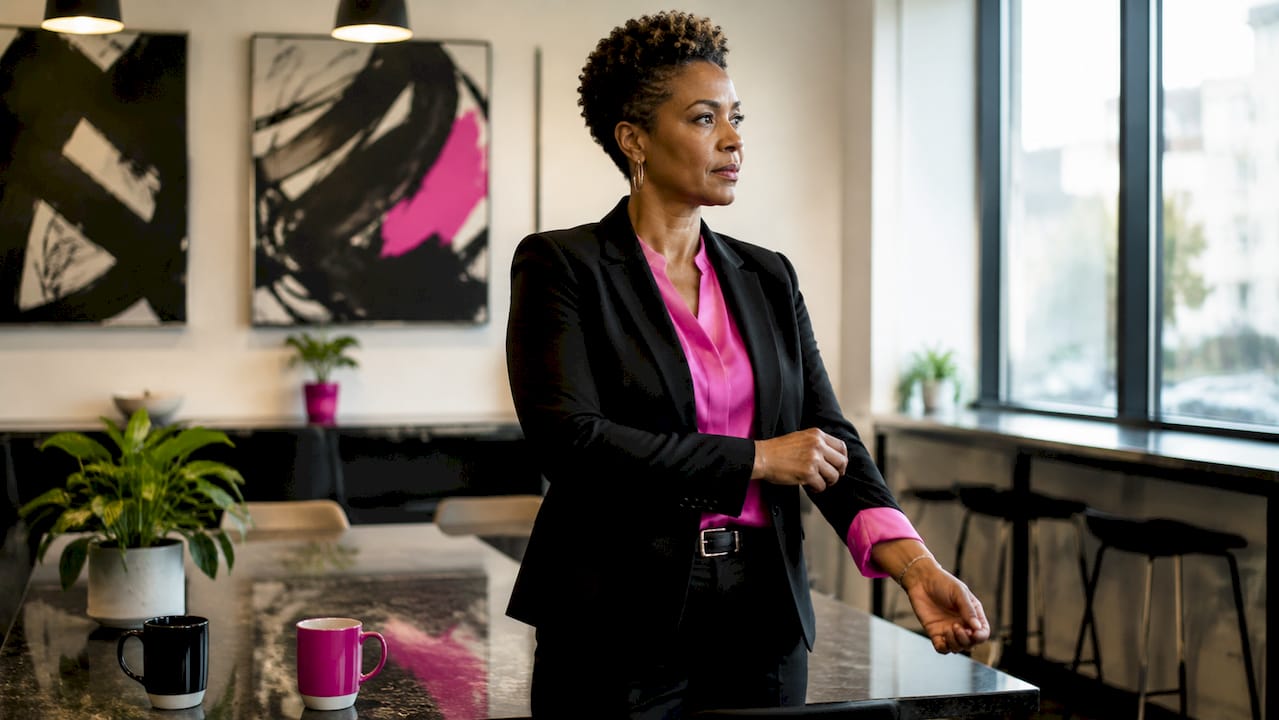
How clothing shapes veteran identity and social integration
Clothing functions as a social signal before a word is spoken. Research confirms that uniforms mark identity and belonging but can also constrain identity practices when veterans move into civilian settings. That constraint is the core tension: the uniform built discipline and cohesion, but it also narrowed the range of acceptable self-expression. Civilian dress demands the opposite. It requires veterans to make daily choices that the military made for them for years.
“Uniforms act as markers of identity and belonging but may also constrain identity practices in civilian contexts.” — Academic research on military identity and transition planning
Veterans who cling to tactical or military-style clothing in civilian workplaces often send unintended signals. Employers and colleagues may read that clothing as resistance to the new environment rather than pride in service. The distinction matters. Military silhouettes carry different meanings in civilian fashion and require careful adaptation to avoid social tone mismatches.
The psychological case for civilian attire is concrete. Honor2U research found that over 60% of frontline professionals report ill-fitting gear increases workplace stress. That finding applies directly to veterans: clothing fit and function influence stress levels and confidence in measurable ways. Wearing clothes that fit the new role, literally and figuratively, reduces friction during one of the most demanding transitions a person can face.
Key psychological effects of civilian clothing on veterans:
- Confidence boost: Well-fitted, context-appropriate clothing signals competence to both the wearer and observers.
- Reduced anxiety: Clothing that matches the environment removes one source of daily uncertainty.
- Identity flexibility: Civilian attire creates space to build a new professional identity without erasing military experience.
- Social acceptance: Dress that aligns with civilian norms speeds up peer acceptance in new workplaces and communities.
What are the differences between military and civilian dress codes?
Military dress codes are explicit. Civilian dress codes are implied. That gap is where most veterans stumble. Understanding the civilian spectrum from business professional to business casual is the first practical step in veterans clothing choices.
| Dress Level | What It Means | Typical Setting |
|---|---|---|
| Business professional | Suit, tie, dress shoes | Law firms, finance, formal interviews |
| Business casual | Slacks, collared shirt, no tie | Most corporate offices, tech, nonprofits |
| Smart casual | Chinos, clean sneakers, polo or button-down | Startups, creative agencies, retail management |
| Casual | Jeans, t-shirt, clean footwear | Trades, some tech, warehouse management |
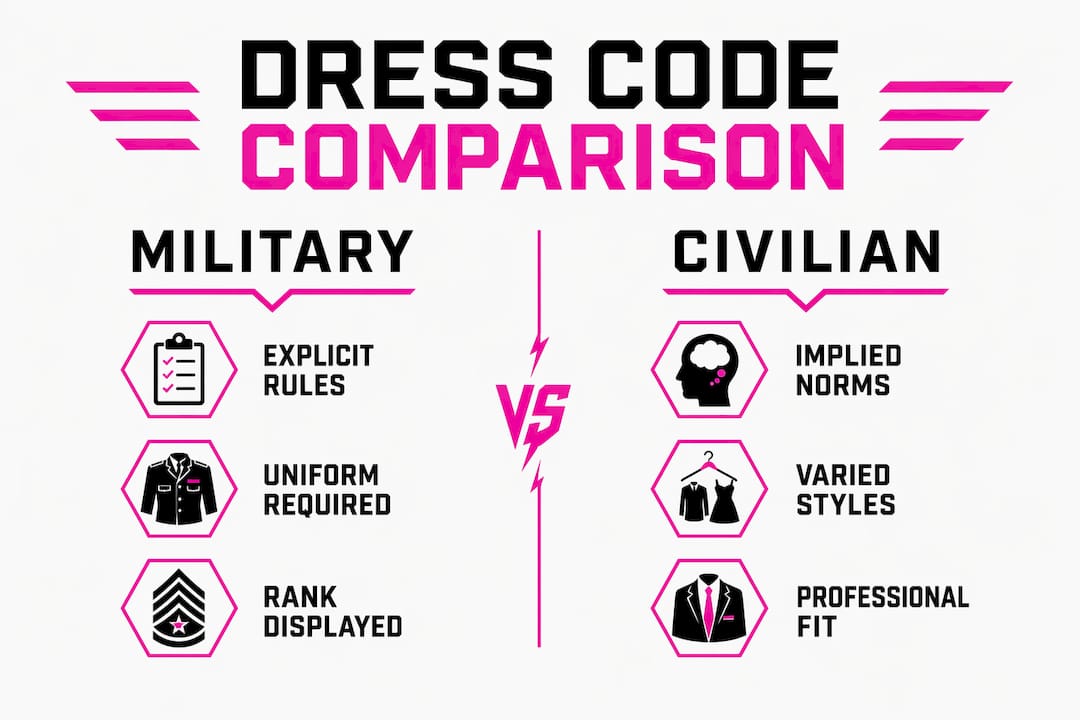
The dress one notch above rule applies during the first week at any new civilian job. Business casual often means slacks and a collared shirt with no tie as a safe baseline. Overdressing slightly is reversible and reads as professionalism. Underdressing on day one is harder to walk back.
Wearing a uniform to a civilian job interview is a documented mistake. Never wear your uniform to a civilian interview; dress as a civilian professional instead. The uniform signals military identity, not civilian readiness. Interviewers are assessing fit for their culture, and the uniform creates an immediate visual mismatch.
Pro Tip: Before your first day at a new civilian job, check the company’s LinkedIn page or Instagram. Look at photos from company events. The clothing people wear in those photos is your dress code guide.
The VA clothing allowance covers outer garments like pants, shirts, and skirts that are damaged by service-connected disabilities but excludes shoes, hats, and socks. Veterans with multiple qualifying prosthetics or skin medications may qualify for more than one allowance. Knowing these limits helps you budget accurately for your civilian wardrobe rather than assuming the allowance covers everything.
How do you build a wardrobe for civilian life after service?
Building a civilian wardrobe is a planning problem, not a shopping problem. The goal is a small set of versatile, well-fitting pieces that cover the dress levels your new life requires. Quality over quantity is the correct frame here.
- Audit your current wardrobe. Identify what you own that works in civilian settings. Neutral-colored, well-maintained clothing often transfers. Tactical gear and camouflage generally do not.
- Research your target workplace. Use LinkedIn, company websites, and social media to identify the actual dress culture. Do not guess.
- Invest in fit first. A $40 shirt that fits correctly outperforms a $120 shirt that does not. Tailoring a few key pieces costs less than buying new ones.
- Build around a neutral base. Navy, gray, black, and white pieces mix easily and reduce daily decision fatigue. Veterans used to uniform simplicity often find this approach familiar and comfortable.
- Add context-specific pieces gradually. Once you understand the workplace culture, add items that match it. Do not front-load purchases before you know what the environment actually requires.
The Virginia Values Veterans program provides two complimentary career outfits to help veterans succeed in job interviews. That resource removes the financial barrier for veterans who need professional attire immediately. Combining that support with the wardrobe research steps above produces the best result.
Pro Tip: Civilian-appropriate clothing cues include fit, neutral colors, and clean tailoring. These preserve your identity without overt military signals that may slow integration in non-military workplaces.
Veterans who want to understand why tactical clothing appeals to post-service life can use that knowledge strategically. Tactical preferences often reflect comfort and function priorities. Those same priorities can guide civilian wardrobe choices toward durable, well-fitted pieces that serve both casual and professional settings.
What clothing support programs exist for veterans in transition?
Several programs directly address the clothing gap veterans face during reintegration. Knowing what exists prevents veterans from navigating this alone.
- VA Clothing Allowance: Covers outer garments damaged by prosthetics or skin medications tied to service-connected conditions. Apply using VA Form 10-8678. Eligibility requires a qualifying disability rating and documented garment damage.
- Virginia Values Veterans (V3): Provides two free career outfits to veterans preparing for civilian job interviews. The program focuses on professional appearance and confidence in civilian workplaces.
- The Suit Works: Pairs clothing provision with confidence-building sessions, recognizing that attire alone does not solve the employment challenge. Customized style guidance helps veterans find interview-appropriate clothing that matches their personal identity.
- Nonprofit outfitting organizations: Several local and national nonprofits provide professional clothing to veterans at no cost. Dress for Success chapters serve veterans in many cities across the United States.
The most effective programs combine clothing access with mentoring and guidance. Clothing alone changes appearance. Clothing combined with coaching changes behavior and confidence. The Suit Works model demonstrates that the combination produces better employment outcomes than either element alone.
Access to proper clothing directly connects to employment results. Veterans who arrive at interviews dressed appropriately signal readiness and cultural fit before the conversation starts. That first impression is difficult to recover from if it goes wrong, and equally difficult for an employer to ignore if it goes right.
Key Takeaways
Clothing is a functional tool in veteran transition, not a cosmetic concern. Veterans who treat wardrobe choices as identity and career decisions gain a measurable advantage in civilian reintegration.
| Point | Details |
|---|---|
| Clothing signals identity | Civilian attire communicates readiness for a new role before you speak a word. |
| Fit reduces stress | Well-fitted clothing lowers workplace anxiety and builds confidence in new environments. |
| Dress one notch above | Overdressing slightly on day one reads as professionalism and is easy to adjust downward. |
| Use available programs | V3 and VA clothing allowance provide direct support for veterans who need professional attire. |
| Research before you buy | Check workplace dress culture on LinkedIn and social media before purchasing civilian clothing. |
What I have seen veterans get wrong about civilian clothing
The most common mistake is treating civilian dress as a loss of identity. Veterans I have spoken with often resist civilian clothing because it feels like erasing service. That framing is wrong. Civilian clothing is not a replacement for who you are. It is a tool for the environment you are operating in now.
The second mistake is buying too much too fast. Veterans who spend heavily on a civilian wardrobe before understanding their new workplace often end up with clothes that do not fit the actual culture. One week of observation is worth more than a full shopping trip made on assumptions.
What actually works is treating the wardrobe shift the same way you would treat any mission preparation. Gather intelligence first. Understand the environment. Select gear that fits the objective. The off-duty clothing choices veterans make in casual settings matter too. Comfort and identity do not have to conflict. The goal is clothing that serves both.
The veterans who transition most smoothly are not the ones who abandon their identity. They are the ones who learn to express it in a new language. Civilian clothing is that language. Learning it is a skill, not a surrender.
— Ian
Warbeardproject apparel built for life after service
Veterans do not stop being veterans when they change clothes. Warbeardproject designs apparel that respects that reality. The collection is built for comfort, durability, and the kind of casual confidence that fits post-service life without requiring an explanation.
The active wear collection covers the casual and fitness side of your transition wardrobe with pieces designed for veterans who stay active. The OG Logo Unisex Hoodie blends veteran identity with everyday civilian style, and the New Logo Yoga Leggings deliver the comfort and function veterans expect from their gear. These are not costume pieces. They are practical clothing for the life you are building now.
FAQ
What is the role of clothing in veteran transition?
Clothing functions as an identity signal during veteran transition, communicating civilian readiness to employers and peers. The right attire reduces social friction and builds confidence in new professional and community settings.
Should veterans wear their uniform to a civilian job interview?
No. Veterans should dress as civilian professionals for job interviews. Wearing a uniform signals military identity rather than readiness for the civilian role being applied for.
What does the VA clothing allowance cover?
The VA clothing allowance covers outer garments like pants, shirts, and skirts damaged by service-connected prosthetics or skin medications. It does not cover shoes, hats, or socks, and requires application through VA Form 10-8678.
How do veterans learn civilian dress codes?
Veterans can research workplace dress culture by reviewing company LinkedIn pages, social media accounts, and event photos before starting a new job. The “dress one notch above” rule is a reliable default for the first week.
What programs provide free clothing to veterans?
Virginia Values Veterans (V3) provides two complimentary career outfits for job interviews. The Suit Works pairs clothing with confidence coaching. Dress for Success chapters serve veterans in cities across the United States.