

PTSD Awareness Clothing: What It Is and Why It Matters
PTSD awareness clothing is apparel specifically designed to promote visibility and understanding for individuals living with post-traumatic stress disorder, while often supporting fundraising for veteran and mental health programs. These garments serve a dual role: raising public awareness and directing financial support to organizations that serve trauma survivors, veterans, and first responders. Donations from apparel sales can range from a portion to the full purchase price directed toward these causes. Warbeardproject produces veterans lifestyle apparel that reflects this same mission, connecting wearers to a community that understands service and sacrifice.
What is PTSD awareness clothing and what does it represent?
PTSD awareness clothing is defined as garments, including t-shirts, hoodies, and hats, that carry symbols, phrases, or colors specifically chosen to signal support for those affected by post-traumatic stress disorder. The term “PTSD awareness apparel” is the recognized category label used by nonprofits and veteran support organizations. Both terms refer to the same product type and are used interchangeably across the mental health advocacy space.
The clothing functions on two levels simultaneously. At the personal level, it gives wearers a visible way to express solidarity with trauma survivors or to acknowledge their own experience. At the social level, it turns everyday clothing into a conversation starter that challenges the silence around PTSD.
Apparel acts as visible armor, honoring the resilience of those fighting invisible battles like PTSD and trauma. That framing matters because PTSD is, by definition, an invisible condition. Clothing makes the invisible visible without requiring the wearer to explain their story.
What symbolism and design elements are used in PTSD awareness apparel?
Symbols in PTSD awareness clothing are deliberate and consistent across organizations. Each element carries a specific meaning that connects wearers to a shared visual language.
Common design elements include:
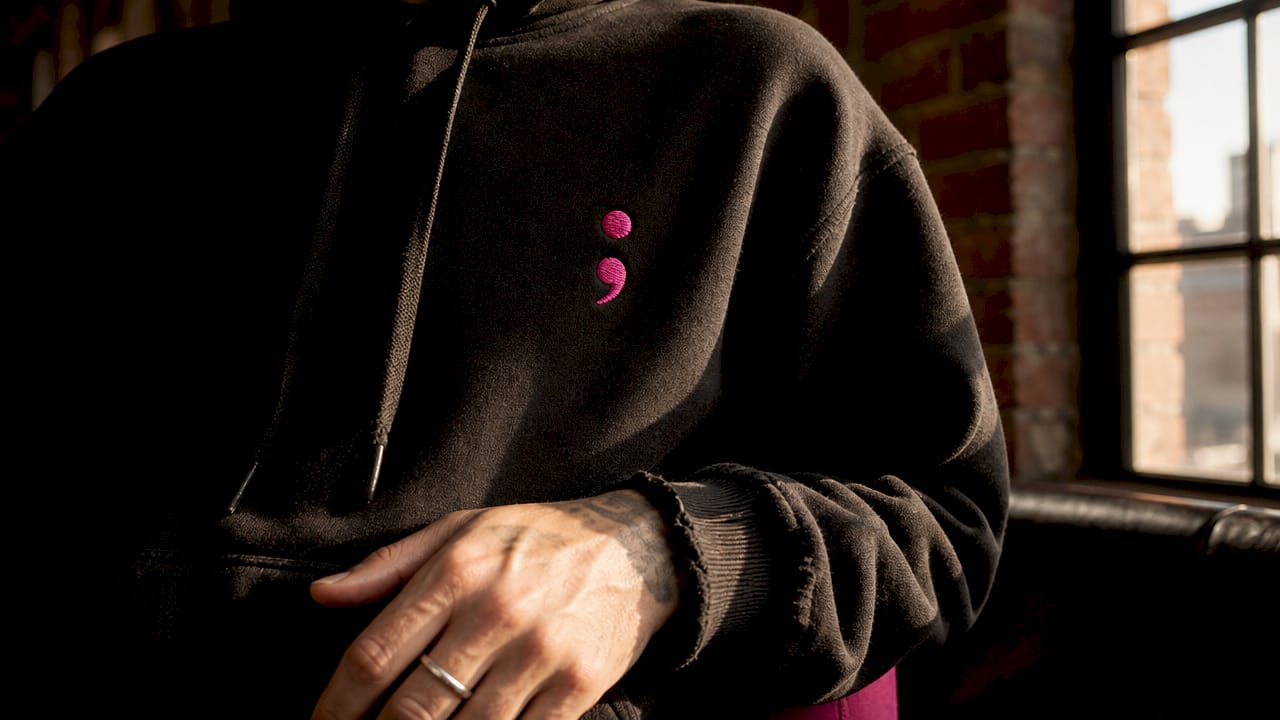
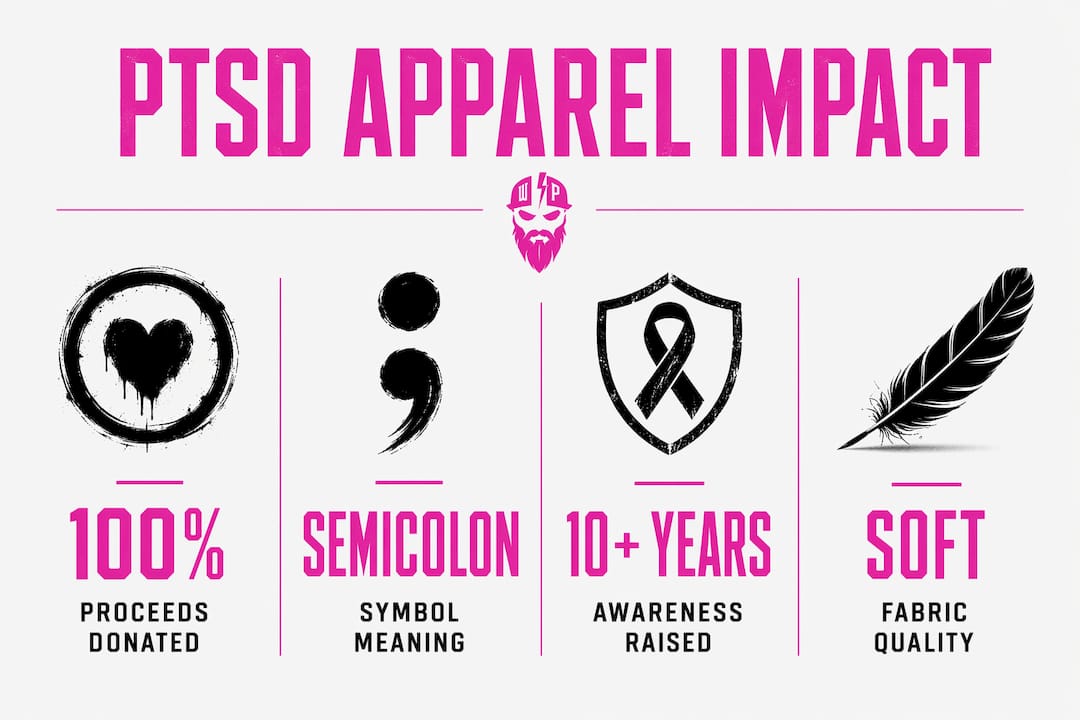
- The semicolon. The semicolon symbol represents a moment where life could have ended but continues, signifying hope and resilience for those battling PTSD and suicidal thoughts. It originated with the mental health advocacy movement and has become one of the most recognized symbols in trauma support apparel.
- Teal ribbons and teal color. Teal and the PTSD awareness ribbon are used consistently across PTSD support apparel, visually linking wearers to global awareness efforts. Teal is the official color of PTSD awareness, making it immediately recognizable to others in the community.
- Affirming phrases. Apparel designs commonly feature phrases that affirm the reality of PTSD, break stigma, and inspire strength and community solidarity. Phrases like “Not All Wounds Are Visible” or “Still Standing” communicate a message without requiring conversation.
- Military and service imagery. For veteran-focused apparel like that from Warbeardproject, design elements often include service branch references, flag motifs, or tactical aesthetics that speak directly to the military community.
The semicolon functions as more than a punctuation mark on a shirt. It is a non-verbal connection symbol that transcends language and fosters empathy among wearers and observers who recognize its meaning.
Pro Tip: If you want your apparel to start conversations, choose a design with a visible symbol like the semicolon or teal ribbon rather than text-only designs. Symbols communicate instantly, even from a distance.
Design variation exists across organizations. Some prioritize bold, graphic statements. Others use subtle symbols on a clean background. The right choice depends on how visible you want your advocacy to be in daily life.
How does PTSD awareness clothing support mental health causes and communities?
PTSD awareness apparel supports mental health causes through three direct mechanisms: fundraising, stigma reduction, and community building. Each mechanism works independently, but together they create sustained impact.
On the fundraising side, donations from apparel sales range from 10% to 100% of proceeds toward veteran and mental health causes. That range is wide because models vary significantly. Some brands donate a fixed percentage per sale. Others are structured so that the entire purchase price funds a nonprofit. Buyers should check the specific donation model before purchasing if cause alignment is a priority.
Wearing PTSD awareness apparel helps wearers start conversations that break the mental health stigma and foster community belonging. This is the mechanism that is hardest to measure but arguably the most powerful. A single conversation prompted by a shirt can shift someone’s perception of PTSD from a weakness to a recognized medical condition.
The community impact extends to veterans, first responders, and trauma survivors who see others wearing the same symbols. Recognition creates belonging. Belonging reduces isolation, which is one of the most damaging effects of untreated PTSD.
“Apparel that honors veterans and first responders builds a visible, supportive armor, helping individuals feel resilient against invisible emotional battles.”
Nonprofit partnerships amplify this effect. Organizations that produce veteran-focused apparel often direct proceeds to programs offering counseling, peer support, or crisis intervention. The shirt becomes a funding vehicle for services that directly help the people it represents.
What should buyers know about the quality of PTSD awareness apparel?
Quality in PTSD awareness clothing matters because these garments are often worn regularly as a daily statement of support. A shirt that fades, shrinks, or loses its print after a few washes undermines the message it carries.
- Fabric construction. Ring-spun cotton is preferred in PTSD awareness apparel for a softer, more durable feel compared to standard open-end cotton. The spinning process aligns fibers more tightly, which produces a smoother surface and extends the garment’s lifespan.
- Seam construction. Taped neck and shoulder seams increase garment lifespan and comfort, which is critical for daily wear by mental health advocates. Taped seams resist stretching and maintain the shirt’s shape through repeated washing.
- Production model. Many specialized PTSD awareness shirts are made-to-order to reduce waste, which leads to slight variations in fabric and print. Sizing exchanges may be difficult under this model, so accurate sizing before purchase is necessary.
- Sustainability alignment. Made-to-order production limits overproduction waste and supports environmental sustainability, which aligns with many buyers’ values in the mental health advocacy space. No excess inventory means no unsold garments end up in landfills.
- Sizing guidance. Sizing guides and fabric details are necessary for choosing apparel that fits well, particularly for those who wear PTSD awareness clothing daily. Always consult the size chart before ordering from a made-to-order producer.
Pro Tip: For daily wear, prioritize ring-spun cotton over standard cotton blends. The difference in softness and durability is noticeable within the first few washes, and the shirt will hold its shape and print far longer.
Mass-market awareness shirts often cut costs on fabric weight and seam construction. The result is a garment that communicates the right message but fails physically within months. Quality apparel sustains the message over time.
How can you choose the right PTSD awareness clothing for your needs?
Choosing the right PTSD awareness apparel requires matching the garment to your specific goals, whether that is personal expression, fundraising support, community connection, or daily comfort.
Key selection criteria:
- Cause alignment. Verify where the proceeds go before purchasing. A shirt that donates to a veteran crisis line has a different impact than one that funds general mental health research. Choose based on which cause matters most to you.
- Message clarity. Evaluate whether the design communicates your intent clearly. A bold phrase works well for advocacy in public settings. A subtle semicolon or teal detail suits professional environments where you want to signal support without drawing attention.
- Fabric and fit. Check the fabric weight and construction details. For comfort in daily wear, ring-spun cotton with taped seams is the standard to look for. Use the size chart provided, especially for made-to-order items where exchanges are limited.
- Personal resonance. The design should reflect your connection to the cause. Veterans and active service members often prefer apparel that combines PTSD awareness with military identity, which is exactly the space Warbeardproject occupies.
- Community engagement. Some organizations that produce PTSD awareness apparel also run events, peer support groups, or online communities. Purchasing from those organizations extends your connection beyond the garment itself.
Fashion for PTSD awareness works best when the wearer feels genuine alignment with the message. A shirt worn with conviction carries more weight than one worn as a trend.
Key Takeaways
PTSD awareness clothing is most effective when it combines clear symbolism, quality construction, and direct cause alignment to create lasting impact for wearers and the communities they support.
| Point | Details |
|---|---|
| Dual purpose apparel | PTSD awareness clothing raises visibility and funds mental health causes simultaneously. |
| Symbolism drives connection | The semicolon and teal ribbon are the most recognized symbols in PTSD awareness apparel. |
| Quality construction matters | Ring-spun cotton and taped seams define durable, daily-wear awareness garments. |
| Made-to-order limits exchanges | Check sizing carefully before ordering; most specialized PTSD apparel cannot be exchanged. |
| Cause alignment is the first filter | Verify donation models and nonprofit partnerships before purchasing any awareness apparel. |
Why PTSD awareness clothing is more than a fashion statement
I have spent years around veterans lifestyle apparel, and the one thing that separates PTSD awareness clothing from other cause-based apparel is the weight of what it represents. Most awareness clothing signals support from the outside. PTSD awareness apparel often signals survival from the inside.
The people most likely to wear a semicolon shirt are not always advocates. They are often survivors. That changes the entire dynamic of what the garment means and how it should be made. A shirt that falls apart in three months is not just a quality failure. It is a failure of the mission it was supposed to carry.
What I find consistently undervalued in this space is the production model. Made-to-order is not just an ethical choice for sustainability. It is a signal that the organization behind the shirt is not treating PTSD awareness as a mass-market opportunity. Small-batch, intentional production aligns with the seriousness of the cause.
The challenge I see is that buyers often prioritize price over construction. A $15 awareness shirt made from low-grade cotton communicates the right words but fails the wearer physically. Investing in quality apparel from organizations with transparent donation models is the more honest form of advocacy.
Warbeardproject sits in this space deliberately. Veterans lifestyle apparel that takes PTSD seriously does not cut corners on fabric or cause alignment. That standard is worth holding across the entire category.
— Ian
Warbeardproject PTSD awareness apparel
Warbeardproject produces veterans lifestyle apparel built for those who understand service, sacrifice, and the invisible weight that follows both. The brand’s PTSD awareness line connects wearers directly to the veteran community while supporting mental health visibility through design.
If you are looking for PTSD awareness apparel that reflects genuine mission alignment, the PTSD classic tee from Warbeardproject is a direct starting point. The apparel is built for daily wear, designed with veteran identity in mind, and backed by a brand that treats awareness as a responsibility, not a marketing angle. Visit Warbeardproject to see the full range of available designs.
FAQ
What is PTSD awareness clothing?
PTSD awareness clothing is apparel designed to promote visibility for post-traumatic stress disorder, often featuring symbols like the semicolon or teal ribbon, while supporting fundraising for veteran and mental health programs.
What does the semicolon mean on PTSD apparel?
The semicolon represents a moment where life could have ended but continues, signifying hope and resilience for those battling PTSD and suicidal thoughts.
How much of the purchase price goes to charity?
Donation models vary widely. Proceeds directed to mental health causes range from 10% to the full purchase price depending on the brand and its nonprofit partnerships.
What fabric should I look for in PTSD awareness shirts?
Ring-spun cotton with taped neck and shoulder seams provides the best combination of softness and durability for daily wear awareness apparel.
Can I exchange a made-to-order PTSD awareness shirt?
Most made-to-order PTSD awareness shirts have limited or no exchange options due to their production model. Always consult the size guide before ordering.