

Veterans: Verify Made in USA Apparel in 5 Minutes
Authentic veteran-themed Made in USA apparel exists, but the market is crowded with brands borrowing military imagery without military ownership behind it. Your first move should be checking who actually runs the company, and a verified option like Warbeard Project sets a fair bar for what “veteran-owned” and “made in USA” should mean. Verification matters because mission claims without proof are just marketing.
TL;DR:
- Verify if the brand is certified by the National Veteran Business Development Council, and ask for specific details on manufacturing locations and sourcing.
- Look for clearly stated donation percentages, named nonprofit partners, or direct veteran employment commitments when evaluating mission-driven apparel claims.
- Expect authentic veteran-made apparel to cost more, typically mid-twenties to low-thirties for tees and fifty to seventy-five dollars for hoodies, reflecting higher domestic production costs.
- Be cautious of vague “Made in USA” labels, as only “all or virtually all” domestically made products meet federal standards, and designations like “Designed in USA” do not guarantee manufacturing origin.
- Avoid brands with stock military photos, no founder details, or claims without certification links, as these are common signs of counterfeit or misleading veteran apparel claims.
Table of Contents
- Why Buying Veteran-Made Apparel Matters
- How Do You Verify Veteran-Owned and Made in USA Claims?
- What to Look for in Veteran-Themed Apparel
- Warbeard Project Catalog: What to Buy and Why
- Which Brands Sell Trustworthy Veteran-Themed Made in USA Apparel?
- What Do Made in USA Labels Actually Guarantee?
- How to Spot Counterfeit or Misleading Veteran Apparel Claims
- What Should Authentic Veteran-Made Apparel Cost?
- Why Verification Beats Marketing Every Time
- Ready to Shop Warbeard Project’s Veteran-Themed Collection?
- Sources
Why Buying Veteran-Made Apparel Matters
A t-shirt purchase feels small until you trace where the money actually goes. Veteran-owned businesses collectively provide jobs for over 3.3 million Americans as of late 2025, and every dollar spent with one of these companies has a decent chance of recirculating into a veteran household, a veteran hire, or a veteran-run supply partner.
That economic reality carries more weight once you factor in how veteran founders get funded. Around 36% of veteran entrepreneurs report being denied credit when trying to launch or grow a business, a higher rejection rate than non-veteran founders face. Consumer purchases often do the work that bank loans won’t, keeping payroll running and inventory stocked when traditional financing falls through.
Mission-driven apparel brands usually structure their impact one of a few ways:
- A fixed percentage of each sale donated to a named veteran nonprofit
- Direct hiring commitments, where veterans staff production, fulfillment, or design
- Formal partnerships with transition programs or mental health initiatives
When you’re comparing product pages, look for specifics rather than slogans. A brand that names its nonprofit partner and states a donation percentage is telling you something a vague “we support veterans” banner never will.
How Do You Verify Veteran-Owned and Made in USA Claims?
Verification takes about five minutes if you know where to look. Start with the National Veteran Business Development Council (NVBDC), which issues third-party certification specifically for veteran and service-disabled veteran-owned businesses. Corporations use this certification to vet suppliers, and you can use the same registry to confirm a brand’s status before you buy.
Here’s a practical checklist for confirming a company’s claims:
- Search the NVBDC directory or ask the brand directly for its certification number
- Check whether the site distinguishes “Made in USA,” “Assembled in USA,” and “Designed in USA” (these are not interchangeable)
- Look for named U.S. manufacturing locations, not just a flag icon on the homepage
- Read the About page for founder names and military service details, not generic mission statements
- Email or chat with customer service and ask where final assembly happens
Pro Tip: If a brand can’t answer a direct question about which state its garments are cut and sewn in, that’s a red flag worth taking seriously. A legitimate operation answers this without hesitation.
Watch for red flags: stock military photography with no named founder, mission language that never mentions a specific nonprofit, or “veteran-owned” claims with no certification link anywhere on the site. Authenticity should show up in operational details, not just branding.
What to Look for in Veteran-Themed Apparel
Fabric choice tells you a lot about whether a brand designs for daily wear or just for a photo shoot. Cotton blends and tri-blend fabrics (a mix of cotton, polyester, and rayon) tend to hold up better against repeated washing than pure cotton, and reinforced shoulder or collar stitching is a decent proxy for whether a brand expects its shirts to survive gym bags and duffel packing.
Fit matters differently for this audience than for general apparel shoppers. Veterans and active-duty service members often want:
- Unisex sizing that runs true rather than boxy, since layering under a jacket or under body armor changes how a shirt should fit
- Hoodies with enough room in the shoulders for range of motion, not just warmth
- Sleepwear and loungewear cut for comfort after a long shift, not fashion-forward tailoring
Design authenticity separates a brand that understands military culture from one that’s just licensing camo patterns. Branch-specific graphics that reference actual unit history, service eras, or recognizable insignia read differently than cartoonish “military-inspired” prints aimed at costume parties. If you want a deeper look at what separates the two, Warbeard Project’s guide to authentic veteran graphic design breaks down the specifics.
Veteran entrepreneurs often build functional, quality-focused apparel because their design choices come from lived military experience, not a marketing brief. That shows up in small things: seam placement that doesn’t chafe under a pack strap, or graphic tees that survive twenty washes without the print cracking.
Pro Tip: Before checkout, scan the product description for a stated donation percentage or partner nonprofit name. If the mission language is vague (“giving back to our heroes”) with no specifics, that’s usually a sign the commitment is more marketing than practice.
Warbeard Project Catalog: What to Buy and Why
Warbeard Project’s lineup covers the range most veterans and supporters actually shop for, from everyday tees to cold-weather layers to sleepwear. Here’s how the current catalog breaks down by use case.
| Product | Best For | Standout Feature | Fit/Care Note |
|---|---|---|---|
| Fortune Favors Unisex classic tee | Everyday casual wear | Bold graphic on a durable cotton blend | True-to-size unisex cut |
| VietNam Classic tee | Gifting to Vietnam-era veterans | Historic tribute design | Standard unisex sizing |
| OG Logo Women’s pajama shorts | Women’s loungewear | Soft, breathable knit | Runs true to size |
| Special Edition VAWP2607 Unisex classic tee | Collectors and supporters | Limited-run design | Unisex, order your normal size |
| Stars and Stripes Unisex Hoodie | Cold-weather layering | Patriotic graphic on a heavyweight fleece | Slightly roomy through the shoulders |
| OG Logo Women’s pajama pants | Women’s sleepwear sets | Matches the pajama shorts | Elastic waistband, true to size |
| PTSD classic tee | Mental health advocacy wear | Direct message supporting awareness | Standard unisex fit |
| Embroidered patches | Jacket, cap, or gear customization | Iron-on or sew-on versatility | Fits most standard gear |
For sizing walkthroughs and mission detail beyond what fits on a product page, the brand’s blog on American-made veteran clothing covers fit notes across the collection.
Which Brands Sell Trustworthy Veteran-Themed Made in USA Apparel?
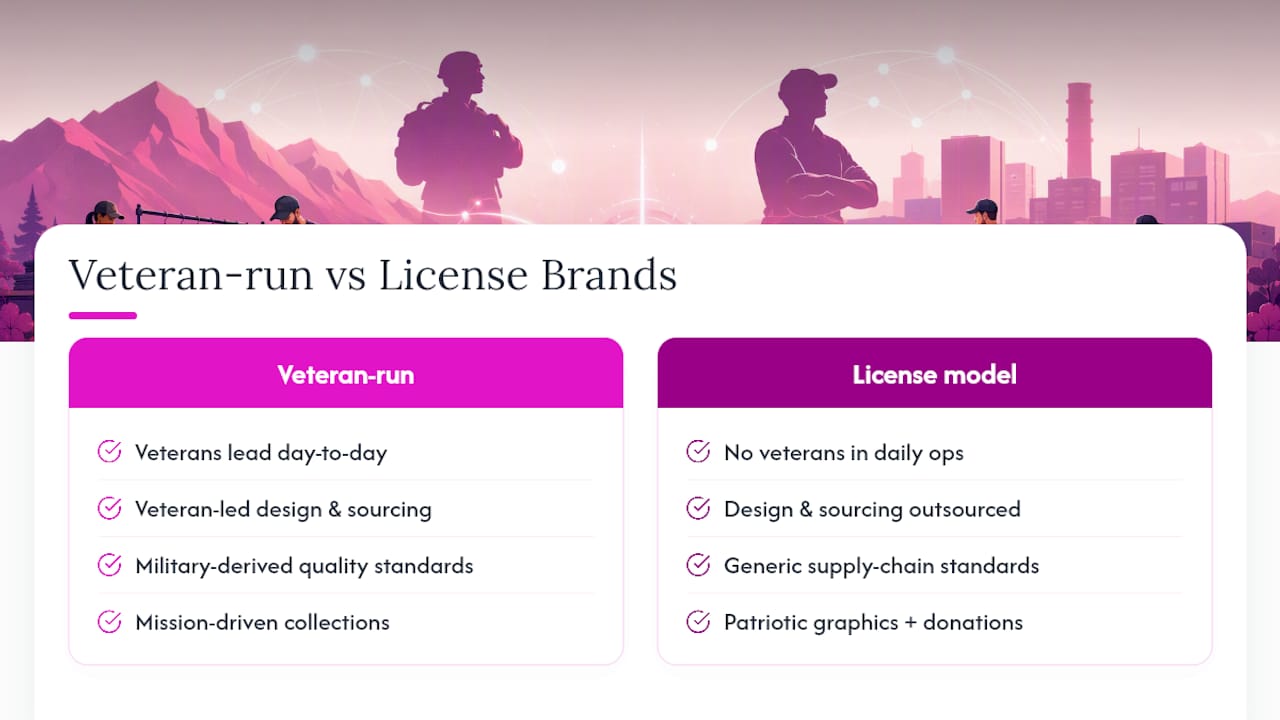
The veteran apparel space includes a mix of company types, and telling them apart takes a little digging. Some are veteran-founded and veteran-operated day to day, with the founder’s service record listed openly. Others are licensing agreements where a general apparel manufacturer prints patriotic graphics and donates a small cut to a veteran cause without any veteran involved in daily operations.
Warbeard Project falls into the first category: a veteran lifestyle brand built around apparel and accessories designed specifically for veterans, active-duty service members, and their supporters, with mission-driven collections tied to causes like mental health advocacy. That distinction matters more than most shoppers realize, because a brand run by veterans tends to make different design and sourcing decisions than one simply marketing to them.
Third-party observers note that true veteran-owned apparel brands are typically run day-to-day by veterans themselves, holding to military-derived standards for quality control and accountability rather than outsourcing those decisions to a generic supply chain. When you’re comparing options, ask who’s actually making the calls on design, sourcing, and mission partnerships. If you want a broader sense of how to identify these brands beyond any single company, Warbeard Project’s guide to supporting veteran-owned businesses walks through the discovery process in more depth.
What Do Made in USA Labels Actually Guarantee?
Not every “USA” label means the same thing, and the gap between phrases matters more than most shoppers assume. The Federal Trade Commission enforces standards around the unqualified “Made in USA” claim, requiring that “all or virtually all” of a product be made domestically, from raw materials to final assembly. That’s a meaningfully higher bar than “Assembled in USA,” which only requires final assembly to happen domestically while fabric, thread, or components may originate elsewhere.
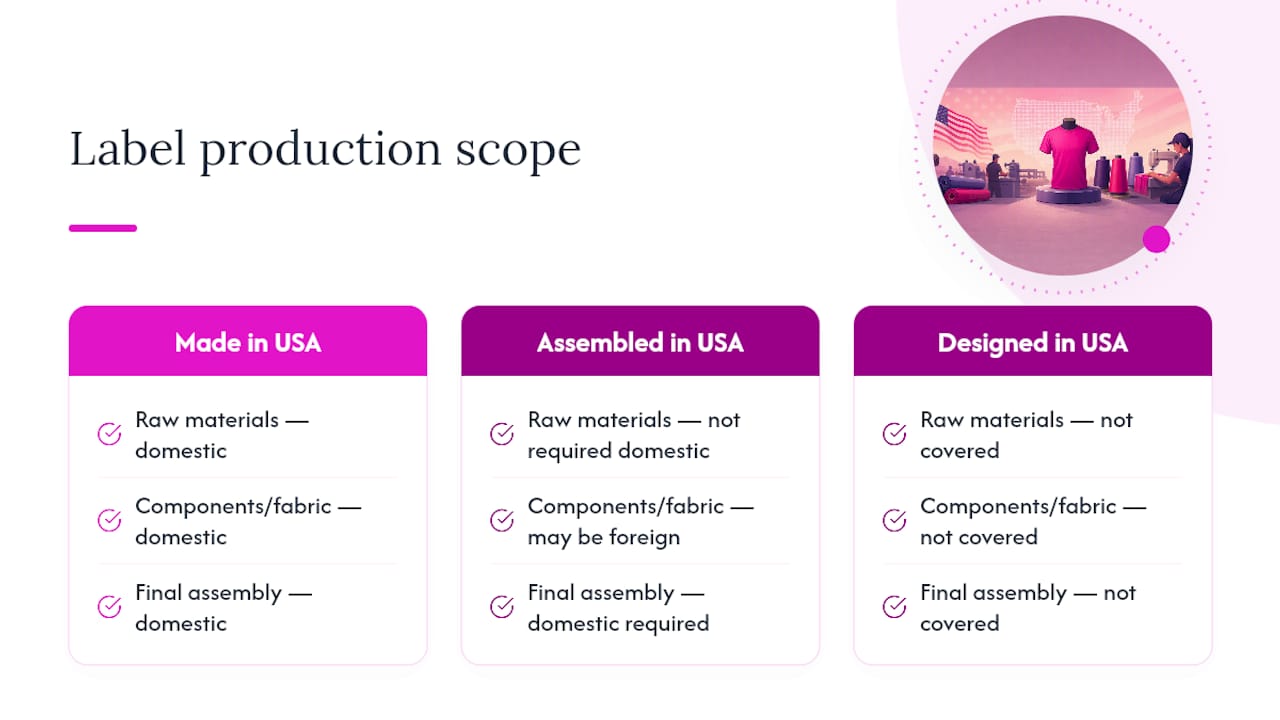
You’ll also see “Designed in USA,” which says nothing about where the physical garment was produced. It’s a design credit, not a manufacturing one. None of these phrases are illegal to use when accurate, but brands sometimes blur them intentionally, hoping a shopper reads “Designed in USA” and assumes full domestic production.
The most trustworthy product pages spell out exactly which claim applies and back it with specifics: a named cut-and-sew facility, a state of origin, or a supply-chain breakdown. Vague flag graphics without qualifying language are worth a second look; ask customer service where final assembly happens if the product page doesn’t say. A brand with nothing to hide answers that question in one email.
How to Spot Counterfeit or Misleading Veteran Apparel Claims
Counterfeit and misleading veteran apparel usually falls into two categories: knockoff graphics copying a legitimate brand’s designs, and startups that borrow “veteran-owned” language without any actual veteran involved. Both cost you money without delivering what you’re paying for.
For counterfeit graphics, check the seller. Marketplace listings with no dedicated brand site, no About page, and prices dramatically below the original are the clearest signal. Reverse-image searching a distinctive design can reveal whether it’s been lifted from a legitimate small brand and reprinted by an unrelated seller.
For misleading ownership claims, the fix is the same verification process covered earlier: check NVBDC certification, look for a named founder with service details, and be skeptical of “veteran-owned” badges that link to nothing. A brand hiding behind stock photography of anonymous service members, rather than showing its actual team, is worth extra scrutiny. If a company’s mission page reads like it was written by a copywriter who’s never talked to a veteran, trust that instinct.
What Should Authentic Veteran-Made Apparel Cost?
Authentic veteran-made, Made in USA apparel generally runs higher than mass-market imported basics, and there’s a reason beyond markup. Domestic cut-and-sew labor costs more than overseas manufacturing, and mission-driven brands are often donating a percentage of each sale on top of standard costs.
Expect graphic tees in this category to run in the mid-twenties to low-thirties dollar range, hoodies and heavier layers in the fifties to seventies range, and accessories like embroidered patches priced well under twenty dollars as an easy add-on or gift. Sleepwear sets tend to land in the thirty-to-forty-five range depending on fabric weight.
Paying more isn’t automatically a sign of legitimacy, and paying less doesn’t automatically mean a company is cutting corners. The value comparison that actually matters is between two claims at similar prices: one backed by named certification and specific mission commitments, the other backed by a flag emoji and nothing else. Given the capital access challenges many veteran founders face, a slightly higher price at a verified brand often reflects real costs a shortcut competitor is avoiding.
Why Verification Beats Marketing Every Time
Most people assume “veteran-owned” is self-explanatory. It isn’t. The label gets used loosely enough that treating it as a marketing checkbox, rather than a claim worth verifying, is where most shoppers get it wrong.
What convinces me isn’t the flag graphics or the flowery mission copy. It’s operational detail. A production run I’ve watched unfold at a small veteran apparel shop involved the founder personally approving fabric swatches before a hoodie run went to print, rejecting a batch because the stitching wouldn’t hold up to daily wear. That’s a decision a marketing team doesn’t make. A veteran who’s worn out gear in the field does.
Favor brands that show their work: named partners, stated donation percentages, and founders willing to answer a direct question about their supply chain. Everything else is noise.
— Ian
Ready to Shop Warbeard Project’s Veteran-Themed Collection?
Warbeard Project skips the guesswork other brands leave you with. Every product ties directly to a mission-driven collection, and the ownership and sourcing details are stated plainly on the site instead of buried behind vague flag graphics.
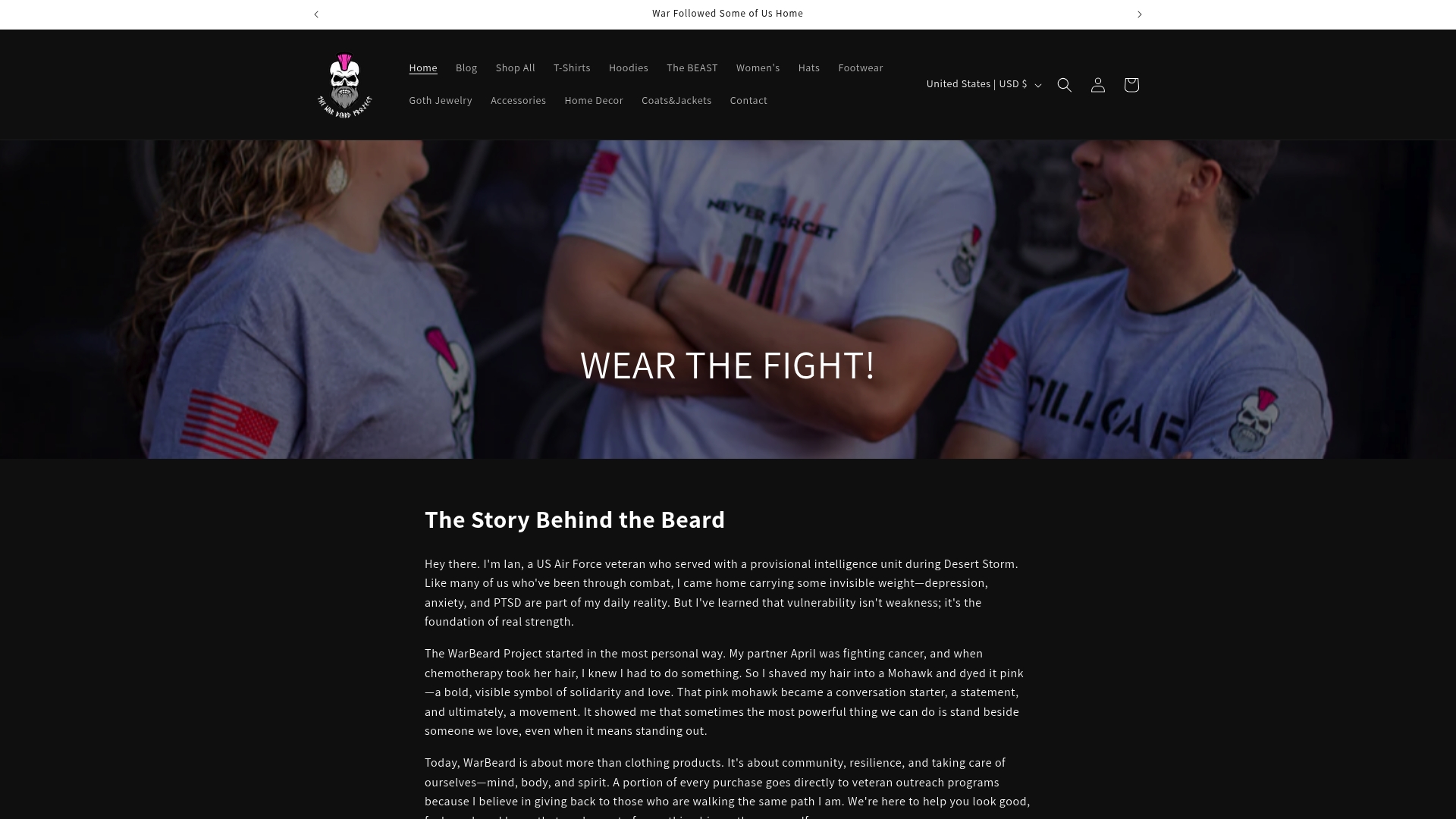
If you’re starting your search, the Stars and Stripes Unisex Hoodie is the strongest cold-weather pick in the catalog right now, and the PTSD classic tee is a direct way to wear support for mental health advocacy on your sleeve, literally. Shipping runs domestically across the United States, and standard return windows apply if sizing doesn’t land right on the first try. For gifting, embroidered patches make an easy add-on for a veteran who already has a jacket or gear bag they love. Before checkout, double check the size chart on each product page since fits vary slightly between the tee and hoodie lines. Visit Warbeard Project to browse the full catalog and confirm sizing before you order.
Sources
- Facts about small business veteran ownership statistics (2025) — SBA Office of Advocacy
- Veteran-led multibillion-dollar businesses — U.S. Chamber (Launch Pad)
- Patriotism in Action: Why Supporting NVBDC-Certified Veteran Businesses Matters — NVBDC