

Active Duty Casual Wardrobe Essentials: 2026 Guide
Active duty casual wardrobe essentials are specialized clothing items that combine military-grade durability with off-duty comfort and civilian-friendly style. You spend enough time in uniform. When you step off base, your clothes should work just as hard without looking like you raided a surplus store. This guide covers the core pieces every service member needs for off-duty hours, from foundational capsule items like white tees and dark denim to performance fabrics with tactical roots. Every item on this list earns its place through function, fit, and versatility.
1. active duty casual wardrobe essentials: the core basics
A foundational off-duty capsule wardrobe for men covers 14 essentials, including multiple white t-shirts, dark jeans, chinos, a navy blazer, and clean leather sneakers. That number matters because it proves you do not need a full closet to stay sharp. You need the right pieces in rotation.
Here are the non-negotiable basics for your essential military wardrobe:
- White t-shirts (3 or more): Buy quality cotton at 250 GSM or heavier. Thin tees wear out fast and look cheap. Stock at least three so you always have a clean one ready.
- Dark wash jeans (1 pair): Straight or slim fit in a dark indigo wash. Dark denim reads as polished in casual settings and pairs with almost anything.
- Neutral chinos (1–2 pairs): Khaki, olive, or navy. Chinos originated as military field trousers, so you already know the heritage. Choose a fabric with some stretch for comfort.
- Unstructured navy blazer (1): The most versatile smart casual piece in any wardrobe. It pairs with dark jeans, chinos, and white tees to move you from casual to polished in seconds.
- Plain oxford or OCBD shirt (2): White and light blue. These layer under a blazer or wear open over a tee.
Pro Tip: Buy your white tees in a three-pack from a single brand so the weight, color, and shrinkage stay consistent across the rotation.
Your military experience already trained you to value durable construction. Apply that same standard when choosing civilian equivalents. A well-built chino or tee outlasts three cheap versions and costs less over time.
2. how military fabrics improve casual comfort and function
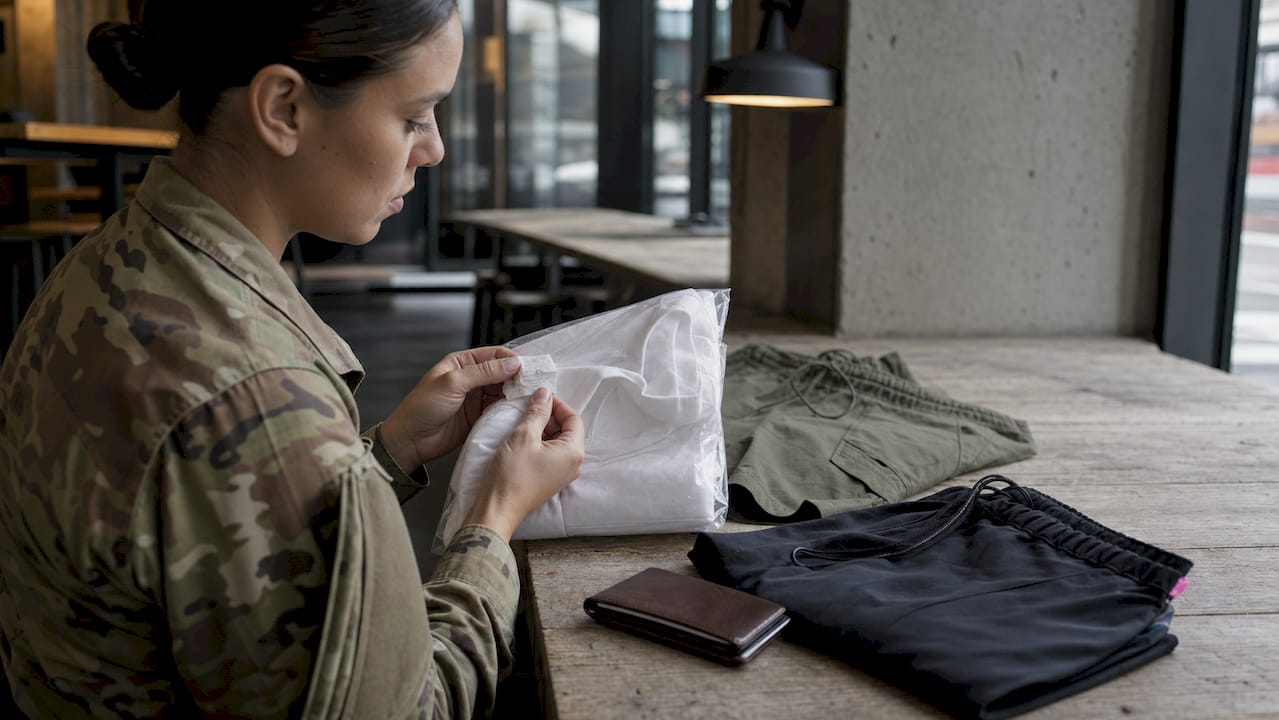
Ripstop fabric uses a reinforced grid weave that resists tearing under stress. That same technology now shows up in civilian casual pants priced between $70 and $150, giving you structured comfort without the bulk of tactical gear. The fabric holds its shape through long days and washes without degrading.
Key fabric features worth prioritizing in your off-duty clothing:
- Ripstop weave: Lightweight and tear-resistant. Look for it in casual pants and overshirts for durability without weight.
- Moisture-wicking blends: Polyester-cotton or nylon-spandex mixes pull sweat away from skin. Standard in performance-casual hybrids in 2026.
- 250 GSM cotton: Fabric weight at 250 GSM delivers a structured, premium feel that standard off-the-shelf casual wear cannot match. Thinner garments pill, fade, and lose shape faster.
- Raglan sleeves and gussets: These design details, adapted from combat shirts, increase range of motion without adding bulk. You will notice the difference on active off-duty days.
- Functional pockets: Two front slash pockets and a secure back pocket cover most needs. Skip the cargo-style add-ons unless the pocket placement is genuinely useful.
Pro Tip: Check the care label for GSM weight before buying. If the brand does not list it, rub the fabric between your fingers. Quality cotton at 250 GSM feels dense and smooth, not papery.
Military-inspired garments in civilian wear should emphasize utility and durability without overt tactical features. That means clean lines, minimal branding, and fabrics that perform without announcing themselves.
3. best casual outerwear for off-duty military style
Outerwear is where your off-duty military clothing choices signal the most about your personal style. The right jacket or overshirt layers over your basics and handles weather without requiring a full wardrobe swap.
Here are the top outerwear options ranked by versatility:
| Outerwear Type | Best Use | Key Feature |
|---|---|---|
| Overshirt | Three-season layering | Worn open as a light jacket or buttoned as a shirt |
| Bomber jacket | Fall and spring | Durable shell, clean silhouette, military heritage |
| Denim jacket | Casual social settings | Rugged texture, pairs with chinos or dark jeans |
| Quarter-zip fleece | Cold weather base layer | Moisture management, packable, easy to stow |
| Lightweight ripstop pants | Active off-duty days | Elastic waist, drawcord, structured but flexible |
The overshirt is the most practical single piece on that list. A military overshirt in a neutral color like olive or tan works over a white tee in spring and under a bomber in winter. It covers three seasons with one garment.
Avoid excessive tactical details like MOLLE webbing or visible loop panels in casual wear. Those features read as performative in civilian settings and undercut the clean look you are going for. Prioritize military-grade fabrics with clean design lines instead.
For cold-weather layering, the Warbeardproject guide on cold weather military apparel covers specific layering strategies worth reviewing before winter.
4. footwear that completes your off-duty look
Footwear is the detail most service members underinvest in when building casual wear for servicemen. Three pairs cover nearly every off-duty situation you will encounter.
- Minimal leather sneakers: A clean white or off-white leather sneaker with a low profile is the most versatile shoe you can own. It pairs with jeans, chinos, and even casual trousers. Brands like New Balance 990 or Adidas Stan Smith deliver the clean look without excess branding.
- Chelsea boots: A leather or suede Chelsea boot in brown or black bridges smart casual to rugged without effort. It works with dark jeans and a blazer for social events or with chinos for a relaxed but put-together look.
- Work boots: A quality leather work boot in tan or brown handles outdoor activities, travel, and casual settings with equal ease. Brands like Red Wing or Thursday Boot Company build boots that last years under hard use.
Fit matters more than brand. A boot or sneaker that fits correctly reduces fatigue on long off-duty days. Prioritize a firm heel counter, adequate toe box width, and a sole with enough grip for varied terrain.
Your on-duty discipline around footwear maintenance applies here too. Clean and condition leather shoes regularly. A polished shoe extends the life of the leather and signals attention to detail in civilian settings.
5. how to combine your essentials for any off-duty occasion
The biggest mistake active-duty personnel make when shifting to civilian casual wear is not adjusting fit and fabric choices away from uniform constraints. Uniform silhouettes run fitted and structured. Off-duty style in 2026 trends toward relaxed, straight, or wide-leg fits that look natural rather than rigid.
Use these outfit combinations as your starting framework:
- Casual social event: Dark jeans + white tee + unstructured navy blazer + leather sneakers. This combination covers dinner, a game, or a casual professional setting without looking overdressed.
- Active off-duty day: Ripstop pants + moisture-wicking tee + overshirt worn open + work boots. Functional, comfortable, and clean without any tactical excess.
- Travel day: Neutral chinos + OCBD shirt + quarter-zip fleece + Chelsea boots. Packable, wrinkle-resistant, and appropriate for airports, hotels, and arrival meetings.
- Weekend leisure: Dark jeans + graphic or plain tee + denim jacket + leather sneakers. Low effort, high return on comfort.
The color-neutrality principle keeps everything mix-and-match ready. Build around navy, olive, khaki, white, gray, and black. Every item in those colors pairs with every other item. You will never open your bag on a trip and realize you packed pieces that do not work together.
Pro Tip: Pack a travel capsule of five items: one pair of dark jeans, two tees, one overshirt, and one pair of Chelsea boots. Those five pieces generate eight to ten distinct outfits.
Smart casual looks anchored by a navy blazer allow easy transitions for military personnel into civilian social and professional environments. One blazer in your bag changes the register of any outfit underneath it.
For a deeper breakdown of how military heritage shapes civilian style, the Huckberry editorial on military wardrobe roots is worth the read. Many off-duty staples like chinos, bomber jackets, and cargo pants originated as functional military garments. You already understand the logic behind these pieces. Now you are applying it off-duty.
Key takeaways
The most effective active duty casual wardrobe is built on neutral-color basics in durable fabrics, layered with military-heritage outerwear and completed by three versatile footwear options.
| Point | Details |
|---|---|
| Start with core basics | Stock 3+ white tees, dark jeans, neutral chinos, and a navy blazer as your foundation. |
| Prioritize fabric weight | Choose 250 GSM cotton and ripstop weaves for durability that outlasts standard casual wear. |
| Limit outerwear to three pieces | An overshirt, bomber jacket, and quarter-zip cover three seasons without overpacking. |
| Fit over silhouette | Shift from fitted uniform cuts to relaxed straight fits for a natural off-duty look. |
| Three shoes cover everything | Leather sneakers, Chelsea boots, and work boots handle every off-duty occasion you will face. |
What i have learned building an off-duty wardrobe after uniform life
The transition from uniform to civilian casual is harder than it looks. You spend years in a system where every clothing decision is made for you. Then you step off duty and face a closet full of wrong choices.
The fit adjustment is the first thing most people get wrong. Uniform training conditions you to wear clothes close to the body. Civilian casual in 2026 reads better in a relaxed straight fit. That shift feels uncomfortable at first. It is the right call.
The second mistake is tactical overload. Cargo pants with eight pockets, MOLLE-compatible bags, and OD green everything signals that you have not made the transition. The goal is to carry the discipline and durability standards of military life into civilian clothing without wearing your service on your sleeve.
Invest in three or four quality core pieces rather than ten mediocre ones. A 250 GSM cotton tee, a well-built overshirt, and a pair of ripstop pants will outlast a full rack of fast-fashion alternatives. That is the same logic you applied to gear selection in service. Apply it here.
The wardrobe you build off-duty reflects the same values you held on duty. Precision, function, and no wasted resources.
— Ian
Upgrade your off-duty wardrobe with Warbeardproject
Warbeardproject builds veterans lifestyle apparel designed for the exact gap between uniform and civilian life. The active wear collection covers the performance-casual pieces that active duty personnel need most, from durable hoodies to comfortable leggings built for real movement.
The OG Logo Unisex Hoodie and New Logo Yoga Leggings are two of the most practical off-duty pieces in the lineup. Both are built for comfort, designed with military-inspired minimalism, and durable enough to handle the pace of active duty life outside the wire. If you are building or refreshing your casual wardrobe, the Warbeardproject active wear collection is the right place to start.
FAQ
What are the core active duty casual wardrobe essentials?
The core pieces are multiple white t-shirts, dark wash jeans, neutral chinos, an unstructured navy blazer, and clean leather sneakers. These 14 capsule wardrobe items cover casual and smart-casual needs for most off-duty situations.
What fabric should i look for in off-duty military clothing?
Look for 250 GSM cotton for structured durability and ripstop weaves for tear resistance in pants and outerwear. Moisture-wicking blends work best for active off-duty days.
How do i avoid looking too tactical in casual settings?
Avoid MOLLE webbing, visible loop panels, and excessive cargo pockets in casual wear. Choose military-grade fabrics in clean, minimalist designs with civilian-friendly colors like navy, olive, and khaki.
What footwear works best for off-duty military style?
Minimal leather sneakers, Chelsea boots, and work boots cover every off-duty occasion. Prioritize fit, sole grip, and leather quality over brand name.
How many outfits can i build from a minimal casual wardrobe?
A five-item travel capsule of dark jeans, two tees, one overshirt, and Chelsea boots generates eight to ten distinct outfits. Color-neutral basics multiply your options without multiplying your bag weight.