

4 Measurements That Decide Athletic vs Regular Fit
Pick athletic fit if you carry muscle in your chest, shoulders, or thighs and want a tapered waist without restricting movement. Pick regular fit if you want relaxed comfort, need room to layer, or your build doesn’t taper sharply at the waist. Fabric and brand sizing vary enough that a garment’s ease measurements and a quick movement test matter more than the label itself.
TL;DR:
- Athletic fit provides extra room at the shoulders, chest, and thighs, tapering at the waist to accommodate muscular builds without restricting movement.
- Regular fit offers a straighter silhouette, with looser sleeves and less tapering, making it ideal for layering or more relaxed comfort.
- Key measurements like shoulder seam placement, chest ease, and sleeve length determine the actual fit, with a tight fit often indicating athletic cut and a looser fit indicating regular.
- Fabric composition, especially elastane content, affects sizing, as stretchier materials can allow smaller athletic cuts to feel comfortable.
- Matching garment measurements to your own, rather than relying on labels, minimizes guesswork and helps avoid ill-fitting purchases.
Table of Contents
- Athletic Fit vs Regular Fit: A Side-by-Side Comparison
- How Fit Shows Up in T-Shirts, Shirts, and Jeans
- How to Choose the Right Fit for Your Body and Activity
- Small Fixes That Make Either Fit Work
- What Warbeard Project Looks for in a Proper Fit
- Why Fit Labels Vary So Much Across Brands
- Which Warbeard Tee Matches Your Fit
- Sources
- FAQ
Athletic Fit vs Regular Fit: A Side-by-Side Comparison
The two fits diverge most at three points: the shoulders, the waist, and the sleeve. Athletic fit garments are cut with extra room across the chest and shoulders, then taper aggressively at the waist to avoid excess fabric bunching at the sides. Regular fit skips the taper. It runs straighter from armpit to hem, which gives it more consistent room through the torso but less shape overall.
Sleeve construction tells the same story. Athletic cuts usually raise the armhole and narrow the sleeve slightly below the bicep, which reduces fabric drag when you lift or reach. Regular fit sleeves hang looser and sit lower at the armhole, trading mobility for a relaxed drape.
Here’s how the two fits typically break down by zone:
- Shoulders/chest: Athletic fit adds ease here; regular fit keeps it moderate and uniform.
- Waist: Athletic fit tapers noticeably; regular fit stays straight or only slightly narrower than the chest.
- Sleeve: Athletic fit sits higher and tighter at the armhole; regular fit sits lower and looser.
- Seat/thigh: Athletic fit (in pants) adds room here before tapering to the ankle; regular fit stays uniform top to bottom.
Use-case mapping helps too. Gym-to-street outfits and anything requiring a full range of motion lean athletic. Daily errands, office layering, and cooler-weather outfits where you’re stacking a shirt under a jacket lean regular, since the extra ease gives layers somewhere to go.
Four measurement checkpoints settle most fit debates: shoulder seam placement, sleeve length, chest ease, and torso length. Chest ease, the extra inches beyond your actual chest measurement, is the number that decides whether a shirt feels snug or suffocating. Fabric changes that math. A cotton blend with 3 to 5% elastane moves with your body, so an athletic cut in that fabric can run slightly smaller than the same cut in 100% cotton and still feel fine.
Pro Tip: Lay a shirt you already own flat on a table and measure armpit to armpit, then compare that number to the product page’s chest measurement. If the difference is under two inches, expect a snug, athletic feel. Four inches or more usually means regular fit territory.
How Fit Shows Up in T-Shirts, Shirts, and Jeans
Fit differences aren’t uniform across your closet. Each garment type expresses “athletic” and “regular” a little differently, and knowing the pattern saves you from guessing every time you shop.
- T-shirts. Athletic-fit tees usually have a higher armhole, a shorter hem, and a waist that tapers in noticeably below the chest. Regular fit runs longer in the hem and looser through the body, with almost no waist shaping. Lay a tee you own flat: if the side seams curve inward sharply below the chest, that’s an athletic pattern.
- Button shirts. Shoulder seam placement matters most here. An athletic shirt’s seam sits closer to the actual shoulder bone, while a regular shirt’s seam sits a bit wider, leaving slack. Waist taper on button shirts affects how the shirt looks tucked in. A regular fit shirt tucked in for formal wear often balloons at the sides unless you size down.
- Jeans and trousers. Athletic-fit denim typically adds room through the seat and thighs, then tapers down to the ankle. Regular or straight fit keeps the leg opening more consistent from thigh to hem, without the extra seat room. Rise matters too. A slightly higher rise on athletic cuts helps accommodate a bigger thigh without gapping at the waistband.
A word of caution: a shirt labeled “athletic” doesn’t automatically fit a muscular build. Many brands design athletic cuts for a lean, V-shaped frame rather than heavy arms or a wide back, so a size that fits your waist might still pull across the shoulders. When that happens, regular fit in a size up, or an athletic cut with more elastane, usually solves it.
How to Choose the Right Fit for Your Body and Activity
Start with numbers, not guesswork. Measure a shirt or pair of pants you already wear comfortably: chest width (armpit to armpit, doubled), shoulder seam length, sleeve length from shoulder seam to cuff, waist width, and thigh width if you’re checking pants. Compare those numbers directly against the product page’s spec chart before you buy anything.
- Measure first. Write down your five key numbers so you’re comparing apples to apples across brands.
- Run the movement tests. Reach overhead, squat, and sit down while wearing the garment (or a close match). Watch for pulling across the back, seam tension at the shoulder, or a waistband that digs in when seated.
- Check the fabric label. Look for stretch percentage. A blend with a few percent elastane gives athletic cuts the flexibility muscular builds need without sizing up.
- Apply the sizing heuristics. If sleeve length is tight but chest fits, size up and expect to shorten sleeves. If you plan to layer heavily, favor regular fit even if athletic looks better on the hanger.
Pro Tip: Do the squat test in the dressing room, not just the mirror pose. A shirt that looks perfect standing still can pull tight across the shoulders the moment you bend or reach, and that’s the moment that matters when you’re actually wearing it.
Comparing garment measurements against your own numbers, rather than trusting the fit label alone, is the single most reliable way to avoid a bad purchase.
Small Fixes That Make Either Fit Work
Not every near miss needs a return. A shirt that’s an inch long in the sleeve, a waist that’s slightly loose, or pant legs with too much room at the ankle are all cheap, quick tailoring jobs. Taking in a waist or narrowing a leg opening typically costs less than buying two sizes to test fit.
- Cheap fixes: sleeve shortening, waist taper, leg opening taper, shoulder seam adjustment on a shirt that’s only slightly too wide.
- Not worth tailoring: a chest that’s genuinely too tight, an armhole that restricts your reach, or a garment more than one full size off.
- Styling tricks: an open jacket over a slightly loose regular-fit shirt reads intentional, not sloppy; choosing a fabric with more drape hides a looser waist better than stiff cotton does.
Pro Tip: If you’re between sizes, buy for the shoulder and chest, then tailor the waist. Shoulders are expensive and difficult to alter. A waist is a 15-minute fix at most tailors.
What Warbeard Project Looks for in a Proper Fit
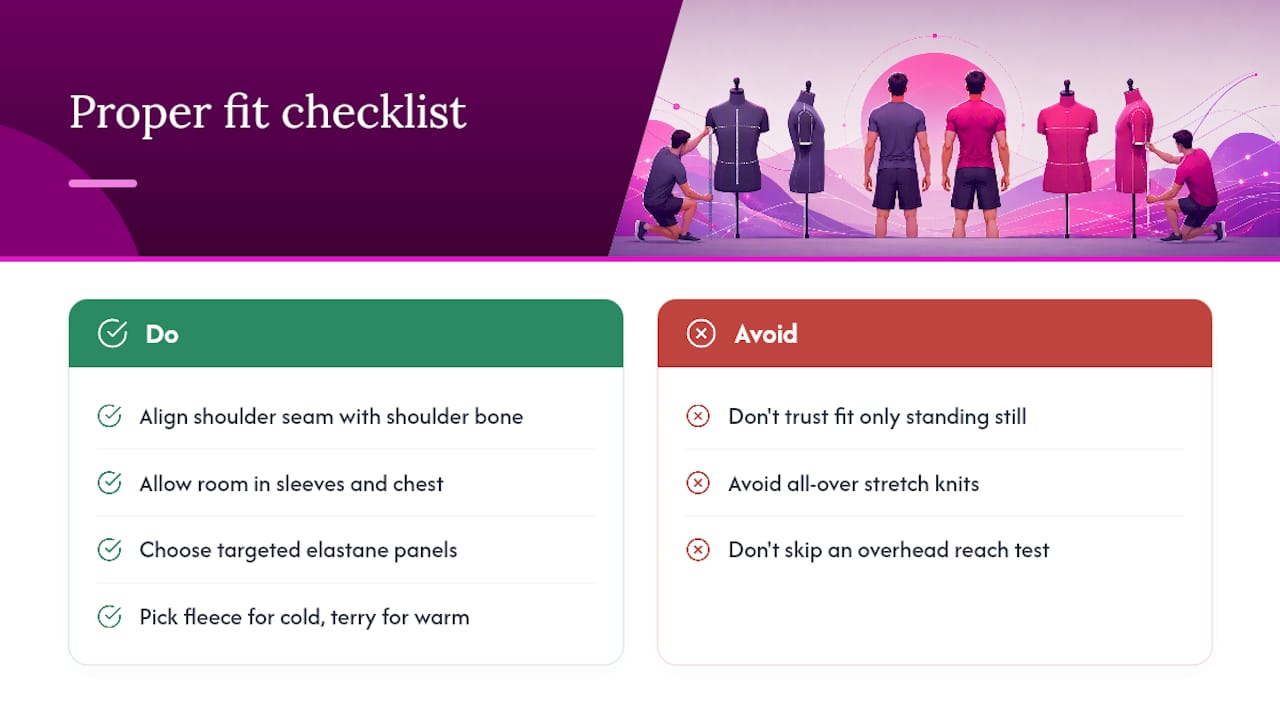
Shoulder seam alignment comes first. If the seam sits where your actual shoulder bone is, the rest of the shirt tends to fall into place. After that, we check for sleeve and chest room, since a build that trains regularly needs a shirt that survives a reach, not just a mirror check. We favor targeted elastane over all-over stretch fabric, because a small percentage placed strategically holds shape better over time than a fully stretchy knit that sags.
On fabric choice: fleece runs warmer and holds shape longer, which suits colder weather layering, while French terry breathes better and moves more freely, which suits training days or warmer climates.
A shirt that fits standing still and fails the moment you reach overhead was never actually your size. Shoulder seam and sleeve room decide that answer before waist taper ever does.
— Ian
Why Fit Labels Vary So Much Across Brands
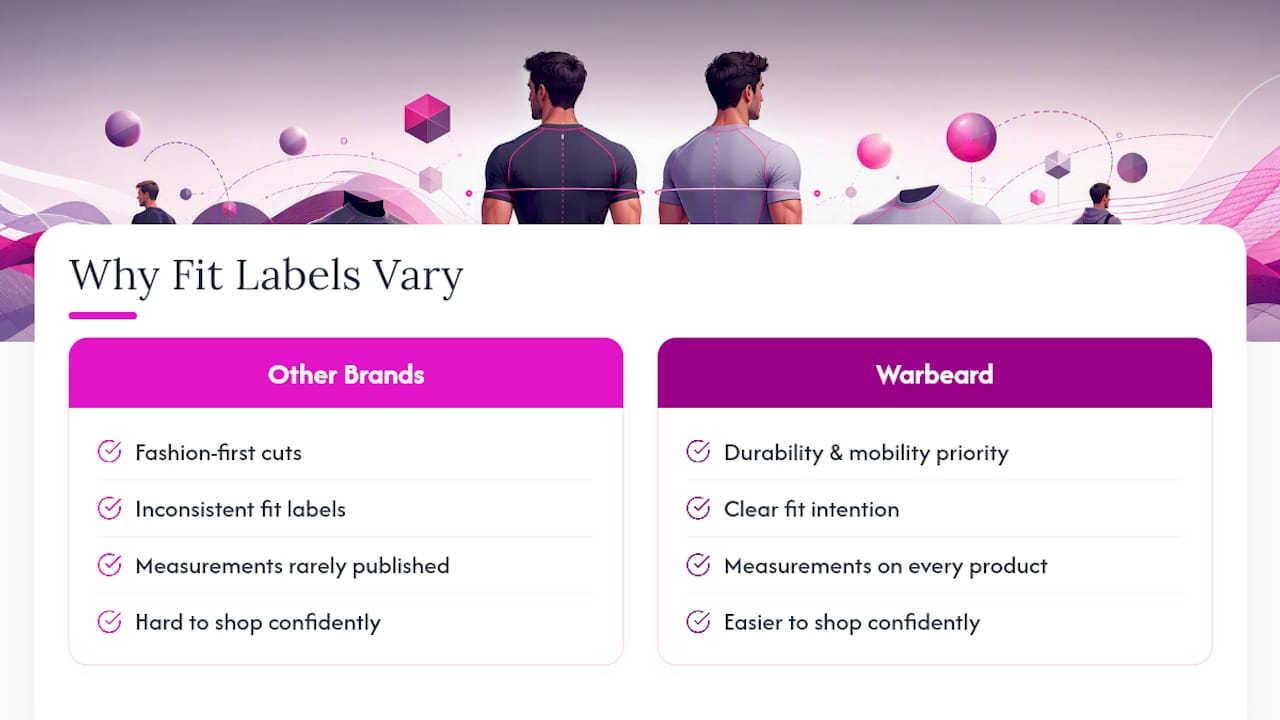
One brand’s athletic fit is another’s slim fit, and that inconsistency is the real problem, not the fit categories themselves. Warbeard Project prioritizes durability and mobility over narrow, fashion-first cuts, and we publish clear measurements on every product because labels alone don’t tell you enough to shop confidently.
Which Warbeard Tee Matches Your Fit
Once you know whether you’re an athletic-fit or regular-fit guy, matching that to an actual product gets simple. The Eat a D… Men’s classic tee runs relaxed and regular through the body, a solid pick if you want room to move without a tapered waist pulling at your midsection.

If you want something closer to an athletic silhouette, with a bit more shape through the torso, the FAFO Classic tee leans in that direction. For the women in your life shopping the same decision, the Women’s DELICATE Relaxed T-Shirt covers the relaxed side of that same fit spectrum. Before you check out, pull up the measurement chart on the product page and run it against the checklist above: shoulder seam, sleeve length, chest ease. Browse the full T-shirts and hoodies collection to compare fits side by side before you commit to a size.
Sources
- Complete Guide to Jeans Fits – Lee
- T-Shirt Fit Types Explained: Regular, Slim & Athletic Fit Guide for B2B Sellers on Alibaba.com - Alibaba.com Seller Blog
FAQ
Who Should Wear Athletic-Fit Jeans?
Men with larger thighs or a muscular seat who still want a tapered leg down to the ankle are the best fit for athletic-cut jeans. If your thighs are proportional to your waist, regular or straight fit usually works fine and is the safer default choice.
What’s Tighter, Slim or Athletic Fit?
Slim fit is tighter overall, cutting close to the body through the chest, waist, and legs with minimal room anywhere. Athletic fit is roomier in the chest, shoulders, and thighs, but tapers sharply at the waist, so it can feel just as fitted at the midsection while staying looser up top.
Is Athletic Fit Baggier Than Straight Fit?
No, athletic fit is not baggier overall. It adds room specifically at the shoulders, chest, or thighs, then tapers more aggressively than straight fit through the waist and legs, so the silhouette ends up more shaped, not looser.
What’s the Real Difference Between “Fit” and “Athletic Fit”?
“Fit” is the general term for how a garment is cut and sized, while “athletic fit” is one specific fit category built for broader shoulders or thighs with a tapered waist. Measuring the actual garment against your body tells you more than the fit name printed on the tag.