

Gold Star Family Meaning: Who Qualifies and Why It Matters
A Gold Star Family is the immediate next of kin, parent, spouse, child, or sibling, of a U.S. service member who died in a qualifying military circumstance, typically combat or line-of-duty service. Eligibility for official recognition is governed by federal statute and Department of Defense policy, not informal usage, and families verify their status through documentation like DD Form 1300, the report of casualty. That paperwork is what casualty assistance officers and survivor programs use to confirm who receives formal honors.
- Next of kin as defined by DOD regulation
- Death in a qualifying duty status
- Verification through DD Form 1300 and service branch records
Quick fact: The Gold Star Lapel Button is furnished directly to eligible family members by the service branch, usually around the time of the funeral or interment, so most families never have to apply for it, according to Military OneSource.
Key Takeaways
Gold Star Family status is a legally defined designation for the next of kin of service members who died in qualifying military circumstances, verified through documentation like DD Form 1300.
| Point | Details |
|---|---|
| Core definition | A Gold Star Family is the next of kin of a service member who died in a qualifying duty status. |
| Origin of the symbol | The gold star replaced a blue star on WWI-era service flags when a family member died in service. |
| Eligibility documentation | DD Form 1300 and casualty assistance officers confirm official status and connect families to benefits. |
| Symbol distinctions | The Gold Star Lapel Button and Next of Kin pin have different statutory eligibility standards despite looking similar. |
| Warbeard Project’s role | Warbeard Project offers commemorative apparel like the VietNam Classic tee, with proceeds supporting veteran outreach. |
Table of Contents
- What Is a Gold Star Family? The History Behind the Symbol
- Who Qualifies as a Gold Star Family Member?
- Understanding the Service Flag, Lapel Button, and Next of Kin Pin
- Gold Star Observances and How to Honor Families Respectfully
- Where Gold Star Families Can Find Official Support
- Warbeard Project’s Perspective on Symbols and Remembrance
- Counseling, Parks Access, and Ongoing Survivor Support
- Why Getting This Definition Right Actually Matters
- Wear It With Meaning: Commemorative Apparel Options
- Sources
What Is a Gold Star Family? The History Behind the Symbol
The gold star did not start as a government program. It started as a homefront tradition during World War I, when families hung a service flag in their window, a white banner with a red border, and stitched a blue star onto it for every family member in uniform. If that service member died, the family sewed a gold star over the blue one, turning a private window display into a public, silent announcement of loss, a practice traced by the Congressional Research Service.
That grassroots custom eventually became federal policy. Here is how it moved from cloth banners to statute:
- World War I (1917 to 1918): Families adopt the blue-star and gold-star service flag as an informal mourning custom.
- 1936: Gold Star Mother’s Day is formally recognized, an observance America’s Gold Star Families traces to organizing among mothers who lost sons in World War I.
- 1947: Congress authorizes the Gold Star Lapel Button, giving the symbol legal standing beyond social custom.
- 1973: The Next of Kin Lapel Button is approved for families whose loss falls outside strict Gold Star criteria.
- Ongoing NDAA and DODI updates: Statutes including 10 U.S.C. §1126 and DOD Instruction 1348.36 refine eligibility definitions and keep pace with how the military defines qualifying deaths.
Each of those legal steps narrowed a once-informal gesture into a defined status, which is exactly why eligibility questions today have precise, checkable answers instead of guesswork.
Who Qualifies as a Gold Star Family Member?
Eligibility hinges on two things: your relationship to the service member and the circumstances of their death. Under DOD Instruction 1348.36 and 10 U.S.C. §1126, “next of kin” generally includes parents, spouses, children, and siblings, with step and adoptive relationships recognized where the individual service branches specify. The death itself must meet a qualifying standard, generally combat, combat-related injury, or line-of-duty death, rather than any death that occurs during a service member’s career.
- Parents (including stepparents and adoptive parents in defined cases)
- Spouses and surviving spouses who have not remarried
- Children, including adopted children
- Siblings, when no closer next of kin survives
There is a technical wrinkle worth knowing before you assume anyone qualifies automatically. The Gold Star Lapel Button and the Next of Kin Lapel Button are not the same award. The Gold Star button is reserved for families of those who died in specific combat or hostile-action circumstances, while the Next of Kin button, approved in 1973, covers families of service members who died on active duty under circumstances that fall outside the stricter Gold Star definition, per the Gold Star Lapel Button reference history. Many families use “Gold Star” colloquially either way, but the distinction matters for anyone applying for benefits tied to the formal designation.
Pro Tip: If you’re unsure which category applies, contact a casualty assistance officer or your service branch’s Survivor Outreach Services office directly. They can confirm status and walk you through DD Form 1300 without you having to decode statute language yourself.
Understanding the Service Flag, Lapel Button, and Next of Kin Pin
Three symbols carry distinct meanings, and mixing them up is one of the most common mistakes civilians make when trying to honor a family correctly.
- The service flag is a white banner with a red border, displaying a blue star for each family member in service. A gold star replaces the blue one when that member dies, a custom dating to World War I.
- The Gold Star Lapel Button is a small gold star on a purple background, authorized under 10 U.S.C. §1126, and issued to next of kin whose loss meets the statutory combat or hostile-action standard.
- The Next of Kin pin, approved in 1973, recognizes families of those who died on active duty in circumstances the stricter Gold Star statute does not cover.
Worth knowing: Because both pins look similar and both groups are often called “Gold Star families” in everyday conversation, confusion between the two is common even among well-meaning supporters, a point the Congressional Research Service flags directly. When in doubt, ask which pin a family was issued rather than assuming.
Gold Star Observances and How to Honor Families Respectfully
Two dates anchor the calendar for this community. Gold Star Mother’s and Family’s Day falls on the last Sunday in September, an observance rooted in organizing among Gold Star mothers during the 1930s, according to America’s Gold Star Families. Gold Star Spouses Day falls on April 5, recognizing surviving husbands and wives specifically.
Respectful support usually comes down to specificity, not sentiment. Consider these approaches:
- Learn the term’s actual meaning before offering condolences, rather than defaulting to generic phrases.
- Say “thank you for their service” in a way that names the fallen service member when appropriate, not a blanket platitude.
- Support vetted nonprofits or attend a local memorial quietly, without turning the moment into a spectacle.
Survivors consistently say informed, specific acknowledgment matters more than volume of sympathy, a finding Military OneSource emphasizes directly.
Where Gold Star Families Can Find Official Support
Survivor Outreach Services, run through the Army and mirrored across other branches, connects families with counseling, casualty assistance officers, and long-term outreach well after the funeral, a resource the U.S. Army’s Gold Star Survivors program details directly. That contact point matters because grief support needs rarely end when the paperwork does.
One tangible benefit worth knowing: the Gold Star Families Parks Pass, established under the FY2021 National Defense Authorization Act, grants free access to national parks and federal recreational lands for eligible family members, with documentation like DD Form 1300 typically required to confirm eligibility.
- Survivor Outreach Services (counseling, casualty assistance, long-term contact)
- Gold Star Families Parks Pass (free national park and federal land access)
- Nonprofit peer-support organizations, including grief-specific resources like Memory Keep’s grief guidance
If you know a Gold Star family personally, one of the most useful things you can do is simply point them toward these programs. Many families never learn a benefit exists until someone mentions it.
Warbeard Project’s Perspective on Symbols and Remembrance
Understanding a symbol correctly is the first step toward using it respectfully, whether that symbol is a service flag in a window or a piece of commemorative apparel. Warbeard Project has written about how symbolic clothing and colors carry meaning for military families, including pieces on red, white, and blue apparel that supports veterans and on wearing deployment support apparel for your family.
- Symbols carry legal and emotional weight, not just aesthetic value.
- Commemorative apparel works best when it reflects genuine understanding, not decoration for its own sake.
- Community-facing brands have a responsibility to get the history right before selling anything tied to it.
Getting the history and eligibility rules correct isn’t a formality. It’s the baseline respect a term this significant deserves.
Counseling, Parks Access, and Ongoing Survivor Support
Benefits for Gold Star Families extend well beyond a single lapel button or a one-time acknowledgment. Survivor Outreach Services offers ongoing counseling and case management, staying in contact with families for years rather than closing a file after initial casualty notification. That continuity matters because grief and financial adjustment often surface in waves, not all at once.
The Gold Star Families Parks Pass remains one of the more practical, everyday benefits available. It costs families nothing and applies across national parks and federal recreational lands, with eligibility tied to the same next-of-kin and documentation standards used elsewhere in the system. Families typically present DD Form 1300 or equivalent verification when applying.
Beyond federal programs, nonprofit counseling networks and peer-support groups fill gaps that government offices cannot always reach quickly. Organizations built specifically around bereavement, including grief-focused resources like Memory Keep, offer practical guidance for supporters trying to help without overstepping. Civilians who want to help can start by simply making sure a grieving family knows these programs exist. That single act, connecting someone to a resource they didn’t know about, often does more than any gift or gesture.
Why Getting This Definition Right Actually Matters
Most explanations of “Gold Star Family” stop at the dictionary-style definition and move on. That undersells the point. The real value in understanding this term correctly is that it changes how you behave around families who carry it, whether that means using the right language, avoiding the common mix-up between Gold Star and Next of Kin pins, or knowing that a benefit like the Parks Pass exists so you can mention it to someone who might not.
Conventional advice tends to treat this as a vocabulary lesson. It is not. The statutes and DOD instructions exist because informal usage caused real confusion about who receives which honors and benefits, and that confusion falls on grieving families to untangle if civilians don’t do their homework first. The most useful thing a reader can do is prioritize accuracy over sentiment: learn the actual eligibility rules before offering sympathy or assistance, because specific, informed acknowledgment is what survivors consistently say they value most. Generic condolences are easy. Getting the details right takes a little more effort, and that effort is the point.
— Ian
Wear It With Meaning: Commemorative Apparel Options
Part of honoring the history behind the gold star is choosing how you show support publicly, and Warbeard Project builds its catalog around that idea, with a portion of proceeds from sales going toward veteran outreach programs.
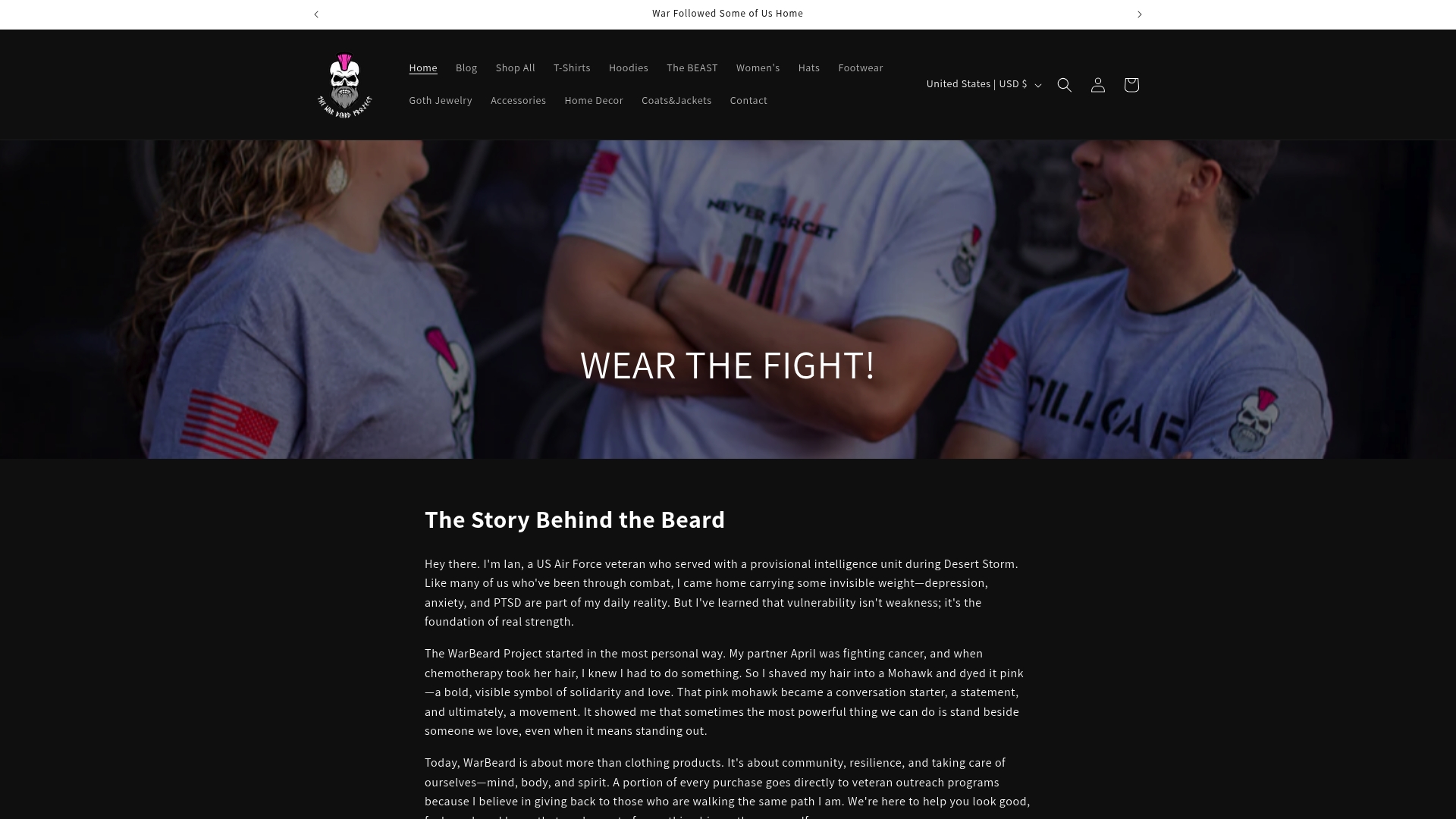
If you’re looking for a tasteful way to acknowledge military sacrifice without overstepping, a few pieces stand out. The VietNam Classic tee honors a specific era of service with understated design. The Stars and Stripes Unisex Hoodie works well for memorial events or quiet community gatherings where flag imagery feels appropriate rather than performative. For everyday wear that still signals solidarity, the Fortune Favors Unisex classic tee offers a low-key option that doesn’t demand explanation.
Browse the full Warbeard Project catalog to find a piece that fits how you want to show up for the veteran and Gold Star community in your life.
Sources
- King/Golden proposal: providing free national park access to Gold Star families now law
- Defense Primer: Gold Star Designation (CRS)
- Gold Star Survivors | The United States Army
- Honoring Gold Star Families | Military OneSource
- Gold Star History | America’s Gold Star Families