Why Veterans Display Unit Insignia: Meaning and Pride
Why veterans display unit insignia: the core answer
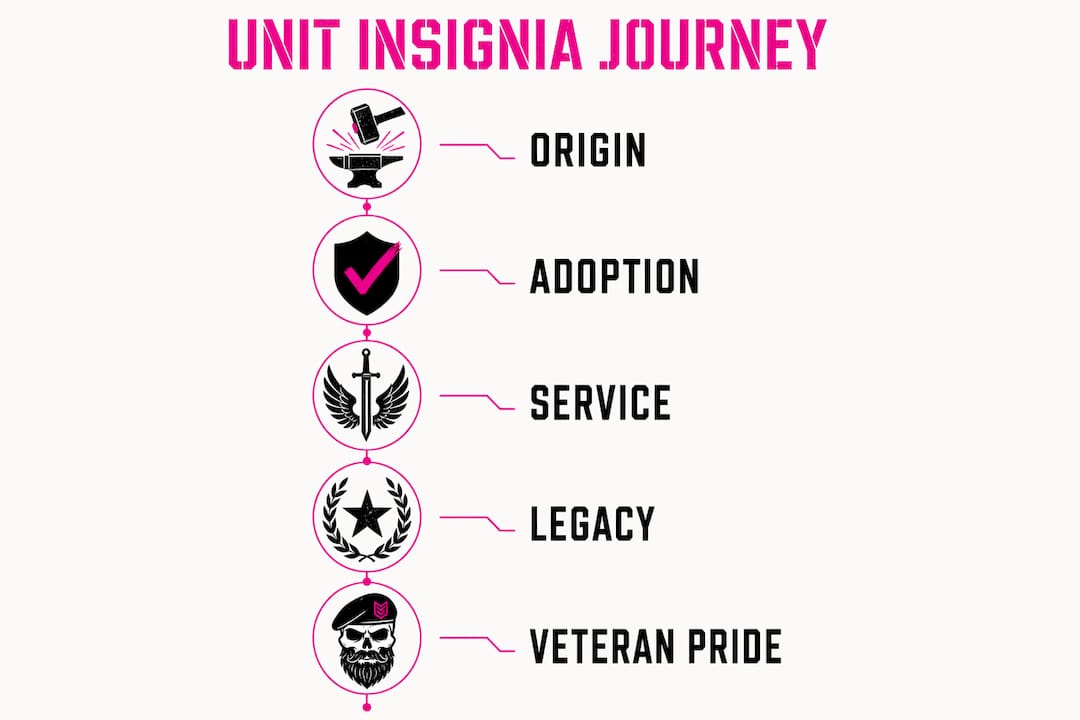
Unit insignia answer one question above all others: “Who do you serve with?” Veterans wear them to express collective unit identity, not personal rank or individual achievement. The patch on a veteran’s shoulder represents shared missions, unit lineage, and the bonds formed under pressure.
Key reasons veterans display unit insignia:
- Collective identity over individual status. Unit insignia signal group affiliation. Every member of a battalion or brigade wears the same patch, regardless of rank.
- Visual record of service. Combat patches indicate authorized wartime service and communicate a veteran’s specific service era to civilians and fellow veterans alike.
- Esprit de corps. Seeing the same patch on another veteran’s sleeve creates instant recognition of shared experience and purpose.
- Connection to unit heritage. Insignia carry the history of campaigns, honors, and unit lineage forward beyond active duty.
- Contrast with rank insignia. Rank badges answer “What are you?” Unit insignia answer “Where do you belong?”
Table of Contents
- How unit insignia differ from rank insignia
- Historical and heraldic origins of unit insignia
- How unit insignia shape veteran identity and apparel culture
- Notable unit insignia and the stories behind them
- Key Takeaways
How unit insignia differ from rank insignia
Civilians frequently confuse unit patches with rank insignia. The distinction is fundamental. Rank insignia signal authority and pay grade. Unit insignia signal origin and belonging. They serve entirely different functions on the uniform.
- Rank insignia include chevrons, bars, oak leaves, eagles, and stars. They indicate a service member’s position in the hierarchy and are replaced, not stacked, upon promotion.
- Unit patches (shoulder sleeve insignia) identify the formation a soldier belongs to, worn on the upper sleeve.
- Skill and qualification badges such as parachutist wings or the Combat Infantryman Badge mark personal training and combat designators. They are neither rank nor unit markers.
- Combat patches on the right sleeve indicate a unit served with during qualifying hostile operations, a distinction separate from current assignment.
Confusing a chest full of ribbons with rank, or a division patch with authority, is one of the most common civilian misreadings of a military uniform.
Historical and heraldic origins of unit insignia
Military patches originated during the Civil War as practical tools for unit identification and morale under chaotic combat conditions. Their use was not officially standardized until World War I, and by World War II they had become symbols of pride, brotherhood, and sacrifice.
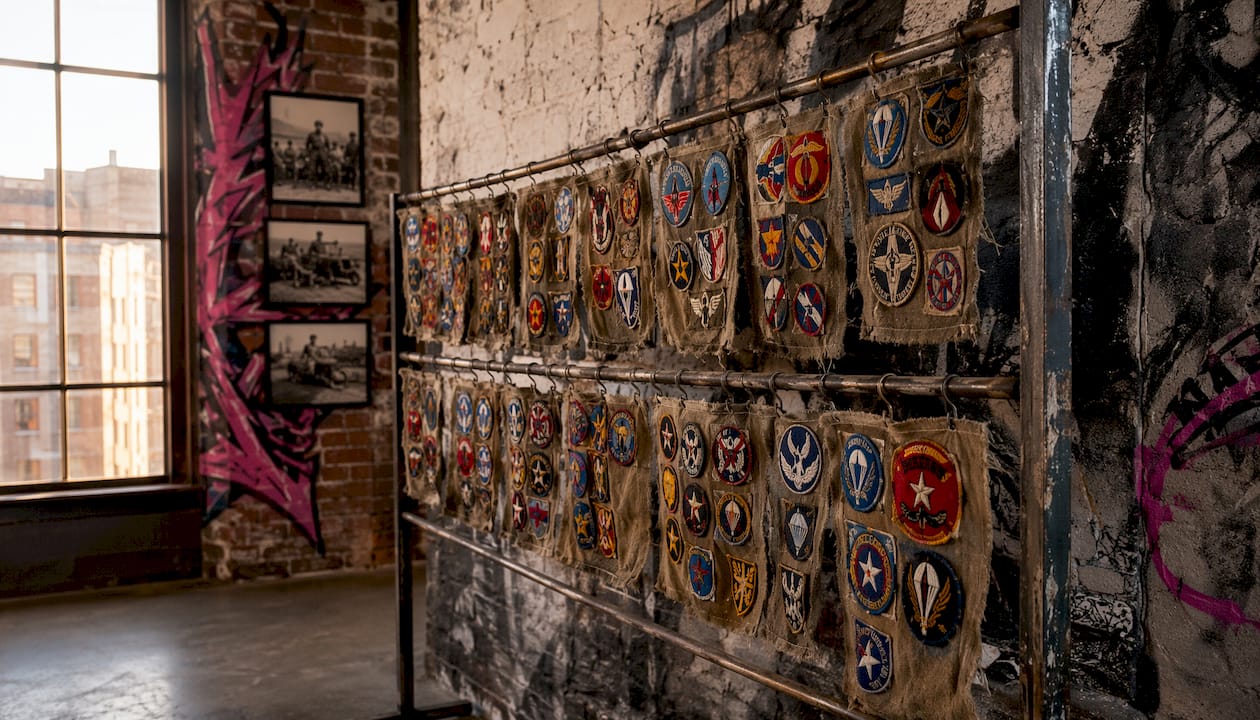
The U.S. Army Institute of Heraldry has governed distinctive unit insignia design since 1960. Every approved design draws from the unit’s lineage and battle honors. Cartoon characters and equipment depictions are prohibited. Symbols must represent mission and values, not transient references.
Heraldic elements carry specific meanings:
- Eagles represent vigilance and authority.
- Swords and shields convey protection and courage.
- Stars denote excellence and achievement.
- Colors carry weight too: red for valor, blue for loyalty, gold for high standards.
During the Vietnam War, unofficial “in-country” patches produced by local tailors became cultural icons. Made in limited numbers, they are now highly collectible, reflecting the adaptability and personal identity of soldiers in combat zones.
How unit insignia shape veteran identity and apparel culture
Unit insignia do not retire when a service member does. Veterans carry that sense of esprit de corps into civilian life, and apparel becomes the primary canvas. A patch on a jacket or cap at a veterans’ reunion signals shared service as clearly as it did on a uniform.
Veteran apparel culture incorporates unit insignia to affirm identity and maintain ties with shared military heritage. Warbeardproject channels this directly, building designs around the symbolism veterans already carry, blending the weight of unit history with a bold, contemporary aesthetic. Wearing service branch pride gear is not nostalgia. It is an active declaration of where you stood and who you stood with.
Common occasions and contexts for displaying unit insignia post-service:
- Veterans’ reunions and unit association events
- Memorial Day, Veterans Day, and military parades
- Motorcycle club rides and informal veteran gatherings
- Everyday apparel as a personal identity marker
- Commemorative displays alongside medals and photographs
Etiquette matters. Displaying insignia from units you did not serve with is widely considered disrespectful within the veteran community. Accuracy carries the same weight off the uniform as it did on it.
Pro Tip: When choosing veteran lifestyle apparel that incorporates unit insignia, prioritize designs that reflect your actual service history. Authenticity is what separates meaningful gear from decoration.
Notable unit insignia and the stories behind them
Some unit insignia have become widely recognized far beyond military circles.
101st Airborne Division (“Screaming Eagles”). The eagle on this shoulder sleeve insignia traces directly to Old Abe, a live bald eagle carried into battle by the 8th Wisconsin Volunteer Infantry during the Civil War. That lineage is still worn on the left shoulder of every soldier assigned to the division today.
82nd Airborne Division (“All Americans”). The “AA” monogram reflects the division’s historic reputation for diversity and national composition. Its special designation, “All Americans,” functions as a rally, a greeting, and an acknowledgment of broad national representation.
1st Infantry Division (“Big Red One”). The bold red numeral on an olive field is one of the most recognized division patches in U.S. Army history. The nickname comes directly from the patch’s distinctive feature, a design that has remained essentially unchanged since World War I.
3rd Infantry Division (“Marne Division”). Three white diagonal stripes on a blue field commemorate the division’s stand at the Second Battle of the Marne in 1918, where it held against a German offensive while outnumbered.
1st Armored Division (“Old Ironsides”). The patch features a tank, a triangle, and a lightning bolt, representing armor, mobility, and speed. The nickname honors the USS Constitution, a symbol of American resilience.
Key Takeaways
Veterans display unit insignia to express collective identity, preserve unit heritage, and maintain esprit de corps long after active service ends.
| Point | Details |
|---|---|
| Collective identity over rank | Unit insignia answer “who you serve with,” not what rank you hold or what skills you earned. |
| Historical roots in heraldry | Patches trace to Civil War identification practices and are now governed by the U.S. Army Institute of Heraldry. |
| Unit vs. rank insignia | Rank insignia signal authority and pay grade; unit patches signal unit origin, lineage, and belonging. |
| Post-service cultural role | Veterans wear insignia on civilian apparel at reunions, parades, and everyday settings as active identity markers. |
| Apparel as living tradition | Brands like Warbeardproject translate unit insignia symbolism into contemporary designs that carry real service meaning. |
Warbeardproject designs gear for veterans who know exactly what their patch means. Explore the new logo collection and wear it with the same intent you wore the uniform.