

140–180 GSM: Which Tee Veterans Should Buy, Heather or Solid
Heather tees have blended yarns that create a mottled, textured look, while solid tees are piece-dyed for one uniform color. Pick the visual finish first: heather for texture and a softer, muted tone, solid for a flat, bold color that makes graphics pop. Once you’ve picked the look, check fiber content and construction before you buy.
TL;DR:
- Heather fabric results from blending differently colored fibers or yarns, producing a mottled appearance that varies based on fiber content and GSM.
- Polyester blends resist wrinkling and dry faster, but shrink less and are less breathable, with fiber ratios directly affecting performance.
- Durability and shrinkage depend on fiber content and construction, not color effects, so washing instructions should follow the fiber composition.
- Printed graphics on heather fabrics can appear muted or grainy, especially on dark or polyester-heavy blends, requiring specific printing preparations.
- Solid tees are better for sharp, visible logos, while heather shirts suit casual, everyday wear with a softer, vintage look.
Table of Contents
- Heather vs Solid Tees: What Makes Them Look Different
- Does Heather Mean a Different Fabric Than Solid?
- Which One Holds Up Better in the Wash?
- How Does Fabric Color Affect Printed Graphics?
- When Should You Choose Heather Over Solid?
- What Should You Check Before Buying a Tee?
- Warbeard Project’s Take on Choosing the Right Fit
- A Short Note From Ian
- Which Warbeard Project Tee Fits Your Look?
- Sources
- FAQ
Heather vs Solid Tees: What Makes Them Look Different
The word “heather” describes an appearance effect, not a fabric type. Manufacturers blend two or more differently colored fibers or yarns together before knitting, producing what textile people call a melange effect — the technical definition of heather fabric confirms it’s a mixing process, not a single dye batch. A solid tee, by contrast, uses piece-dyed yarn or fabric, so the whole garment absorbs one dye lot and reads as flat, even color.
That difference shows up the moment you look closely at a shirt:
- Heather: mottled, tonal depth with tiny flecks of contrasting fiber color visible up close, most familiar as grey heather.
- Solid: one continuous color with no visible texture variation, even under bright light.
- In photos: heather often looks slightly grainy or shadowed; solid looks crisp and flat.
- On the rack: heather tees usually feel a touch softer to the eye because the color has no hard edges.
A dictionary definition puts it simply: heathered fabric is interwoven yarn of mixed colors that produces that speckled effect. Neither term tells you anything about the actual fiber, though, and that’s where most shoppers get tripped up.
Does Heather Mean a Different Fabric Than Solid?
No. Heather is a color effect, not a fiber label, and two heather tees can be built from completely different materials. One might be 100% cotton with white and gray fibers blended together. Another might be a cotton-polyester blend dyed to mimic the same look.
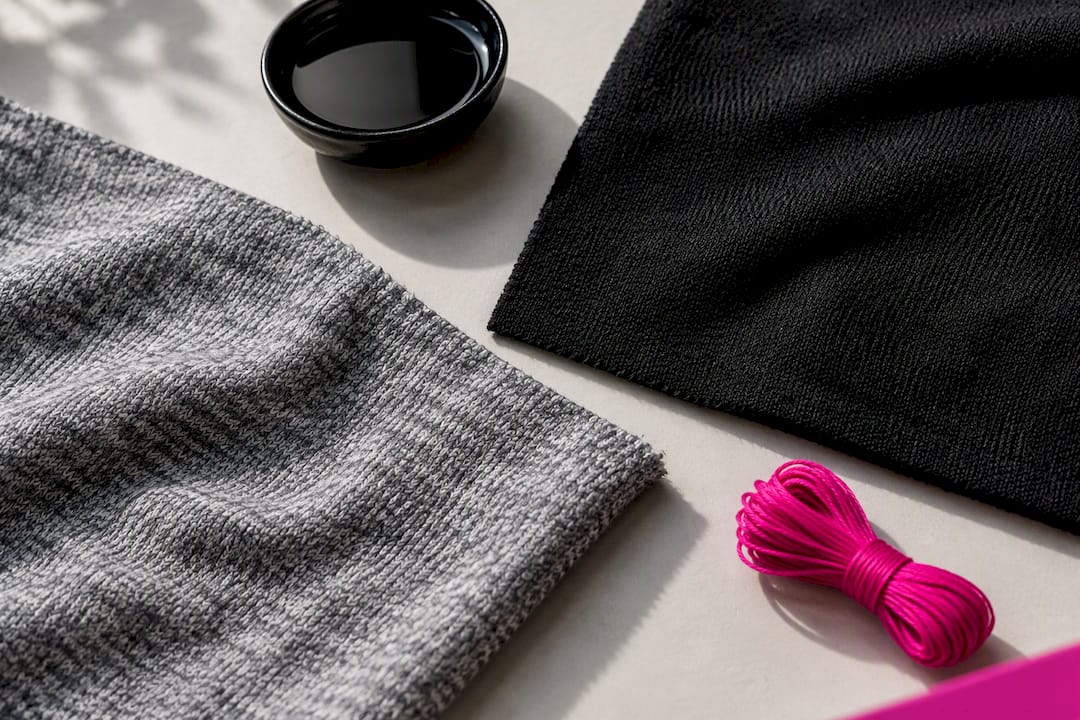
Blend ratios change how a shirt performs regardless of whether it’s heather or solid. A common ratio like 65% polyester and 35% cotton behaves differently than 100% cotton: it resists wrinkling better, dries faster, but breathes less. Yarn blending combines fibers specifically to hit performance targets, and blend ratios directly affect strength, softness, and cost in ways that have nothing to do with the color category on the tag.
Fabric weight matters just as much as blend. Grams per square meter, or GSM, tells you how thick and substantial a shirt feels:
- Light tees generally have lower GSM, making them breathable but less durable.
- Standard tees typically fall into a mid-range GSM suitable for everyday cotton and blended shirts.
- Heavyweight tees tend to have higher GSM, approaching knitwear weight and thickness.
Quick reference: Knitted GSM bands show that most everyday tees fall in that 140 to 180 GSM commodity range, whether they’re heather or solid. If you want a deeper look at how weight categories affect feel in hoodies and heavier apparel, this breakdown of fleece versus French terry weights walks through the same GSM logic.
Which One Holds Up Better in the Wash?
Durability, shrinkage, and breathability come down to GSM, knit structure, and seam quality, not whether the shirt is heather or solid. The color effect tells you nothing about strength.
Fiber content is what actually predicts laundering behavior. Cotton-heavy fabrics shrink more in the first few washes and take longer to dry. Polyester-rich blends shrink less, dry fast, but can trap heat and feel less breathable in summer. Follow these steps regardless of color category:
- Wash in cold water to slow shrinkage and fading.
- Turn the shirt inside out before washing to protect any printed graphic.
- Skip high heat in the dryer, or air dry when the label allows it.
- Follow the exact care symbols on the tag, since fiber blends dictate the safe settings, not the color name.
Pro Tip: Wash a new heather tee separately the first time. Some blended fibers release loose dye or lint that can dull a solid-colored shirt sitting next to it in the machine.
How Does Fabric Color Affect Printed Graphics?
Solid backgrounds usually give the cleanest print contrast, since there’s no texture competing with the ink. Heather fabric adds a subtle graininess that can mute pale or light-colored inks, especially on darker or polyester-heavy heather blends where the fiber mix fights against the print instead of sitting quietly behind it.
Before ordering printed shirts in bulk, especially for a fundraiser, event, or veteran-support run, run through this checklist:
- Ask the printer for a physical sample or wash-tested swatch, not just a digital mockup.
- Request a white underbase for pale ink on dark or heavily heathered fabric.
- Confirm fiber percentage before ordering, since poly-rich heathers print differently than cotton-rich ones.
- View any sample under natural daylight, not just under shop lighting.
A logo tee example from Wattz Good shows how background texture changes perceived logo sharpness even when the artwork file is identical. That’s the printing variable most buyers never think to test until the order already shipped.
When Should You Choose Heather Over Solid?
Heather works best for casual, everyday wear where a slightly worn-in, vintage texture is the point. It layers well under jackets, softens a graphic instead of shouting it, and forgives the small inconsistencies that come with daily wear.
Solid tees earn their place when you need a sharp, uniform block of color, particularly for logos, emblems, or event branding that has to read clearly from a distance:
- Choose heather for: relaxed everyday shirts, casual layering, low-key support wear.
- Choose solid for: crisp emblem tees, fundraiser or volunteer shirts, anything where the graphic needs to be the focal point.
- For veteran-themed apparel specifically: solids preserve the sharpness of insignia and unit graphics, while heathers suit understated, everyday support shirts worn without a big printed statement.
Outfit-building around either finish gets easier once you’ve seen it done. This guide on graphic tee outfit formulas walks through real combinations using both heather and solid tees.
What Should You Check Before Buying a Tee?
Most buying mistakes happen because shoppers compare color names instead of comparing specs. Work through it in order:
- Decide the visual finish you want first: mottled heather or flat solid color.
- Compare only similar categories against each other: cotton to cotton, blend to blend, not heather cotton against solid poly.
- Read the fiber-content statement on the tag before checking price or fit.
- Ask for a swatch or printed sample when ordering dark or polyester-rich heathers in bulk.
Statistic callout: FTC rules require every covered textile product sold in the United States to disclose generic fiber names and percentages by weight, along with the manufacturer and country of origin. That label is the one piece of information marketing terms like “heather” or “premium” never give you.
The Textile Fiber Rule backs this up specifically: the required disclosure covers fiber percentages, manufacturer identity, and where the garment was processed. That’s the actual data point, not the color category on the product photo.
Warbeard Project’s Take on Choosing the Right Fit
Warbeard Project builds veteran-themed graphic tees, hoodies, and accessories with fit and fabric chosen for how the shirt will actually get worn, not just how it photographs.
Pick a solid when the priority is graphic clarity. The Campfire Unisex classic tee uses a classic fit built to keep printed emblems and text sharp edge to edge. Pick a relaxed heather or softened finish when comfort and everyday wear matter more than a crisp print. The Women’s DELICATE Relaxed T-Shirt and the Mama Moose Women’s Relaxed T-Shirt both prioritize a looser, all-day fit over sharp graphic contrast.
For more on fit and fabric weight before you order, the fleece and French terry breakdown and outfit formula guide both go deeper into the specs that matter.
A Short Note From Ian
Veteran graphics almost always read better on a solid background. Heather is the better call for a relaxed, everyday shirt that isn’t trying to make a loud statement. Either way, check the garment specs before you check out.
— Ian
Which Warbeard Project Tee Fits Your Look?
That’s the real difference from a generic apparel rack: your fit choice also funds something concrete.
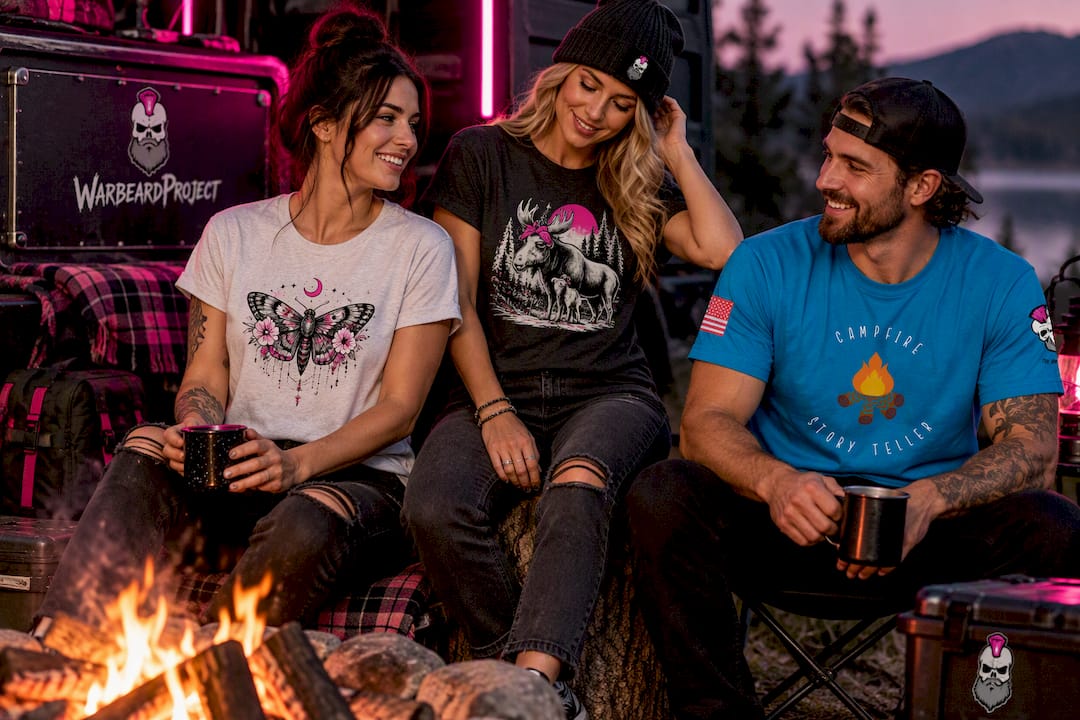
If you want a clean, logo-forward look, the Campfire Unisex classic tee keeps emblem graphics sharp with its classic cut. For a relaxed everyday feel with a bit more give, the Women’s DELICATE Relaxed T-Shirt is built for comfort over structure. If you want a themed, women’s-specific fit with the same relaxed intent, the Mama Moose Women’s Relaxed T-Shirt covers that ground. Browse the full T-Shirts, Hoodies, Women’s Wear collection to compare fits side by side and find the one that matches both your style and your reason for wearing it.
Sources
- Apparel labeling guidance | Federal Trade Commission
- Heather (fabric) — Wikipedia
- Yarn blending calculations for textile manufacturing — TextilesSchool
FAQ
What Does Heather Mean on a T-Shirt?
Heather means the fabric is knit from yarns blended with two or more fiber colors, producing a mottled, muted appearance rather than one flat color. It’s a color effect, not a fiber type, and it can appear on cotton, polyester, or blended shirts alike.
What Is the Highest Quality T-Shirt?
There’s no single fiber or color category that guarantees quality. The strongest signal is GSM combined with fiber content and construction, since a well-built solid and a well-built heather in the same weight range perform almost identically for durability and feel.
Can Heather Be 100% Cotton?
Polyester and cotton-polyester blends also produce heather effects, so the fiber content still needs checking on the label rather than assumed from the name.
What Are the Differences Between Heather Fabric and Cotton?
Heather isn’t a competing category to cotton. Cotton is a fiber, and heather is a color-blending technique that can be applied to cotton, polyester, or blended fabrics. The real comparison to make is fiber content and GSM, which the FTC-required label discloses on every covered garment.