

4 Tactical Hoodie Features That Prove Genuine Veteran Design
The tactical hoodie features that matter most fall into four groups: authentic design signals like accurate insignia and provenance, heavyweight construction that outlasts fast fashion, a fit that works from the trailhead to the truck, and a real mission connection through donations or veteran partnerships. Together they separate a garment that speaks for your service from one that just borrows its look. Warbeard Project builds around exactly this combination.
TL;DR:
- Look for authentic insignia, correct symbolism, and veteran-designed graphics to ensure the hoodie truly reflects service experience.
- Prioritize heavyweight fabrics over lightweight blends for durability, with at least 7.5 ounces being ideal for long-lasting wear.
- Verify construction features like reinforced seams, thick cuffs, and dense fabric to distinguish quality veteran apparel from fast fashion.
- Confirm mission linkage through specific donation percentages or named veteran organizations instead of vague “giving back” language.
- Check that the hood design includes adjustable drawstrings, ample coverage, and durable edges to ensure functionality and daily comfort.
Table of Contents
- Tactical Hoodie Features: What to Look For on Product Pages
- Fabric Weight and Build: What Separates Real Longevity From Fast Fashion
- What Makes Veteran Design Authentic Instead of Costume
- Choosing Fit and Color for How You Actually Wear It
- Buying Checklist and Questions to Ask Before Checkout
- Warbeard Project’s Proof Points on Design and Mission
- Reinforced Elbows and Shoulders: Where Construction Quality Shows First
- Weather Resistance: What “Water-Repellent” Actually Means on a Hoodie
- Storage and Pockets: Function Beyond the Front Pouch
- Hood Design: Coverage, Adjustability, and Fit With Headgear
- Breathability and Moisture Control for Active Days
- Why These Features Matter Beyond the Fabric
- Warbeard Project Hoodies and Apparel Built Around These Standards
- Sources
Tactical Hoodie Features: What to Look For on Product Pages
Reading a hoodie’s product page is a skill. Most listings bury the details that actually matter under generic marketing copy, so you have to know what to hunt for.
Authentic design signals are the first tell. A hoodie built with real service in mind uses insignia, branch symbols, or unit references correctly, not as decoration pulled from a stock graphics library. Custom military clothing commonly draws on branch, unit, rank, and deployment history, and that same logic applies to graphic hoodies. If a brand gets the details right, it usually means someone with actual knowledge of service life had a hand in the design.
Mission-driven features come next. Look for explicit donation callouts, named veteran-support partnerships, or a stated percentage of proceeds going somewhere specific. Vague language like “giving back” without a number or a named organization is a soft signal, not a real one. A growing category of veteran brands now pairs storytelling and provenance with better materials specifically to earn this kind of trust, so expect more listings to compete on transparency.
Finally, notice how a design scales for the occasion:
- Subtle use-case: muted colorway, small chest logo, minimal text, meant for daily wear
- Bold use-case: front-and-back graphics, unit mottos, memorial dates, meant for reunions, ruck events, or remembrance days
- Hybrid use-case: one dominant graphic with restrained color, works in both settings
Knowing which category you’re shopping for keeps you from either underselling the moment or overdoing the everyday.
Fabric Weight and Build: What Separates Real Longevity From Fast Fashion
Weight tells you almost everything about how long a hoodie survives. Lightweight cotton blends move air and feel soft off the rack, but they pill fast and lose shape within a season. Heavier fabric holds its structure through hundreds of washes, which is why durable veteran apparel tends to lean on stock in the 7.5 oz range or heavier rather than the thin material typical of fast-fashion basics.
Pro Tip: Check the product description for fabric weight in ounces. If a listing skips that number entirely, assume it’s on the lighter, less durable end.
Construction cues to check before buying:
- Double-stitched or reinforced seams at the shoulders and side panels
- Thick ribbed cuffs and waistband that hold elastic recovery over time
- A dense, structured collar that resists stretching out after repeated wear
- Bar-tacked stress points at the pocket and drawstring openings
Care matters just as much as the initial build. Wash inside-out in cold water, skip the dryer’s high-heat cycle, and avoid fabric softener, which breaks down printed graphics faster than anything else. Veteran apparel is built around the balance of durability and comfort, and that balance only holds if you treat it right after purchase.
What Makes Veteran Design Authentic Instead of Costume
Authentic imagery reads as lived experience, not theme-party gear. Accurate insignia proportions, correctly rendered branch symbols, and design credits that name a veteran artist or veteran-owned studio all signal the real thing. Symbol choice, typography, and composition determine whether a piece lands as identity, remembrance, or an unintended political statement, so brands that get this right are usually deliberate about every element on the shirt.
Watch for these red flags before you add a hoodie to your cart:
- Misused or distorted insignia that doesn’t match the actual branch or unit patch
- Overloaded graphics stacking mottos, flags, dates, and slogans until nothing reads clearly
- Politicized language slapped onto a design with no connection to service or mission, purely for shock value
- No artist or brand story anywhere on the page, which usually means the design was licensed generically rather than created with intent
Verification is simple once you know where to look. Scroll to the bottom of the product page for an “about this design” note, check whether the brand links to a nonprofit partnership page, and search the brand name plus “veteran owned” to confirm the story holds up outside the storefront.
Pro Tip: A brand willing to name its design source or veteran collaborator on the product page is almost always more trustworthy than one that just says “military inspired.”
Choosing Fit and Color for How You Actually Wear It
Fit decisions come down to how you plan to layer. If you’re pulling the hoodie over a base layer for cold mornings, size up slightly for range of motion. If it’s a standalone daily piece, true-to-size keeps the silhouette clean and avoids excess fabric that pills faster at friction points.
Color carries its own message. Muted palettes (charcoal, olive, black) read as everyday and versatile; high-contrast prints with bold typography read as statement pieces meant to be noticed. Neither is wrong, but they send different signals in a room. Event and memorial pieces tend to favor bold, readable hero graphics, while daily wear leans toward subtler motifs.
- Buy one size up if you plan to layer over base layers or armor carriers
- Wash cold, hang dry when possible to prevent shrinkage
- Store folded rather than hung to protect neckline shape
- Rotate between two hoodies to slow fading from repeated wear
Buying Checklist and Questions to Ask Before Checkout
Run through this order before you commit to a purchase:
- Check fabric weight. Confirm it’s listed in ounces and lands on the heavier side if longevity matters to you.
- Inspect construction photos. Zoom on seams, cuffs, and collar in product images, not just the front graphic shot.
- Verify authenticity. Look for correct insignia, named design credit, or a stated veteran-owned status.
- Confirm mission linkage. Find a specific donation percentage or named partner organization, not vague “giving back” language.
- Read the returns policy. A brand confident in its product usually offers a straightforward, no-hassle return window.
Three questions worth asking a seller directly, by message or in the FAQ section of the site:
- What percentage of this sale goes to veteran support, and which organization receives it?
- Is the fabric weight listed, and what’s the shrinkage rate after washing?
- Who designed this graphic, and is there a story behind it?
Pro Tip: If a seller can’t answer where the donation actually goes, treat that as a bigger red flag than a slightly higher price tag elsewhere.
Vague answers to any of these are the clearest signal to keep shopping.
Warbeard Project’s Proof Points on Design and Mission
Warbeard Project builds its catalog around the same criteria this guide lays out. Its breakdown of why veterans choose tactical clothing explains the reasoning behind heavier fabrics and provenance-first design, and its guide to building a lasting brotherhood apparel collection shows how longevity and mission linkage work together in practice. Clear provenance and transparent mission statements are what build buyer trust in this category, and every product decision Warbeard Project makes traces back to that standard.
Reinforced Elbows and Shoulders: Where Construction Quality Shows First
Elbows and shoulders take the most abuse of any point on a hoodie, whether from a rucksack strap, a truck door, or just years of folded arms leaning on a counter. Reinforced stitching in these zones is one of the fastest ways to spot a hoodie built for real wear versus one built for a single season of Instagram photos.
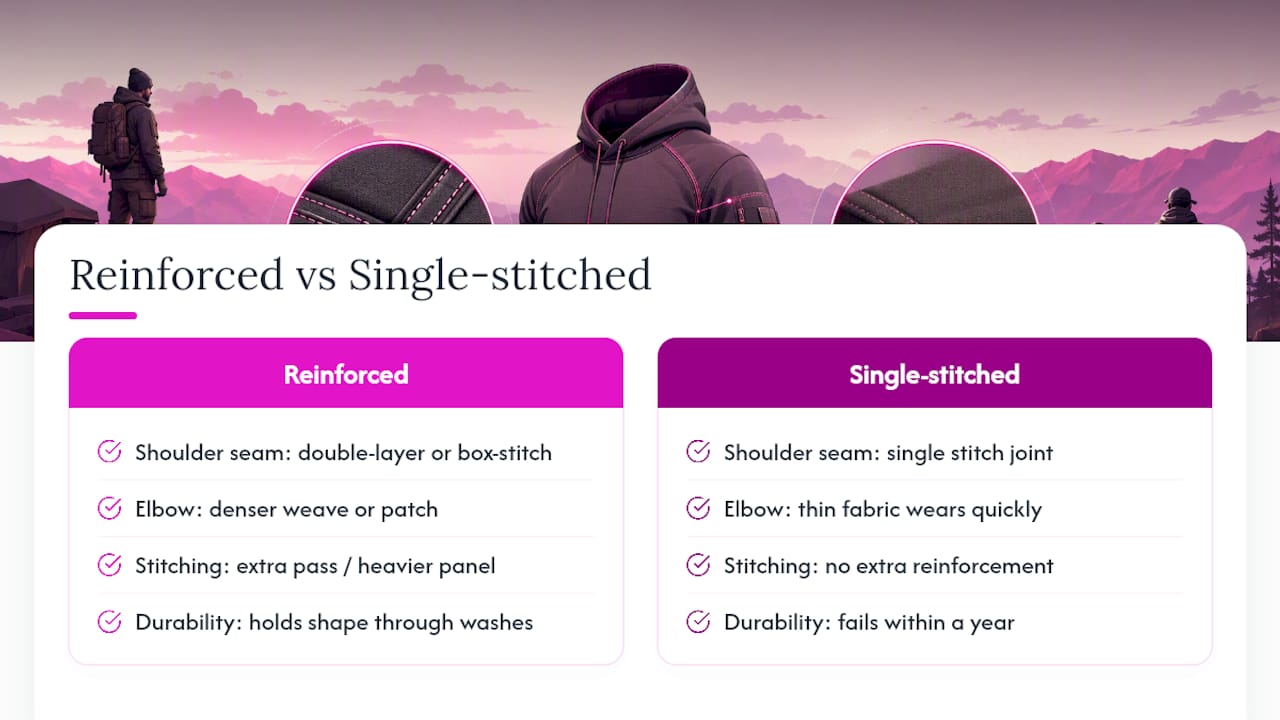
Look for double-layered fabric panels or box-stitched patterns at the shoulder seam where the sleeve attaches to the body. This is the joint that fails first on cheap hoodies, usually within a year of regular wear. A hoodie that reinforces this seam with an extra pass of stitching, or a slightly heavier interior panel, will hold its shape through far more washes and far more physical activity than a single-stitched version.
Elbow reinforcement matters most if you’re wearing the hoodie for anything beyond sitting at a desk. Working outdoors, loading gear, or just leaning on rough surfaces wears through thin elbow fabric fast. Some heavier-weight hoodies build in a slightly denser weave at the elbow specifically to resist this kind of abrasion, even without a separate patch or panel.
None of this shows up clearly in a product photo shot from the front. You often have to read the fabric description or zoom into detail shots showing the inside seam construction to confirm it’s there. A brand that photographs its interior seams is usually confident in what it’s selling.
Weather Resistance: What “Water-Repellent” Actually Means on a Hoodie
Cotton-heavy hoodies were never built to shed rain, and no amount of marketing language changes that basic fact. What varies is how a fabric blend handles light moisture, wind, and the kind of damp cold that ruins an otherwise good day outdoors.
A tighter knit and a heavier fabric weight naturally resist wind better than a loose, lightweight blend. Air passes through thin fabric almost immediately; a denser weave slows that down and keeps body heat closer to the skin. This is one more reason heavyweight construction keeps coming up across every category of hoodie feature: it does double duty for durability and for basic weather comfort.
Some blends include a small percentage of synthetic fiber, often polyester, mixed with cotton specifically to improve moisture and wind resistance without sacrificing the soft, broken-in feel veterans and supporters tend to prefer in daily wear. Pure synthetic tactical shells handle rain far better, but they trade away the comfort and casual look that makes a hoodie work as everyday apparel in the first place.
If you need genuine water resistance, treat the hoodie as a mid-layer rather than an outer shell. Pair it with a separate rain shell for wet conditions and let the hoodie do what it does best: warmth, comfort, and a design that says something about who you are.
Storage and Pockets: Function Beyond the Front Pouch
The standard kangaroo pocket on most hoodies is built for hands, not gear, and it shows the moment you try to carry anything heavier than a phone. Better-built hoodies split that single pouch into two separate compartments, which distributes weight more evenly and keeps a phone from sliding into the same pocket as keys or a wallet.
Zippered pockets are the upgrade worth looking for if you plan to wear a hoodie actively rather than just around the house. A zip closure on at least one pocket keeps small items secure during movement, whether that’s a hike, a workout, or just walking a dog in the wind. Some designs add an interior chest pocket as well, useful for a phone or a set of earbuds you want to keep separate from anything that might scratch a screen.
Stitched pocket bags matter more than most buyers realize. A pocket that’s just two layers of the main fabric sewn together will stretch and sag within months, especially if you’re routinely carrying keys or a multitool. A separate, tighter pocket lining holds its shape and resists wear at the entry point, which is usually the first place a poorly built hoodie fails.
None of this needs to be complicated. If you regularly carry small gear, check pocket count and closure type before buying rather than after the first time your phone falls out mid-workout.
Hood Design: Coverage, Adjustability, and Fit With Headgear
A hood is either genuinely functional or purely decorative, and the difference comes down to a handful of details you can check before buying. Drawstring adjustability is the first one. A hood with two independent drawstrings lets you cinch coverage around your face in wind or rain, while a single center string or a sewn-shut hood offers no real adjustment at all.
Coverage depth matters just as much. A hood cut generously enough to stay up during movement, without constantly sliding back off your head, uses more fabric at the crown and a slightly deeper front panel. Cheaper hoodies cut this fabric tight to save cost, which is exactly why the hood keeps falling back the moment you turn your head.
If you wear a ball cap or a beanie regularly, check whether the hood is cut roomy enough to go over headgear without pulling tight across the forehead. This detail rarely makes it into a product description, so it’s worth reading customer reviews specifically for mentions of hood fit over hats.
Rib-knit or bound hood edges also hold their shape longer than a raw or single-folded edge, which tends to curl and lose structure after repeated washing. It’s a small detail, but it’s one of the clearest signs of whether a brand thought through daily use or just added a hood because that’s what a hoodie is supposed to have.
Breathability and Moisture Control for Active Days
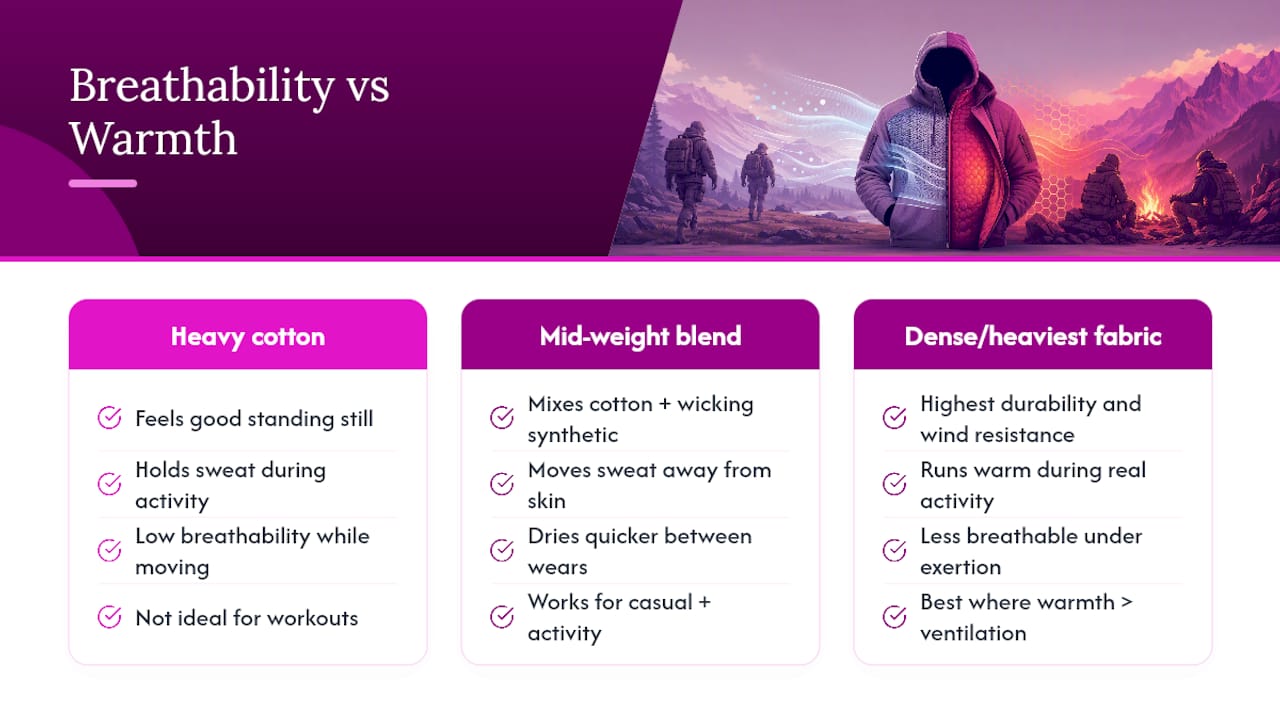
A hoodie that traps heat the moment you start moving isn’t built for anyone with an active routine, and this is where fabric blend and weave really separate the good from the mediocre. Pure heavyweight cotton feels great standing still but holds sweat once you’re working, hiking, or training in it.
Blended fabrics that mix cotton with a moisture-wicking synthetic fiber move sweat away from skin faster and dry quicker between wears. This matters most if the hoodie is doing double duty as both a casual piece and something you’d wear for a workout, a range day, or an outdoor project. The wearability veterans consistently look for in this category means a garment that moves from outdoor activity into social settings without needing a wardrobe change in between, and breathable fabric is a big part of what makes that transition work.
Loose-knit panels under the arms or along the side seams, sometimes barely noticeable in a product photo, also help air circulate during activity. Not every hoodie includes this, but it’s worth checking construction photos for any panel that looks different from the main body fabric.
If breathability matters more to you than pure warmth, lean toward a mid-weight blend rather than the heaviest option available. The densest fabric wins on durability and wind resistance, but it can run warm during real activity, so match the weight to what you’ll actually be doing in it.
Why These Features Matter Beyond the Fabric
Veterans consistently describe wanting one thing from apparel: something that looks right, holds up, and doesn’t have to be explained. The functional details, the stitching, the fabric weight, matter because they earn the right to carry the symbolic ones. A hoodie that falls apart in six months cheapens whatever it’s printed with.
— Ian
Warbeard Project Hoodies and Apparel Built Around These Standards
Warbeard Project is the direct-to-consumer route to this exact combination: authentic design, heavier construction, and mission linkage in one place, instead of hunting across generic marketplaces hoping a listing happens to check every box.
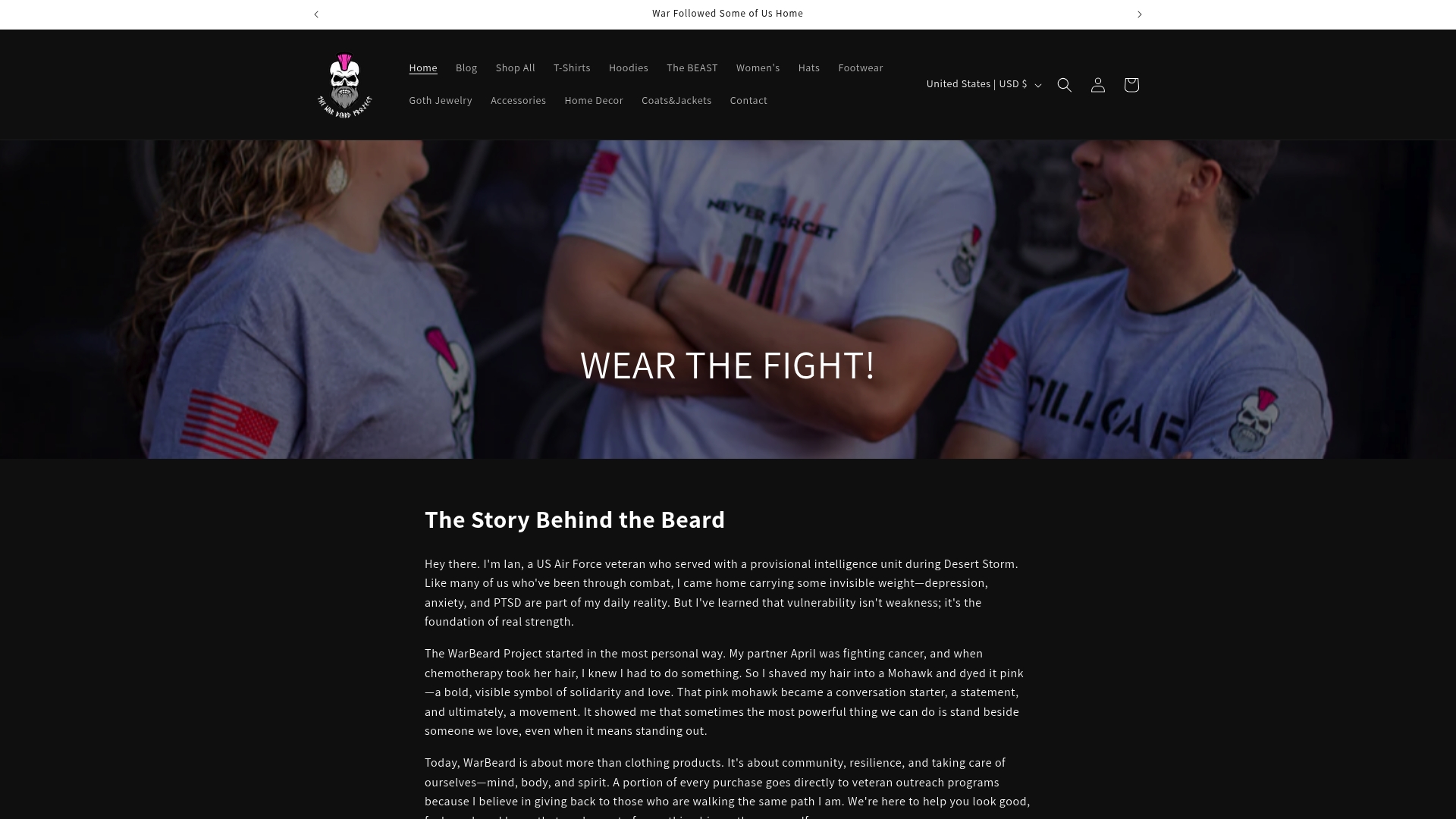
Every product in the catalog maps to the standards covered above. The VietNam Classic tee shows how a single historical reference, handled with restraint, reads as tribute rather than costume. The PTSD classic tee puts mission messaging front and center for anyone who wants their apparel to open a conversation about mental health. For lifestyle pieces beyond graphic tees, the OG Logo Women’s pajama shorts and matching pajama pants show the same brand identity carried into everyday comfortwear, while the OG Logo Unisex Denim Sherpa Jacket demonstrates the heavier-weight construction this guide recommends checking for. If bold, unapologetic voice is what you’re after, the Fortune Favors tee and the Eat a D… Men’s classic tee carry that attitude directly. Browse the full Warbeard Project shop to find the piece that matches your fit, your color preference, and the cause you want your purchase to support.
Sources
- What Makes Military Veterans Pick Disgruntled Outpost: 4 Honest Reasons | Form & Taste
- Veteran clothing designed for durability, comfort, and meaningful self-expression - IPS News
- Freedom Shirts Meaning: Explore Symbols & Design Tips – T-Shirt Envy Co.