

Military Uniform Regulations Explained for 2026
Military uniform regulations are the official standards that govern how service members and veterans must wear, maintain, and display their uniforms and associated insignia. These rules span every branch of the U.S. Armed Forces and carry legal weight under federal law. Getting them wrong is not just a matter of appearance. It can mean disciplinary action, legal liability, or a failure to honor the traditions the uniform represents. This article breaks down military uniform regulations explained in plain terms, covering uniform types, authorized wear, grooming standards, and clothing allowances.
What are military uniform regulations and why do they matter?
Military uniform regulations are codified standards issued by each branch and backed by federal law, specifically 10 U.S.C. § 771, which restricts who may legally wear a military uniform. The Army’s primary regulation is AR 670-1, which covers everything from boot polish to hair length. The Department of Defense sets overarching policy, while each branch publishes its own detailed dress code guidelines.
These rules exist for reasons beyond appearance. Uniform standards for soldiers signal rank, unit, and role at a glance. They also affect safety. A non-compliant hairstyle, for example, can prevent a gas mask from sealing correctly, which is a life-threatening failure in a combat environment. Compliance is not optional. It is a condition of service.
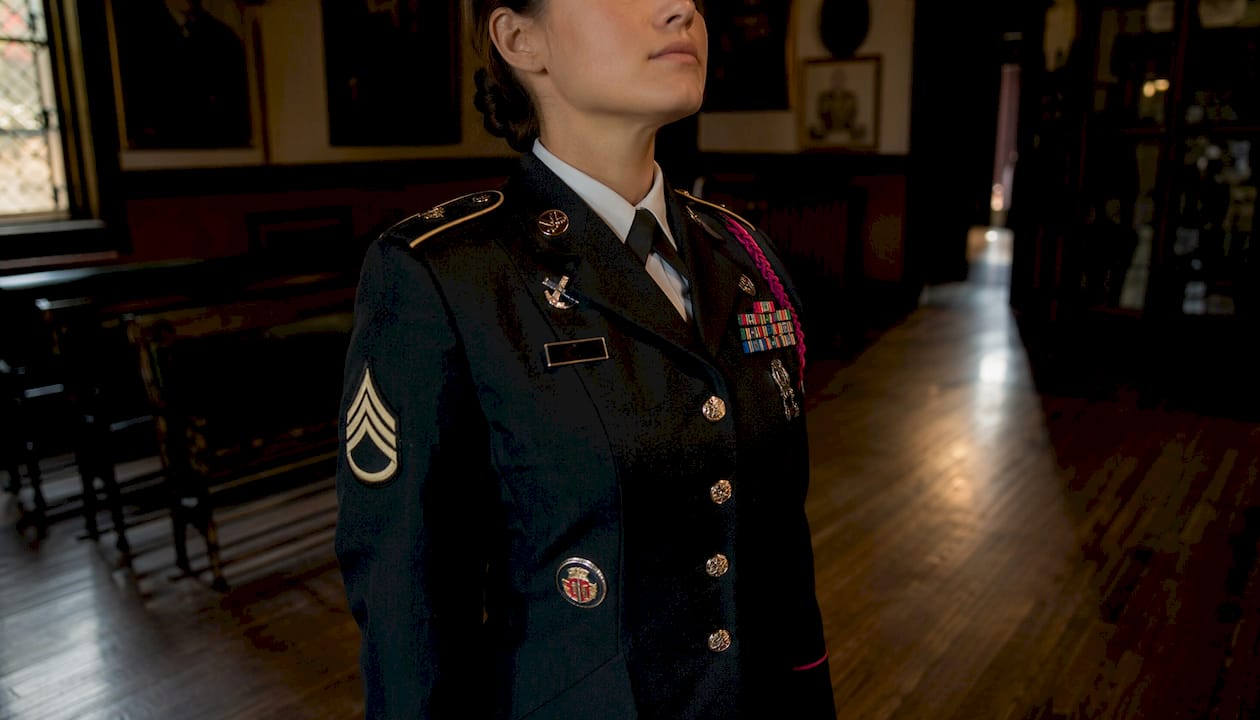
What are the different types of military uniforms and their proper wear?
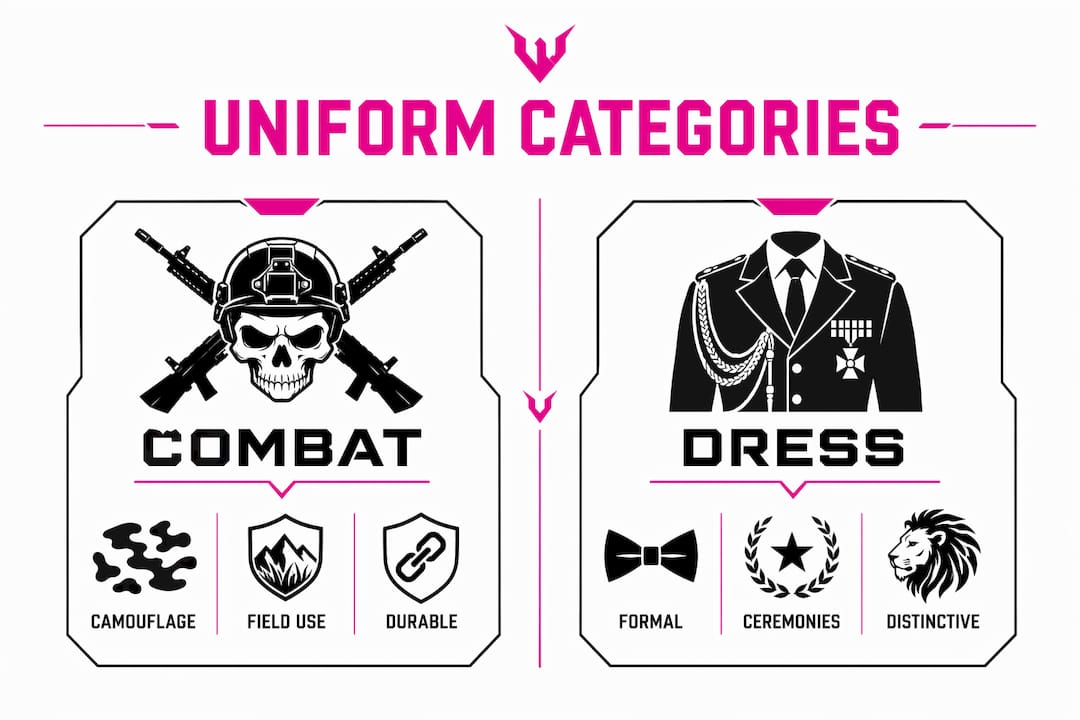
Every branch issues multiple uniform categories, each with a defined purpose and wear occasion. The four main categories are combat uniforms, service uniforms, dress uniforms, and specialty uniforms. Command authority determines which uniform is required on any given day.
Combat and service uniforms
Combat uniforms, such as the Army Combat Uniform (ACU) in Operational Camouflage Pattern (OCP), are worn in field environments and most garrison settings. Service uniforms are the standard daily wear for office and administrative duties. The Army Green Service Uniform (AGSU) is replacing the blue service uniform as the primary daily wear, with all soldiers required to own and wear the AGSU by October 1, 2027. After that transition, the blue uniform becomes optional.
Dress and specialty uniforms
Dress uniforms are reserved for formal occasions, ceremonies, and official functions. Each branch has its own version. Marines wear the iconic Dress Blues. The Navy uses Service Dress Blue and Service Dress White. The Air Force and Space Force wear the Dress Blue uniform. The Coast Guard maintains its own Dress Blue and Dress White variants. Specialty uniforms cover physical training gear, flight suits, and branch-specific working uniforms.
The table below summarizes the primary uniform categories across branches.
| Branch | Combat/Field | Service/Daily | Dress |
|---|---|---|---|
| Army | OCP (ACU) | Army Green Service Uniform | Army Service Uniform (Blue) |
| Marine Corps | MARPAT Utilities | Service Uniform | Dress Blues |
| Navy | NWU Type III | Service Khaki / Service Dress | Service Dress Blue/White |
| Air Force | OCP | Airman Battle Uniform | Dress Blue |
| Space Force | OCP | Service Dress | Dress Blue |
| Coast Guard | ODU | Service Dress Blue | Dress Blue/White |
Understanding military uniforms across branches requires knowing that no single regulation covers all services. Each branch publishes its own manual, and service members are responsible for knowing their branch’s specific rules.
Who is authorized to wear a military uniform?
Federal law under 10 U.S.C. § 771 defines exactly who may wear a military uniform and under what conditions. Unauthorized wear is a federal offense. The law covers active duty, reserve, and National Guard personnel, but it also carves out specific exceptions.
Authorized wearers and recognized exceptions include:
- Active duty service members in their assigned uniform of the day
- Reserve and National Guard members while on duty or during authorized travel
- Veterans at patriotic events, parades, and memorial ceremonies
- Recently discharged members traveling home within 3 months of separation
- Retired service members at formal occasions and ceremonies
- Actors and performers in film, theater, or television productions, provided the portrayal does not discredit the military
A common misconception is that wearing military surplus clothing is always illegal. Surplus items without rank or insignia are generally permissible for civilians. The law targets the assembly of a complete uniform with distinctive insignia, not the individual surplus jacket or boots sold at a military surplus store. Veterans who want to honor their service through veteran-friendly apparel have legal options that do not require wearing a regulated uniform.
What are the grooming and appearance standards required while in uniform?
Grooming standards are a direct extension of uniform attire rules. Army Directive 2025-18 updated grooming standards to include new allowances for natural hair colors, ponytails, and facial hair exceptions tied to medical profiles. These updates reflect a balance between tradition, inclusivity, and operational readiness.
Grooming standards are enforced primarily to maintain compatibility with protective equipment, including gas masks and helmets. A hairstyle that prevents a proper seal on a gas mask is a safety violation, not just a dress code issue.
The table below outlines key grooming rules under current Army standards.
| Category | Male Standards | Female Standards |
|---|---|---|
| Hair length | Tapered, off collar | May touch collar; bulk limits apply |
| Authorized styles | Short, neat, natural colors | Buns, braids, ponytails (authorized) |
| Prohibited styles | Mohawks, dreadlocks (uncontained) | Styles that prevent headgear wear |
| Facial hair | Clean-shaven; exceptions via medical profile | N/A |
| Cosmetics | Not authorized | Conservative, natural tones |
Religious accommodation requests follow a formal process. Under Army DIR 2026-09, disapproved accommodation cases require a written decision memo, and soldiers must return to standard grooming within 24 hours of notification. That timeline is firm, not advisory.
Pro Tip: Check your unit’s current policy memo before any formal event. Branch-level regulations set the floor, but commanders can impose stricter standards for specific occasions.
How do clothing allowances and personal responsibility work?
Clothing allowances are a financial tool, not a benefit to spend freely. The military provides an initial clothing allowance early in a service member’s career, followed by annual replacement allowances after three years, with rates varying by branch and rank. Army male enlisted members receive approximately $613.19 annually for uniform upkeep. That figure must cover repairs, replacements, and cosmetic maintenance.
The responsibility for maintaining a serviceable uniform falls entirely on the individual service member. The allowance does not automatically cover every cost. Service members who fail to budget for unplanned repairs can find themselves out of compliance and out of funds at the same time.
Practical uses of the annual clothing allowance include:
- Replacing worn or faded uniform items before an inspection
- Purchasing branch-required accessories such as belts, boots, and headgear
- Covering tailoring costs for proper fit after weight changes
- Repairing damaged insignia or patches
- Stocking a second set of uniforms for field rotations
Service members must proactively manage their clothing allowance. Treating it as a fixed annual budget rather than a windfall prevents the common problem of arriving at a uniform inspection with worn-out boots and an empty account. The active duty casual wardrobe also requires planning, since off-duty appearance standards still apply in many garrison environments.
Key Takeaways
Military uniform regulations define legal, safety, and appearance standards that every service member and veteran must know and follow.
| Point | Details |
|---|---|
| Federal law governs uniform wear | 10 U.S.C. § 771 restricts who may legally wear a military uniform, with defined exceptions for veterans and actors. |
| AGSU transition deadline is firm | All Army soldiers must own and wear the Army Green Service Uniform by October 1, 2027. |
| Grooming standards affect safety | Hair and facial hair rules exist to maintain compatibility with gas masks and helmets, not just appearance. |
| Allowances require active management | Army enlisted members receive approximately $613.19 annually; failing to budget it correctly risks non-compliance. |
| Surplus wear has legal nuance | Civilians may wear surplus items without rank or insignia; assembling a complete uniform is the prohibited act. |
A veteran’s read on what the regulations actually demand
The regulations look straightforward on paper. In practice, the gap between knowing the rule and applying it correctly is where most service members run into trouble. I have seen soldiers show up to a formal event in a perfectly pressed uniform with the wrong boot polish shade, or with a haircut that passed last month but does not pass today because the command issued a new policy memo that nobody read.
The Marine Corps uniform app is a good example of how branches are trying to close that gap. Putting the full uniform manual on a phone removes the excuse of not having access to the guidance. That is a real improvement. But the app does not replace the habit of checking before you dress, not after.
The deeper issue is that uniform and grooming regulations carry the weight of military tradition alongside the weight of law. When you wear the uniform correctly, you signal that you understand both. When you do not, the signal is equally clear. My advice is simple: read your branch’s current regulation, check your unit’s policy memo, and inspect your own uniform the night before, not the morning of. The regulations are not designed to catch you out. They are designed to keep every service member at the same standard.
— Ian
Warbeardproject: apparel built for the veteran lifestyle
Service members and veterans carry their identity beyond the uniform. Warbeardproject designs apparel that reflects military pride without the restrictions of regulated dress.
The New Logo Yoga Leggings from Warbeardproject offer comfort and quality built with the active veteran in mind. Whether you are at the gym, at a community event, or simply off duty, Warbeardproject gear lets you represent without the compliance checklist. Supporting veteran-owned and veteran-friendly brands is one direct way to keep military culture alive in civilian life. Visit Warbeardproject to see the full range of apparel designed for those who served.
FAQ
What law governs who can wear a military uniform?
10 U.S.C. § 771 is the federal statute that restricts military uniform wear to authorized personnel. Violations can result in federal charges.
When must Army soldiers own the AGSU?
All Army soldiers must own and wear the Army Green Service Uniform by October 1, 2027. After that date, the blue service uniform becomes optional.
Can civilians legally wear military surplus clothing?
Civilians may wear surplus items that lack rank insignia and do not constitute a complete uniform. Assembling a full uniform with distinctive insignia is the prohibited act under federal law.
What did Army Directive 2025-18 change about grooming?
Army Directive 2025-18 expanded allowances for natural hair colors, ponytails, and facial hair exceptions tied to approved medical profiles, updating AR 670-1 standards.
How much is the annual clothing allowance for Army enlisted soldiers?
Army male enlisted soldiers receive approximately $613.19 per year for uniform replacement and maintenance. Rates vary by branch, rank, and gender.