

The Role of Military Tradition in Apparel Explained
The role of military tradition in apparel is the direct legacy of functional military design and symbolic military values that have shaped civilian clothing for centuries. Military dress does not simply inspire fashion. It defines it, through surplus adoption, cultural reinterpretation, and the transfer of battlefield engineering into everyday wear. From the khaki color borrowed from British colonial campaigns to the M-65 jacket worn by Vietnam-era protesters, the military influence on fashion operates through two distinct paths: practical utility and symbolic identity. Understanding both paths reveals why military heritage in clothing carries weight far beyond aesthetics.
How historical military uniforms have influenced civilian fashion
Military uniforms have shaped social identities and civilian dress since at least the 18th century, introducing colors, patterns, and silhouettes that became fashion staples. The British Army’s red coats established a visual language of authority that filtered into formal civilian dress. Khaki, developed for concealment in the Indian subcontinent, became the default color of casual trousers by the mid-20th century. The history of military uniforms is, in large part, the history of practical color theory applied under life-or-death conditions.
The transition from battlefield to wardrobe follows a consistent pattern. Military surplus enters civilian life first through necessity, then through culture. After World War II, surplus stores across the United States sold field jackets, trench coats, and cargo pants at low prices to working-class buyers. Those garments carried functional features, reinforced stitching, deep pockets, and durable fabrics, that civilian manufacturers had not yet prioritized.
Key garments that made the crossing from military to mainstream include:
- Trench coat: Developed for British officers in World War I by Burberry and Aquascutum, now a luxury fashion staple
- Bomber jacket (MA-1): Designed for U.S. Air Force pilots, adopted by subcultures from punk to hip-hop
- Peacoat: Standard Royal Navy issue since the 18th century, now a menswear classic
- Cargo pants: Derived from British Airborne trousers in World War II, now ubiquitous in streetwear
- Khaki trousers: Originated in British colonial military dress, now the default business-casual pant
Each of these garments entered civilian wardrobes through surplus channels before designers reinterpreted them for mass markets. The shift from battlefield utility to fashion staple is not accidental. It reflects the durability and problem-solving quality built into military design from the start.
What functional military design elements shaped modern apparel
The impact of military style on contemporary clothing is not limited to silhouettes and colors. Military-industrial research and development has shaped fabrics, layering systems, and construction methods that now define outdoor and performance wear. This is the less visible but more structurally significant dimension of military heritage in clothing.
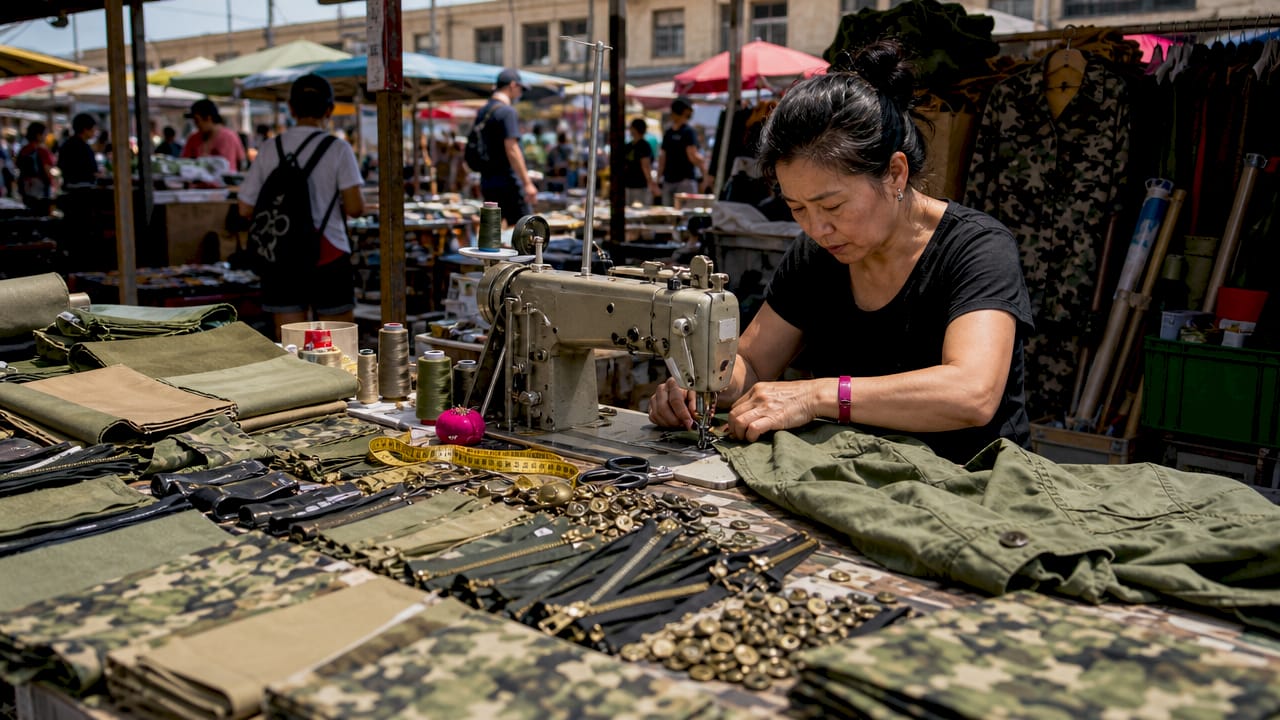
The M-65 field jacket is the clearest example. The M-65 layering system was engineered as a modular approach to thermal regulation, combining a shell jacket with a removable liner to adapt to changing conditions. Outdoor brands including Patagonia and Arc’teryx built their technical layering philosophies on the same principle, often without consumers knowing the origin. The M-65 is not just a jacket. It is a systems design document that civilian manufacturers have been reading for fifty years.
| Feature | Military origin | Civilian application |
|---|---|---|
| Layering system | M-65 field jacket with removable liner | Technical outdoor jackets from Patagonia, Arc’teryx |
| Ripstop fabric | Developed to prevent tear propagation in field conditions | Hiking pants, workwear, streetwear |
| Cargo pockets | Airborne trousers for carrying field equipment | Utility pants, tactical fashion brands |
| Water-resistant coatings | Developed for wet-weather military operations | Gore-Tex and DWR-treated outdoor gear |
| High-visibility design | Inverse of camouflage for safety signaling | Construction workwear, cycling apparel |
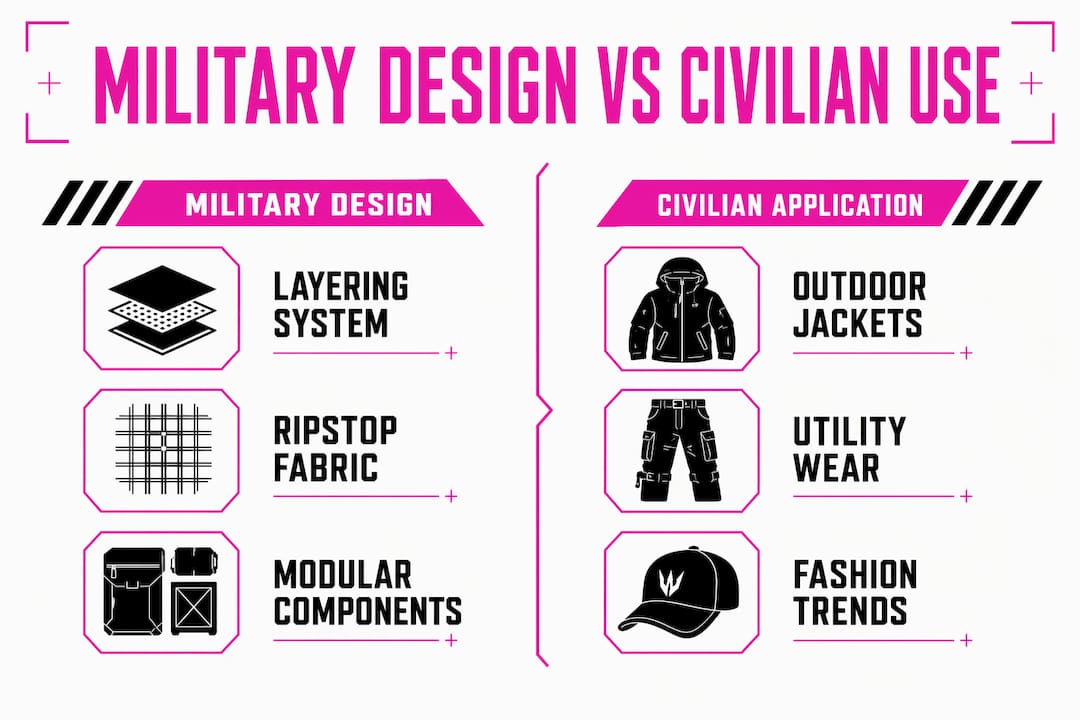
Military solutions like the M-65 influenced civilian adoption in outdoor and utilitarian wear, often without consumers knowing their origin. That invisibility is significant. It means the military’s contribution to fashion is systematically underestimated, even as its design logic underpins entire product categories.
Pro Tip: When evaluating the quality of any jacket or outdoor garment, check whether it uses a modular liner system. If it does, you are looking at a design lineage that traces directly to U.S. military field research.
How military symbolism shapes fashion beyond utility
Military apparel carries meaning that extends well past function. Military uniforms codify hierarchy, values, and group identity, and those codes do not disappear when a garment moves into civilian life. They shift, sometimes in ways that reinforce existing power structures and sometimes in ways that subvert them.
Camouflage is the most studied example. Developed through scientific research on concealment and environmental blending, camouflage patterns carry a specific operational meaning in context. Removed from that context, they become a visual shorthand for toughness, authority, and masculine power. Camouflage and military styles influence not only wearers but also broader societal perceptions and gender norms, contributing to cultural militarization beyond fashion alone. That is a measurable social effect, not a stylistic observation.
The symbolic dimensions of fashion inspired by military traditions include:
- Rank insignia and epaulettes: Adopted by designers from Yves Saint Laurent to Alexander McQueen as markers of authority and structure
- Camouflage prints: Worn across genders and subcultures as signals of toughness, rebellion, or ironic detachment
- Olive drab and khaki palettes: Associated with practicality and anti-establishment values in counterculture movements
- Tactical silhouettes: Cargo vests and utility belts adopted in streetwear as signals of preparedness and urban readiness
“Military designs carry meaning beyond visual style, and ignoring origins can disconnect consumers from the sacrifice and function those designs represent.” — How fashion borrowed military aesthetics and lost the context
The militarization of fashion is part of a broader societal process that affects ideas about masculinity and power, reaching people who never wear military styles directly. Fashion does not exist in a cultural vacuum. When military aesthetics saturate mainstream clothing, they normalize a specific set of values whether or not the wearer intends that signal.
What tensions arise from fashion’s reinterpretation of military apparel
The critical fault line in military-inspired fashion runs between two distinct adoption paths. Surplus items maintain legible military function while design-for-culture pieces transform silhouettes into fashion accessories divorced from utility. One path preserves context. The other erases it.
This distinction matters for several reasons:
- Loss of original meaning: When tactical silhouettes and camouflage patterns are removed from their operational context, they become abstract aesthetic shorthand. A pattern engineered for concealment in a specific environment communicates nothing about concealment when printed on a luxury handbag.
- Veterans’ perspectives: Removing context from military attire reduces deep symbolic meaning to style, eliciting concern among military families and veterans about tone and respect. The garment that represents sacrifice and service to one person is a seasonal trend to another.
- Marketing versus reality: Fashion brands use military aesthetics as shorthand for durability, authority, and toughness without delivering the engineering that earned those associations. A jacket with decorative epaulettes and cargo pockets that cannot hold field equipment borrows credibility it has not earned.
- Cultural awareness: Consumers who understand the origin of military design elements make more informed choices about what they wear and what it communicates. Ignorance of context is not neutral. It has social effects.
Pro Tip: Before buying a garment marketed as “tactical” or “military-inspired,” check whether it was designed with actual functional requirements or purely for visual effect. The difference is visible in construction quality, pocket depth, and fabric weight.
The adoption of military apparel in civilian life reflects a hidden influence of military-industrial systems shaping everyday fashion, often unknowingly to consumers. That hidden influence becomes a problem when it is exploited for marketing without acknowledgment of its source. Brands that engage honestly with military heritage, as Warbeardproject does, occupy a different ethical position than those that strip the context entirely.
How military tradition in apparel continues to shape fashion today
The market data confirms that military-inspired clothing is not a niche interest. The camouflage fashion market reached $5.3 billion in 2022, demonstrating the scale at which militarized aesthetics have penetrated mainstream consumer culture. That figure represents only camouflage. It excludes olive drab, tactical silhouettes, surplus-derived workwear, and the broader category of military heritage clothing.
| Trend | Current status | Cultural driver |
|---|---|---|
| Camouflage fashion | $5.3B market (2022) | Masculine identity, streetwear crossover |
| Gorpcore / outdoor utility | Mainstream adoption | Patagonia, Arc’teryx, military surplus roots |
| Veteran-owned apparel brands | Growing segment | Authenticity demand, heritage storytelling |
| Surplus thrifting | Rising in Gen Z | Sustainability, anti-fast fashion, authenticity |
| Tactical streetwear | Expanding globally | Urban utility, gaming culture crossover |
The broader cultural effects of militarized fashion extend beyond the wearers themselves, shaping social attitudes and identity norms across populations that have no direct connection to military service. This is why the why behind military traditions in apparel matters as much as the what. Brands like Warbeardproject that ground their designs in genuine military heritage provide consumers with a more honest relationship to that influence, connecting style to story rather than stripping one from the other.
Sustainable engagement with military-inspired apparel means buying surplus when possible, supporting veteran-owned brands, and learning the origin of the garments you wear. That approach honors the design tradition rather than consuming it without acknowledgment.
Key takeaways
Military tradition shapes apparel through two paths: direct surplus adoption that preserves function, and cultural reinterpretation that transfers aesthetics while discarding context.
| Point | Details |
|---|---|
| Military design origins | Functional military R&D produced layering systems, ripstop fabrics, and silhouettes now standard in civilian wear. |
| Two adoption paths | Surplus adoption preserves military function; cultural styling abstracts it into aesthetic shorthand. |
| Symbolic weight | Military garments carry codified meanings around hierarchy, masculinity, and identity that persist in civilian use. |
| Veterans’ concern | Decontextualized military fashion reduces service-linked symbolism to trend, which veterans and military families find disrespectful. |
| Market scale | The camouflage fashion market alone reached $5.3 billion in 2022, confirming military aesthetics as a dominant commercial force. |
Why military fashion deserves more than surface-level appreciation
I have spent years studying how military design enters civilian culture, and the pattern that frustrates me most is not the borrowing. It is the borrowing without acknowledgment. The M-65 jacket is one of the most copied garments in fashion history, and most people wearing its descendants have no idea where the design came from or what problem it was solving.
That ignorance is not harmless. When fashion strips military aesthetics of their context, it does two damaging things simultaneously. It disrespects the people whose service gave those designs meaning, and it misleads consumers into thinking they are getting something they are not. A jacket with decorative cargo pockets is not a tactical garment. Calling it one is a category error with cultural consequences.
What I find genuinely valuable is the approach taken by brands like Warbeardproject, which treat military heritage as a subject worth understanding rather than a visual shorthand worth exploiting. That distinction separates fashion that honors tradition from fashion that merely borrows its appearance. Conscious consumerism in this space means asking where a design came from, what it was built to do, and whether the brand selling it has any real connection to that history.
The lifestyle branding that shapes firearms and military culture demonstrates that authenticity is not just an ethical position. It is a market differentiator. Consumers increasingly want the story behind what they wear. Military tradition in apparel has one of the richest stories in the history of clothing. It deserves to be told accurately.
— Ian
Wear the heritage, not just the look
Military-inspired apparel carries more history than most fashion categories combined. Warbeardproject was built to honor that history, not dilute it.
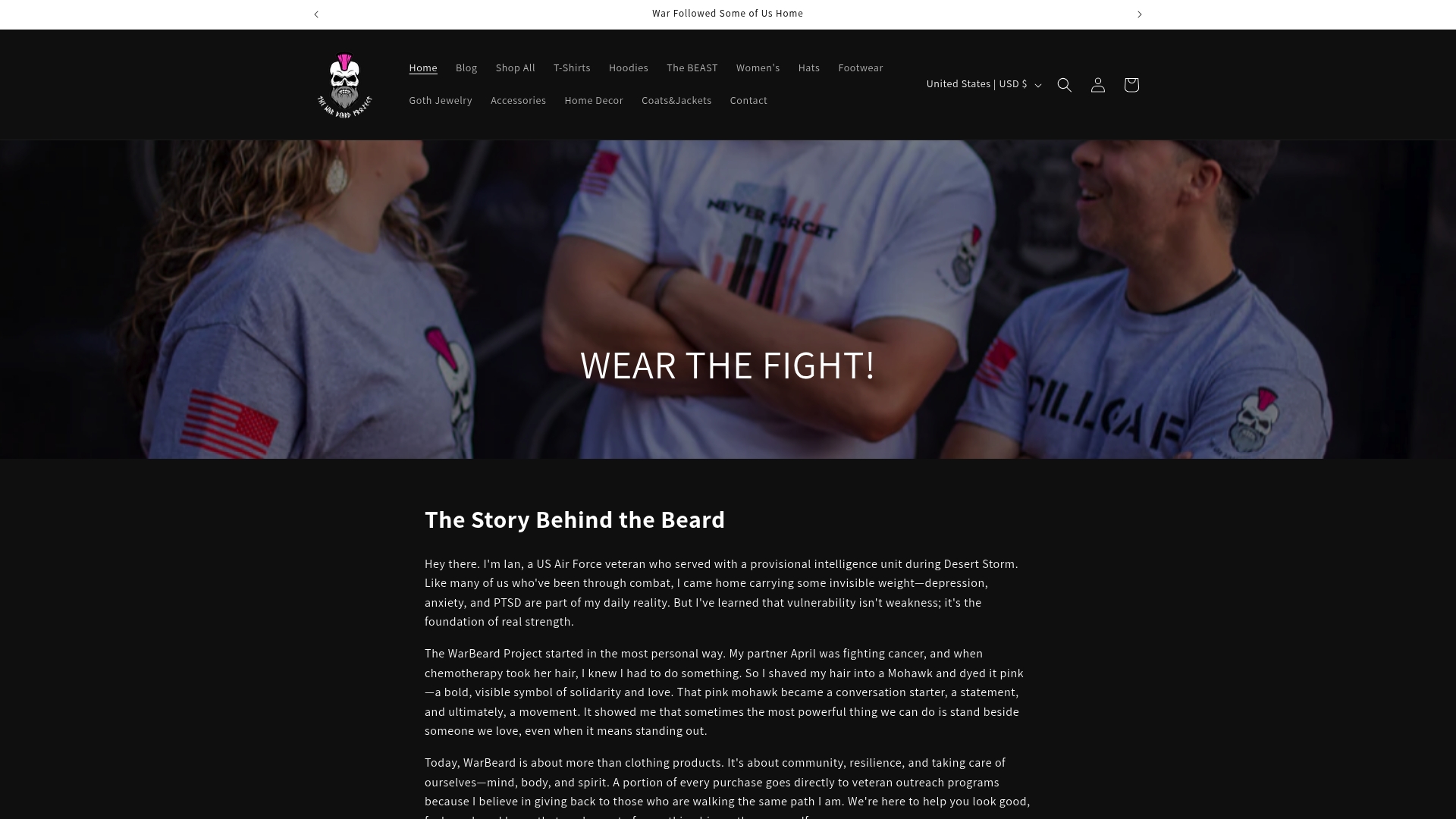
Warbeardproject designs apparel rooted in genuine military heritage, built for veterans and those who respect what that heritage represents. The Vietnam Classic Tee connects directly to one of the most consequential chapters in American military history, while the PTSD awareness tee puts veteran mental health at the center of the conversation. Every piece at Warbeardproject carries a reason behind the design. Browse the full collection and wear something that means something.
FAQ
What is the role of military tradition in apparel?
Military tradition in apparel is the transfer of functional military design and symbolic military values into civilian clothing, operating through both direct surplus adoption and cultural reinterpretation. It has shaped colors, silhouettes, fabrics, and construction methods across mainstream fashion for centuries.
How did military uniforms influence everyday fashion?
Garments including the trench coat, bomber jacket, peacoat, and cargo pants all originated as military issue before entering civilian wardrobes through surplus markets and designer reinterpretation. The history of military uniforms is the direct origin story of several major civilian clothing categories.
Why do veterans object to military-inspired fashion?
Veterans often feel concern when military aesthetics are used as abstract style without acknowledgment of their origin, because those garments represent service and sacrifice rather than seasonal trends. Removing that context reduces meaningful symbolism to decoration.
How large is the military-inspired fashion market?
The camouflage fashion market alone was valued at $5.3 billion in 2022, reflecting the scale at which military aesthetics have penetrated mainstream consumer culture across streetwear, outdoor wear, and luxury fashion.
What is the difference between surplus adoption and military-inspired fashion?
Surplus adoption means wearing actual military-issue garments that retain their original function and construction. Military-inspired fashion reinterprets military aesthetics for civilian style, often removing the functional elements that gave the original design its purpose and credibility.