

Do Moisture-Wicking Shirts Really Keep You Dry?
Moisture-wicking shirts work when they’re built from the right fibers and worn for the right activity, pulling sweat off skin and pushing it to a surface where it can evaporate. Polyester, nylon, and merino wool lead the pack; 100% cotton fails at this job because it holds water instead of moving it. When shopping, match fabric weight to your activity and read the care label before you buy, since the wrong wash routine kills performance fast.
TL;DR:
- Polyester and nylon fabrics have extremely low moisture regain rates, making them the most effective for moisture-wicking performance, unlike cotton or viscose.
- Fabric engineering, such as microchannels in polyester fibers, plays a key role in how effectively a shirt can pull sweat away from the skin and promote evaporation.
- Proper care, including cold washing with performance detergent and avoiding fabric softener, is essential to maintain a shirt’s wicking ability over time.
- Matching fabric weight and fit to activity level ensures optimal moisture management, with snug base layers ideal for high-intensity sports and looser styles better for casual wear.
- Blended fabrics often outperform single fibers by combining durability, breathability, and moisture movement, especially in demanding conditions like travel or military training.
Table of Contents
- What Does Moisture-Wicking Actually Mean?
- Which Fabrics Actually Wick Sweat Best?
- How to Choose a Shirt for Your Activity
- How Do You Wash a Moisture-Wicking Shirt Without Ruining It?
- How Warbeardproject Builds Shirts That Actually Perform
- What Actually Matters Most When You’re Shopping
- Featured Warbeardproject Picks for Active Wear
- Sources
What Does Moisture-Wicking Actually Mean?
Wicking and absorption are opposites. An absorbent fabric like cotton soaks up sweat and holds onto it, getting heavier and staying wet against your skin. A wicking fabric does the opposite: it pulls moisture away from your body through capillary action, moving it along fiber channels to the outer surface of the shirt where air and body heat can evaporate it off.
This matters because evaporation is how your body actually cools down. Sweat sitting on your skin does almost nothing for temperature regulation; sweat that evaporates from a fabric surface pulls heat away as it changes from liquid to vapor, which is why sweating cools you at all. Humidity and workout intensity both push back against this process. On a humid day, evaporation slows no matter what shirt you’re wearing, and a hard sprint session generates sweat faster than any fabric can move it.
Textile scientists rely on a handful of standardized tests to measure how well a fabric actually wicks:
- Vertical wicking test: measures how high moisture climbs up a fabric strip against gravity.
- Horizontal wicking test: tracks how far moisture spreads sideways across the fabric surface.
- Siphon test: evaluates how effectively a fabric pulls liquid from a reservoir through capillary pull alone.
These tests are how manufacturers back up wicking claims instead of just printing the phrase on a tag.
Which Fabrics Actually Wick Sweat Best?
Fiber choice decides most of a shirt’s performance, and the differences between materials are bigger than most shoppers realize.
Polyester dominates the performance apparel market for a reason. It has an extremely low moisture regain rate, around 0.4%, meaning the fiber itself barely absorbs water. Manufacturers often engineer the fiber’s cross-section into a noncircular shape, creating microchannels that pull sweat along the surface rather than into it. That engineering is why two polyester shirts can perform completely differently depending on how the fiber was made.
Nylon brings stretch and abrasion resistance to the table. It wicks well and holds up under repeated flexing, which makes it a common choice for compression tops and tighter, high-movement pieces like running gear or cycling jerseys.
Merino wool is the outlier. As a natural fiber, it wicks moisture while also resisting odor-causing bacteria, and it regulates temperature across a wider range than synthetics. It’s often filed under “cold-weather fabric,” but it’s a strong option for multi-day trips or travel where you can’t wash gear daily.
Blends frequently outperform any single fiber alone. Combining polyester with a small percentage of spandex or nylon can create knit structures with built-in capillary channels, sometimes even a spacer construction that pushes moisture from an inner layer to an outer face fabric so it never pools against skin.
What to avoid: 100% cotton and viscose. Cotton’s moisture regain sits far above polyester’s near-zero figure, which is why a cotton shirt gets heavy and stays wet for hours. Viscose behaves similarly once saturated, drying slowly and losing shape under repeated sweat exposure.
| Material | Best for | Odor resistance | Care needs |
|---|---|---|---|
| Polyester | All-around training, running | Moderate (needs finish) | Cold wash, no softener |
| Nylon | High-movement, compression fits | Moderate | Cold wash, air dry |
| Merino wool | Multi-day wear, travel, hiking | High (natural) | Cold wash, lay flat |
| Cotton | Casual wear only, not performance | Low | Any (not for wicking use) |
How to Choose a Shirt for Your Activity
Picking the right moisture-wicking shirt isn’t about grabbing the first “performance” tag you see. Weight, fit, and finish matter as much as fiber type.
Match the fabric weight to the intensity of what you’re doing. A lightweight, open-knit polyester works for running in warm weather because it maximizes airflow. Heavier, denser knits suit gym training or cooler outdoor sessions where you need a bit more structure. For hiking or multi-day outdoor use, REI’s guidance on wicking fabrics points toward blends that balance durability with breathability, since you’re dealing with pack straps and sustained friction.
Fit changes the calculus too. A snug base layer wicks faster because it stays in contact with skin, moving moisture immediately. A looser layering piece trades some wicking speed for airflow and comfort, which works fine for lower-intensity activity. Flat seams matter regardless of fit. Raised seams under a pack strap or sports bra band turn into chafe points within a few miles.
Run through this checklist before you buy:
- What’s the primary fiber, and is it polyester, nylon, or merino, not cotton?
- Does the weight match your activity’s intensity and climate?
- Are the seams flat-locked at friction points (underarms, sides, shoulders)?
- Does it include an odor-control finish or naturally odor-resistant fiber?
- Is the fit appropriate for base-layer use or looser casual wear?
- Does the care label call for cold wash and no fabric softener?
Pro Tip: Splash a little water on the fabric in the store or right after unboxing it at home. If it beads up and sits on the surface instead of spreading and thinning out, the finish either wasn’t applied well or has already worn off.
How Do You Wash a Moisture-Wicking Shirt Without Ruining It?
Wicking performance degrades over time, and washing habits are usually the reason. Fabric softener coats fibers in a waxy residue that clogs the microchannels responsible for capillary action, and once that residue builds up, no amount of rewashing with regular detergent fully strips it out.
Stick to a few habits to protect the fabric:
- Wash in cold water, inside out, using a sports or performance detergent instead of standard liquid detergent.
- Skip fabric softener entirely, every wash, no exceptions.
- Air dry when possible; if you need a dryer, use low heat, since high heat can degrade synthetic fibers and elastic fibers over repeated cycles.
- Store shirts flat or hung rather than compressed tightly in a drawer, which helps knit structures keep their shape.
Watch for a specific warning sign: if a shirt that used to feel dry after a workout now feels damp and heavy for longer, the finish has likely broken down and it’s not doing its job anymore.
Pro Tip: For a shirt already suffering from softener buildup, run it through a hot wash with just a cup of white vinegar and no detergent. That strips residue without adding more coating, often reviving a chunk of the original wicking speed.
How Warbeardproject Builds Shirts That Actually Perform
Warbeardproject designs apparel around the same performance checklist covered above, built specifically for veterans, active duty service members, and the people who support them. That means fabric choices aren’t an afterthought. Cuts follow real movement patterns instead of generic sizing, and stitching gets reinforced at the seams most likely to see repeated friction during training or travel.
The fit matters as much as the fabric for anyone training hard or spending long stretches away from a washing machine, whether that’s a high-intensity session at the gym or a stretch of deployment travel where comfort options are limited.
Performance apparel built for the military fitness community has to hold up under conditions that go well beyond a studio workout, from field training to long travel days where you can’t always control the wash cycle.
That’s the same standard veterans apply to gear generally, whether it’s a shirt for a workout or something worn at a community event supporting fellow veterans.
What Actually Matters Most When You’re Shopping
Most advice on moisture-wicking apparel gets the emphasis wrong. Shoppers fixate on brand names and marketing language like “performance fabric” without checking the one number that actually predicts how a shirt behaves: fiber content on the tag. A shirt labeled “moisture-wicking” with a cotton blend heavy enough to dominate the fabric’s behavior will still get heavy and stay wet, no matter what the hangtag promises.
The bigger blind spot is care. People spend real money on the right fabric, then wash it with regular detergent and fabric softener out of habit, and wonder six months later why the shirt “doesn’t work like it used to.” It’s not a defect. It’s residue.
If you take one thing from this guide, prioritize fiber content first, fit second, and washing habits third; and never skip that third step, since it’s the one that determines whether your investment in the first two still pays off a year from now.
— Ian
Featured Warbeardproject Picks for Active Wear
Warbeardproject builds each piece around the fabric and fit principles covered above, so you’re not guessing which product fits which activity.
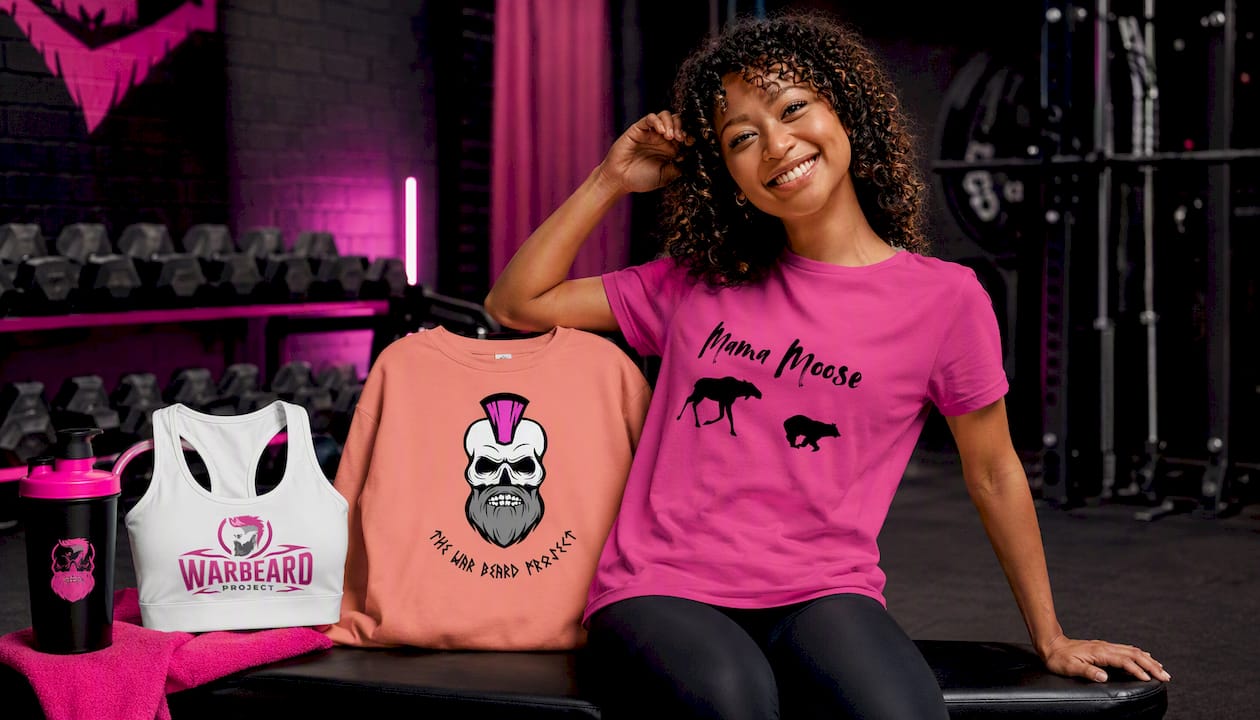
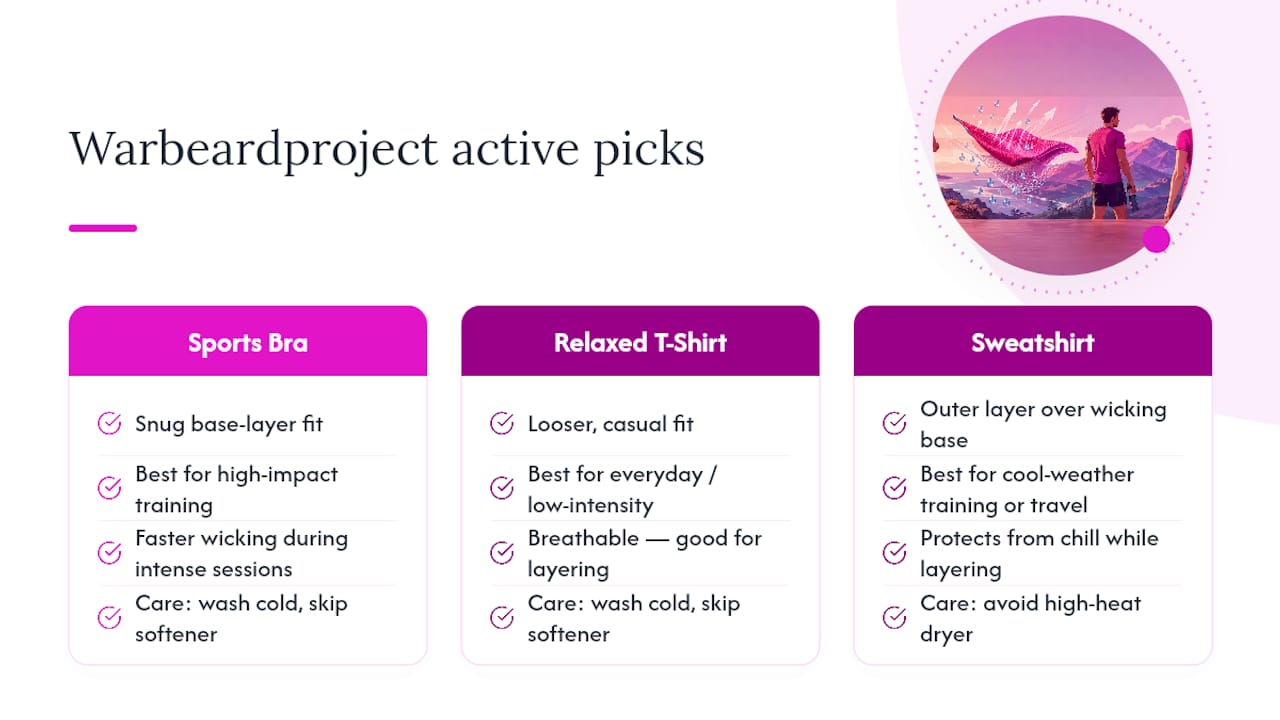
The New Logo Sports Bra is built for high-impact training, with a snug base-layer fit that keeps fabric against skin for faster wicking during intense sessions. Wash it cold, skip the softener, and it holds its support and moisture control through repeated wear.
For everyday active wear, the Mama Moose Women’s Relaxed T-Shirt trades base-layer snugness for a looser, casual fit that still breathes well, making it a solid pick for lower-intensity days or layering under a jacket. It handles the same cold-wash care routine as tighter performance pieces.
When temperatures drop, the OG Logo Unisex Premium Sweatshirt works as an outer layer over a wicking base shirt, ideal for cool-weather training or travel days. Keep it out of the dryer’s high-heat setting to protect the print and preserve its shape over repeated wear.
Browse the full lineup at Warbeardproject to find the right piece for your training schedule and climate.
Sources
The claims in this guide draw on textile science reporting and sports medicine sources, along with Warbeardproject’s own product and buying guides:
- Don’t Sweat It: How Moisture-Wicking Fabrics Keep You Cool and Dry - inChemistry
- Moisture management - Wikipedia
- How sweat works — Houston Methodist