

Overseas Deployment Comfort Clothing: 10 Best Examples
Overseas deployment comfort clothing is defined as off-duty and supplemental apparel worn by military personnel to maintain physical comfort, morale, and adaptability across varied environments. The best examples prioritize lightweight construction, quick-dry fabrics, and multi-function designs that work within uniform regulations. Items like moisture-wicking undershirts, the iconic military woobie, and tactical travel pants with hidden security pockets appear consistently across naval and Air Force packing guidance. Air Force dress standard DAFI 36-2903 requires service members to consult their command before wearing non-issued comfort clothing, which means every item on this list operates within that compliance framework.
1. Examples of overseas deployment comfort clothing: moisture-wicking undershirts
Moisture-wicking undershirts are the most requested comfort item in overseas care packages. High-demand care package items consistently include brown T-shirts, basic undergarments, and moisture-management base layers. That demand reflects a real gap: standard-issue cotton undershirts trap sweat and take hours to dry in humid climates. Synthetic blends and polyester-spandex fabrics pull moisture away from skin and dry in under an hour, making them the clear choice for both under-uniform wear and off-duty use.
Pro Tip: Pack undershirts in the standard military brown or tan colorway. They pull double duty under your uniform and pass inspection without drawing attention.
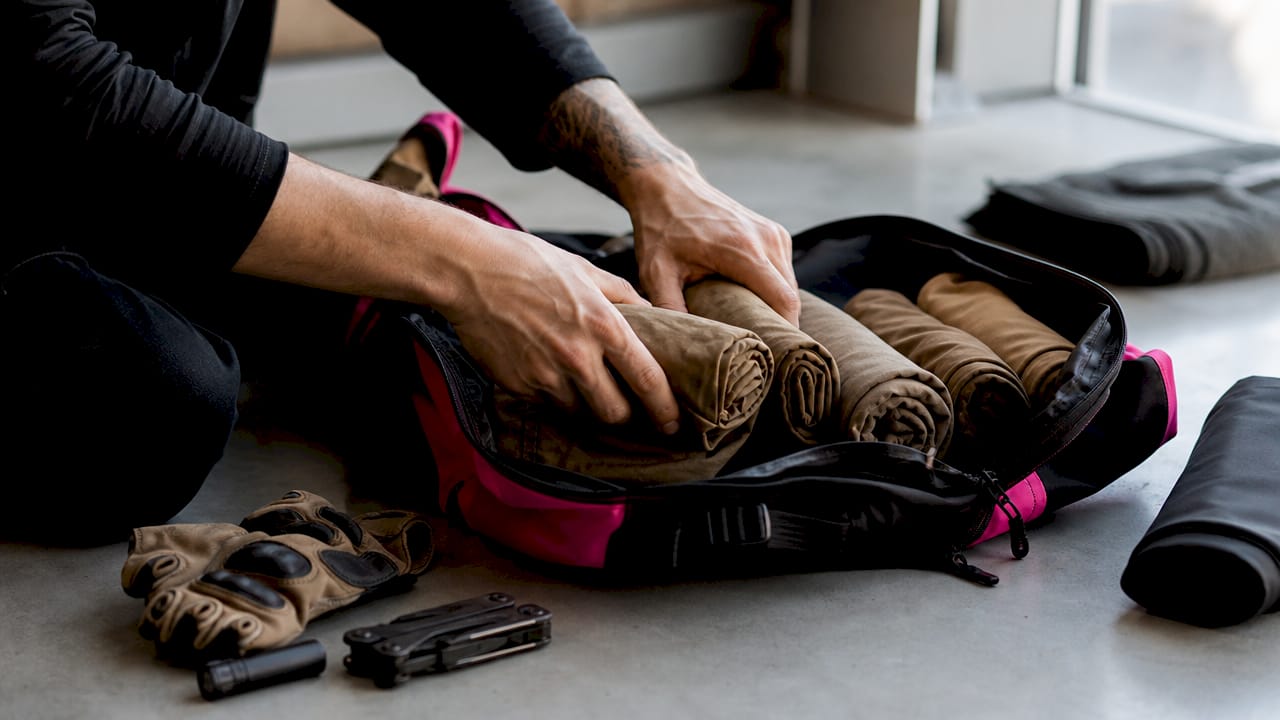
2. The military woobie (poncho liner)
The military woobie is the single most versatile comfort item a service member can carry. The poncho liner serves as a blanket, thermal mid-layer, pillow, and privacy screen, all from one lightweight package. It dries quickly after rain or washing, which matters enormously in environments where laundry access is limited. Experienced deployers treat the woobie as non-negotiable, and its multi-function value means it replaces several single-purpose items that would otherwise consume pack space.
3. Lightweight travel pants with security pockets
Lightweight travel pants with 4-way stretch fabric and zippered security pockets are a proven deployment clothing option. Clothing with 4-way stretch and hidden security pockets delivers comfort without sacrificing safety or a professional appearance. The security pockets protect passports, CAC cards, and cash during transit through airports and foreign bases. Quick-dry fabric means a single pair washed at night is ready to wear by morning, which directly supports a minimalist packing strategy.
4. Moisture-wicking socks and quick-dry underwear
Foot care is a mission-critical issue on deployment, and moisture-wicking socks are the foundation. Wet feet cause blisters, fungal infections, and long-term discomfort that degrades performance over weeks. Merino wool and synthetic-blend socks regulate temperature in both hot and cold climates, and they resist odor far better than cotton. Quick-dry underwear made from nylon or polyester follows the same logic: fast turnaround, reduced chafing, and durability through repeated washing in field conditions.
5. Lightweight waterproof jackets
A lightweight waterproof jacket with a high hydrostatic rating is non-negotiable for wet-weather deployments. Modern tactical rain gear uses 20,000mm hydrostatic head waterproof ratings and deploys over boots and existing clothing in under 60 seconds. That speed matters when weather changes fast and you cannot stop to change clothes. Look for jackets with taped seams, adjustable hoods, and packable designs that compress into a side pocket for easy storage.
6. Thermal layering shells (L5 system)
Cold-climate deployments require a layering system that adds warmth without bulk. L5 thermal shells and 3-in-1 systems enable rapid layering over field wear, improving comfort and mobility in extreme cold. The L5 Thermal Patrol Coverall, for example, fits directly over a uniform and cinches at the waist and ankles to seal out wind. This approach keeps service members warm during static guard duty or vehicle operations without requiring a full clothing change.
Pro Tip: Layer a thermal shell over your uniform during early morning watch, then remove it as temperatures rise. You stay comfortable without carrying a separate cold-weather bag.
7. Merino wool base layers
Merino wool base layers outperform cotton in nearly every deployment condition. Experienced deployers favor quick-drying synthetic or Merino wool fabrics over cotton for faster turnaround and durability in humid or constrained environments. Merino wool regulates body temperature across a wide range, meaning one base layer works in both desert heat and mountain cold. It also resists odor for multiple wears between washes, which is a practical advantage when laundry access is limited to once or twice a week.
8. Morale T-shirts and casual civilian tops
Morale T-shirts serve a psychological function that goes beyond fabric and fit. Service members value comfort clothing for its direct impact on morale and mental well-being during extended deployments. A shirt with a unit logo, a hometown reference, or a piece of humor creates a sense of identity and normalcy during downtime. Lightweight cotton-blend or tri-blend shirts work well for off-duty wear in controlled environments like barracks or ship berthing areas where quick-dry performance is less critical.
9. Sun protection caps and boonie hats
Head protection in hot and humid environments reduces heat exhaustion risk and sun exposure during outdoor duty. A boonie hat with a wide brim provides shade for the face, ears, and neck, which are the areas most exposed during extended outdoor operations. Lightweight ripstop nylon versions pack flat and weigh almost nothing. For service members in desert or tropical environments, a boonie hat is one of the highest-value comfort items per ounce of pack weight.
10. Hair ties and personal grooming comfort items
Personal grooming items are among the most requested and least anticipated comfort needs on deployment. Care package demand data shows hair ties, hairbrushes, and basic undergarments rank among the top requested items for service members overseas. Hair ties are small, lightweight, and have zero pack impact, yet their absence creates daily frustration. Packing a supply of these items, along with a compact grooming kit, addresses a comfort gap that most pre-deployment checklists overlook.
How layering and multi-function garments improve adaptability
The layering system used in military clothing follows a base, mid, and outer layer structure. Each layer has a specific job: the base layer manages moisture, the mid layer retains heat, and the outer layer blocks wind and rain. This system lets service members adapt to temperature swings without carrying separate wardrobes for each climate condition.
| Layer | Function | Example Item |
|---|---|---|
| Base | Moisture management | Merino wool or synthetic undershirt |
| Mid | Insulation | Woobie or fleece pullover |
| Outer | Wind and rain protection | Waterproof tactical jacket or L5 shell |
Multi-function garments reduce total pack volume. The woobie’s multipurpose design replaces a separate blanket, pillow, and thermal layer in one item. That consolidation matters when storage space is measured in cubic inches aboard ships or in forward operating bases. Choosing garments that serve two or three functions is the most effective way to stay comfortable without overpacking.
Packing smart: minimalist strategies for deployment clothing
Naval deployment packing guidance recommends limiting civilian clothing to 3–5 days of outfits, focusing on lightweight and quick-dry fabrics. That number is not arbitrary. It reflects the realistic laundry cycle available on most ships and at many forward bases. Packing more than five days of civilian clothing creates storage problems without adding meaningful comfort.
The practical packing approach follows three rules:
- Choose synthetic blends or Merino wool for every civilian item. Cotton takes too long to dry and loses its shape after repeated field washing.
- Select items that serve multiple purposes. The woobie, a lightweight jacket, and a pair of travel pants each cover several scenarios.
- Avoid bulky items entirely. Denim, heavy sweatshirts, and thick cotton hoodies consume pack space and dry slowly.
Laundry logistics vary by location. Ship laundry facilities run on fixed schedules, and forward bases may offer coin-operated machines or hand-washing only. Planning your clothing quantity around a realistic three-day laundry cycle is more reliable than hoping for daily access.
Situational comfort wear: matching clothing to environment
Hot and humid environments call for lightweight, breathable fabrics with UV protection. Moisture-wicking shirts, quick-dry shorts or pants, and a boonie hat cover the core needs. Avoid dark colors that absorb heat, and prioritize loose fits that allow airflow.
Cold climates require the full layering system. A Merino wool base layer, a woobie or fleece mid layer, and an L5 thermal shell as the outer layer handles most cold-weather scenarios. Air Force dress guidelines under DAFI 36-2903 require command consultation before wearing non-issued clothing, so confirm your layering choices comply with your unit’s standards before packing.
Wet weather demands a packable waterproof jacket with sealed seams and a hood. The 20,000mm hydrostatic rating found in current tactical rain gear sets the standard for reliable waterproofing in sustained rain. Downtime wear in barracks or berthing areas allows for more casual choices, including morale T-shirts and lightweight joggers, but always within the appearance standards your command enforces.
Pro Tip: Check your active duty wardrobe essentials list against your specific command’s uniform policy before you pack. What works at one base may not pass inspection at another.
Key takeaways
The most effective overseas deployment comfort clothing combines quick-dry fabrics, multi-function designs, and compliance with command appearance standards to maximize comfort across all environments.
| Point | Details |
|---|---|
| Prioritize quick-dry fabrics | Merino wool and synthetic blends outperform cotton in every deployment climate. |
| Pack for a 3–5 day laundry cycle | Naval guidance limits civilian clothing to 3–5 days of outfits to manage storage and weight. |
| Use the layering system | Base, mid, and outer layers let you adapt to temperature changes without extra gear. |
| Multi-function items reduce bulk | The woobie replaces a blanket, pillow, and thermal layer in a single lightweight item. |
| Confirm command compliance | DAFI 36-2903 requires Air Force members to consult command before wearing non-issued clothing. |
What I’ve learned about deployment comfort clothing after years of writing about it
The woobie debate is settled. Every service member I’ve spoken with who deployed without one regretted it within the first week. It is not sentimental. It is the most efficient piece of fabric you can carry, and its reputation is built entirely on performance.
The bigger lesson I’ve taken from covering deployment gear is that most service members underestimate the morale value of civilian clothing. Putting on a T-shirt that has nothing to do with your rank or your unit gives your brain a break. That psychological separation matters during a seven-month deployment more than any technical fabric specification.
New deployers consistently make the same mistake: they pack for the worst-case scenario in every category. They bring the heaviest rain jacket, the thickest thermal layer, and the most durable boots, then spend the deployment unable to close their bag. The better approach is to pack the lightest version of each item that meets the performance threshold. A 20,000mm waterproof jacket weighs less than a pound. A woobie compresses to the size of a water bottle. Merino wool shirts fold flat. The weight savings compound quickly.
One more thing: check your command’s appearance standards before you pack anything. DAFI 36-2903 is not a suggestion. Service members who show up with non-compliant clothing either leave it behind or spend the deployment wearing items that create friction with leadership. Neither outcome serves your comfort or your career.
— Ian
Warbeardproject active wear built for deployment readiness
Warbeardproject designs apparel specifically for the veteran and active duty community, with comfort and durability as the baseline requirements. The active wear collection covers the off-duty and downtime clothing needs that standard-issue gear does not address.
Whether you need a reliable base layer for off-duty hours or a versatile piece that works from the gym to the barracks, Warbeardproject’s lineup is built with the same priorities this article covers: lightweight construction, durable materials, and designs that respect the military lifestyle. The yoga leggings work as a thermal base layer or off-duty comfort wear, making them a practical addition to any deployment bag. Browse the full collection and find what fits your next rotation.
FAQ
What clothing is best for hot-climate deployments?
Lightweight, moisture-wicking shirts and quick-dry pants made from synthetic blends or Merino wool perform best in hot and humid environments. A boonie hat adds sun protection for extended outdoor exposure.
How many civilian clothes should I pack for deployment?
Naval deployment packing guidance recommends 3–5 days of civilian outfits, focused on quick-dry fabrics that can be washed and ready within a standard laundry cycle.
Is the military woobie worth packing?
The woobie is one of the highest-value items per ounce in any deployment bag. It functions as a blanket, thermal mid-layer, pillow, and privacy screen, replacing several single-purpose items.
Can I wear non-issued comfort clothing during deployment?
Air Force dress standard DAFI 36-2903 requires service members to consult their chain of command before wearing non-issued clothing. Each branch and command has specific rules, so confirm compliance before packing.
What fabric should I avoid packing for deployment?
Avoid cotton for any item you expect to wash and wear quickly. Cotton retains moisture, dries slowly, and loses shape after repeated field washing. Synthetic blends and Merino wool are the reliable alternatives.