

Why Veterans Embrace Outdoor Lifestyle: The Full Picture
Veterans gravitate toward an outdoor lifestyle for three documented reasons: natural environments restore cognitive function and lower stress through mechanisms the U.S. Department of Veterans Affairs calls attention restoration; outdoor activities mirror the mission-oriented, team-based structure of military service; and group outings rebuild the social bonds that often fracture after discharge. Researcher and Vietnam War veteran Daniel Dustin puts it plainly: nature-based recreation is nonspecific, meaning it does not deliver set outcomes like a drug, but it consistently produces measurable relief. Warbeardproject, a veteran-first apparel brand, recognizes these motivations as the foundation of veteran outdoor identity. Less than half of returning veterans who need mental-health treatment actually receive it, largely because of stigma and access barriers. Outdoor programs address all three gaps at once.
Key drivers at a glance:
- Mental health: attention restoration, stress reduction, and awe-driven relief
- Identity: skills transfer from military training to outdoor tasks
- Community: peer bonding and destigmatized support in shared settings
Table of Contents
- Why veterans embrace outdoor lifestyle through nature’s mental-health effects
- Outdoor tasks map directly onto military identity and purpose
- Group outdoor settings rebuild camaraderie and lower stigma
- Common activities veterans choose and what each delivers
- Where veterans can find programs and VA-adjacent resources
- How apparel expresses outdoor-veteran identity and supports causes
- Practical steps to build a sustainable outdoor practice
- Key Takeaways
- The research confirms what veterans already know
- Warbeardproject gear built for veterans who live outdoors
- Useful sources
Why veterans embrace outdoor lifestyle through nature’s mental-health effects
Natural settings give the brain a specific kind of rest. The VA’s clinician guidance describes attention restoration as what happens when visually interesting, low-demand environments allow the brain’s “attention muscle” to recover from the focused cognitive effort that daily life and hypervigilance demand. For veterans managing PTSD or anxiety, that recovery is not trivial.
Beyond relaxation, awe experienced in wilderness settings correlates with measurable reductions in stress among veterans in high-intensity outdoor programs. Outdoor experiences also lower blood pressure, heart rate, and cortisol. Critically, the VA frames nature-based approaches as flexible adjuncts, not fixed prescriptions. Daniel Dustin reinforces this: “Recreation is therapeutic, but you can’t prescribe the particular outcomes.” Brief, local exposures produce real benefits too, not only multiweek expeditions.
For veterans exploring complementary supports, medical cannabis for PTSD is another option some clinicians discuss alongside outdoor therapy.
Outdoor tasks map directly onto military identity and purpose
Veterans often lose their sense of mission after discharge. Outdoor activities restore it because they replicate the structural features of military life: defined objectives, physical challenge, navigation, and team reliance.
Specific skill continuities that make outdoor settings feel familiar:
- Navigation and terrain reading mirror land-navigation training
- Risk assessment parallels operational planning under uncertainty
- Physical endurance goals sustain the fitness identity built during service
- Leadership and team roles emerge naturally in group expeditions
Apparel plays a role here too. Warbeardproject designs pieces that carry veteran identity signals through patches, insignia, and messaging, so the gear worn on a trail communicates belonging and continuity with service. That is not decoration. It is a functional signal to fellow veterans that the wearer shares a common framework.
Group outdoor settings rebuild camaraderie and lower stigma
Shared outdoor experiences recreate the peer structure that makes military units cohesive. Qualitative research published in the Journal of Veterans Studies found that peer support in outdoor programs prompted sleep improvements and reduced isolation among veterans with PTSD. The mechanism is straightforward: when everyone in the group has served, emotional disclosure carries less stigma. The shared goal, whether summiting a peak or landing a fish, creates a neutral context where conversation happens naturally.
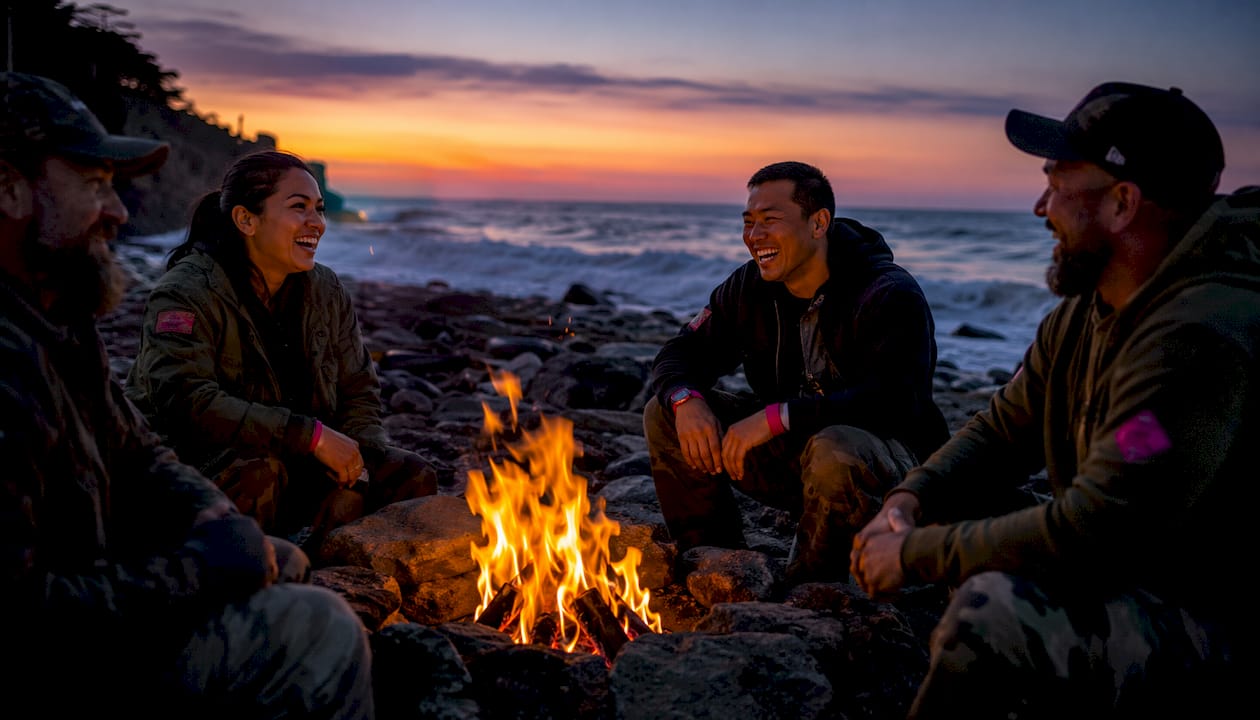
Veterans also report individual variation. Some find a solo reset in the wilderness most effective; others need the group dynamic to reestablish trust. Both responses are valid, and well-designed programs accommodate both.
Pro Tip: When choosing an outing, prioritize veteran-specific or peer-led groups over general outdoor clubs. The shared service background removes the need to explain yourself and accelerates the bonding that produces the most consistent mental-health benefits.
Common activities veterans choose and what each delivers
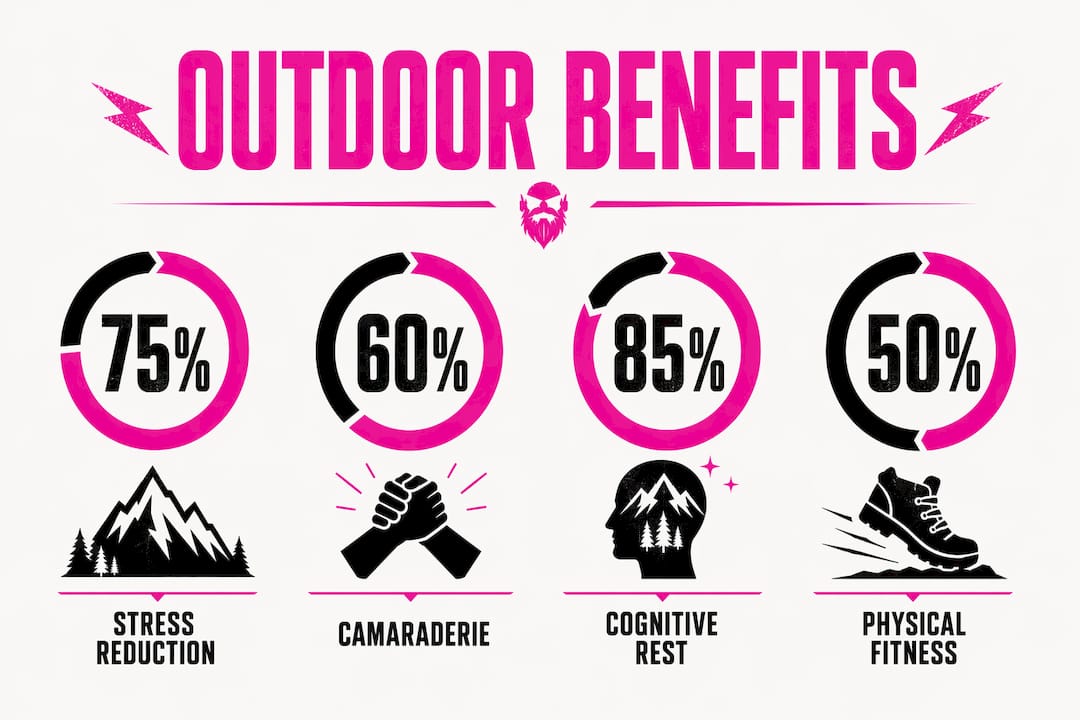
Different activities emphasize different benefits. Fishing produces calm and savoring. Rafting generates awe and team bonding. Hiking builds endurance and provides sustained attention restoration. Research confirms that diversity in activities and settings produces better outcomes than any single program type.
| Activity | Primary benefit(s) |
|---|---|
| Hiking | Attention restoration, endurance, stress reduction |
| Fishing | Savoring, calm, rumination interruption |
| Hunting | Mission focus, solitude, skills application |
| Whitewater rafting | Awe, team bonding, controlled risk |
| Adaptive sports | Inclusion, physical confidence, peer connection |
| Rock climbing | Goal completion, trust, physical challenge |
Low-barrier options for veterans with mobility limitations:
- Seated fishing from accessible piers or adaptive boats
- Nature photography walks on paved or groomed trails
- Adaptive kayaking programs through veteran nonprofits
- Viewing nature imagery, which the VA notes produces small but real mood benefits
Where veterans can find programs and VA-adjacent resources
The most credible starting points are VA-produced materials and established veteran-led nonprofits operating on public lands. National forests, parks, and wildlife refuges are the primary settings for outdoor programs for veterans, and their public-lands availability makes them accessible across most of the country.
Practical resources to evaluate:
- VA MIRECC “The Great Outdoors” guides (clinician and veteran versions): free, evidence-based, and designed for self-directed or clinician-guided use
- Warrior Expeditions: long-distance hiking, paddling, and biking programs with psychologist oversight
- Heroes’ Harvests: veteran-led hunting and fishing trips founded by a veteran
- Sierra Club Military Outdoors: structured outdoor programs with veteran staff
- Local veteran service organizations (VSOs): often maintain lists of regional outdoor programs
Before committing to a multi-day trip, check three things: whether the program has a safety screening process, whether peer-led or clinician-involved support is available, and whether adaptive options exist for your specific needs. The VA recommends using outdoor engagement as a complement to, not a replacement for, existing treatment.
How apparel expresses outdoor-veteran identity and supports causes
Apparel is not separate from the outdoor lifestyle. It is part of how veterans signal who they are on the trail, at the range, or in the gym.
Practical choices matter: moisture-wicking fabrics, layering systems, and durable footwear built for varied terrain. But symbolic choices carry equal weight. Patches, unit insignia, and messaging that references service history tell other veterans something immediately. Cause-linked purchases add another layer. Warbeardproject donates a portion of proceeds to veteran support programs, so a purchase functions as both gear and contribution. Veterans who understand why authentic brands matter to the community recognize the difference between a brand that performs veteran identity and one that is built from it.
Practical steps to build a sustainable outdoor practice
Start small. The VA’s veteran guide confirms that brief, local nature engagements produce real benefits without requiring a multiweek expedition.
- This week: Take a 20-minute daily nature microbreak. Walk a park path, sit near a tree line, or pay deliberate attention to outdoor surroundings during an existing commute.
- This month: Schedule one weekend outing with a defined goal (a specific trail, a fishing spot, a local climbing gym).
- In 90 days: Join or evaluate one veteran-specific outdoor group or program. Use the resource checklist above.
- In 6 months: Assess what format works best for you (solo reset vs. group dynamic) and build a recurring schedule around it.
Check with a clinician before high-intensity or multi-day trips if you are managing active PTSD symptoms or physical limitations. Adaptive options exist for nearly every activity type.
Pro Tip: Use SMART goals for scheduling outdoor time: Specific (a named trail or activity), Measurable (duration or distance), Achievable (matched to current fitness), Relevant (tied to a benefit you want), and Time-bound (a calendar date). The VA’s clinician manual recommends ranking activities by difficulty and building up progressively rather than starting with the most demanding option.
Key Takeaways
Veterans embrace an outdoor lifestyle because natural environments restore cognitive function, outdoor tasks mirror military structure, and group settings rebuild peer bonds that reduce isolation.
| Point | Details |
|---|---|
| Attention restoration is the core mechanism | Natural scenes restore cognitive resources by requiring low mental effort, per VA guidance. |
| Awe drives measurable stress reduction | Wilderness experiences that generate awe correlate with reduced stress in veteran outdoor programs. |
| Peer-led settings lower stigma | Veteran-specific groups make emotional disclosure more likely and reduce isolation, per Journal of Veterans Studies research. |
| Small doses work | Brief, local nature engagements produce real benefits; multiweek expeditions are not required to start. |
| Warbeardproject reflects this identity | Veteran-themed apparel with cause-linked proceeds signals outdoor and service identity while supporting veteran programs. |
The research confirms what veterans already know
The science on outdoor therapy for veterans is still developing, but the direction is consistent. Attention restoration, awe, peer bonding, and skills continuity all point the same way. What the research has not fully resolved is dosage: how much outdoor time, how often, and in what format produces lasting results. That uncertainty is not a reason to wait. It is a reason to start with what is accessible and build from there. Veterans who wear their identity on the trail, in the gym, or at the range are not making a fashion statement. They are maintaining a framework that keeps them oriented, connected, and purposeful. Apparel that reflects that framework, especially when it funds programs that support the community, is part of the same system.
Warbeardproject gear built for veterans who live outdoors
Warbeardproject makes veteran-themed activewear and accessories designed for people who take their identity seriously, on and off the trail. The New Logo Yoga Leggings are built for movement, carry the brand’s veteran-first design language, and are part of a product line where a percentage of proceeds goes directly to veteran outreach programs. This is not generic activewear with a flag on it. It is gear made by and for the military community.
Browse the full collection at Warbeardproject and wear something that means something. A portion of every purchase supports veteran programs.
Useful sources
- VA MIRECC “The Great Outdoors” Clinician Manual: Evidence-based guidance on attention restoration, behavioral activation, and SMART goal scheduling for nature-based interventions. Use for mechanisms and practical-tips sections.
- VA MIRECC “The Great Outdoors” Veteran Guide: Self-directed version of the VA nature program; covers benefits, goal-setting, and local engagement strategies. Use for practical tips and resources sections.
- Smithsonian — Why Nature-Based Therapy Is Gaining Traction Among Veterans: Profiles veteran experiences, quotes Daniel Dustin, and reports the treatment-access gap. Use for BLUF, identity, and social sections.
- Journal of Veterans Studies — A Green and Pleasant Helping Hand: Qualitative study on peer support, sleep, and wellbeing outcomes in outdoor programs for veterans with PTSD. Use for social-support and resources sections.
- Social Science & Medicine — Therapeutic Landscapes, Outdoor Programs for Veterans, and Public Lands: Scholarly review of awe, program diversity, and public-lands settings as therapeutic environments. Use for mechanisms, activities, and resources sections.