

50/25/25 Tri Blend Shirt: What Buyers Need to Know
A tri-blend shirt is a knit made from three fibers, typically 50% polyester, 25% cotton, and 25% rayon, engineered for a soft, drama hand and a heathered, vintage look. The blend runs lighter than standard cotton tees, prints with a faded, worn-in softness rather than sharp contrast, and needs gentler washing to protect the rayon content.
TL;DR:
- Tri-blend shirts are composed of 50% polyester, 25% cotton, and 25% rayon, which influences their feel, weight, and durability.
- They weigh about 3.8 to 4.3 oz/yd², making them lighter and more fluid in drape compared to heavier cotton tees.
- Printing on tri-blend fabric results in softer, faded-looking images that require thin ink layers and simple designs for best results.
- These shirts shrink less than 100% cotton but still require cold washing and low heat drying to prevent rayon shrinkage and pilling.
- Their softness and drape suit casual, vintage aesthetics, but they are less suitable for heavy-duty use or bold, opaque printing.
Table of Contents
- What Is a Tri-Blend Shirt Made Of?
- How Does Tri-Blend Feel and Look Compared to Cotton?
- What Happens When You Print on Tri-Blend Fabric?
- Does Tri-Blend Shrink, and How Should You Wash It?
- How Do You Choose the Right Tri-Blend Shirt?
- Why Warbeard Project Weighs Tri-Blend Against Other Fabrics
- The Real Trade-Off Nobody Explains Clearly Enough
- Shirts Built for Comfort, Fit, and What Warbeard Project Stands For
- Sources
- FAQ
What Is a Tri-Blend Shirt Made Of?
The ratio isn’t a marketing gimmick. The industry-standard tri-blend blank runs 50% polyester, 25% cotton, and 25% rayon, with polyester making up the largest single fraction by weight. Each fiber does a specific job, and understanding that job explains why the shirt feels the way it does.
- Polyester brings shrink resistance, shape retention, and durability. It’s why tri-blend tees hold their cut wash after wash better than a straight cotton tee.
- Cotton contributes breathability and absorbency, softening the synthetic edge polyester would otherwise leave behind.
- Rayon (viscose) is a regenerated cellulose fiber that adds the silky drape and fluid hand tri-blend is known for, though it loses strength and can shrink when wet.
There’s a practical shortcut worth remembering: fiber content lists on a garment label typically appear in order of dominance. Whatever’s listed first usually drives the shirt’s dominant characteristics, so if you flip the tag and see “polyester” first, expect a shirt that leans synthetic in feel and performance even inside a tri-blend construction. Common tri-blend blanks in the market include styles like Next Level 6010, Bella+Canvas 3413, and American Apparel TR401, all built on roughly the same fiber math.
How Does Tri-Blend Feel and Look Compared to Cotton?
Pick up a tri-blend shirt and a standard cotton tee side by side, and the difference is immediate. Tri-blend fabric typically weighs 3.8 to 4.3 oz/yd², or about 130 to 145 GSM, noticeably lighter than midweight 100% cotton shirts, which often run closer to 150 to 180 GSM.
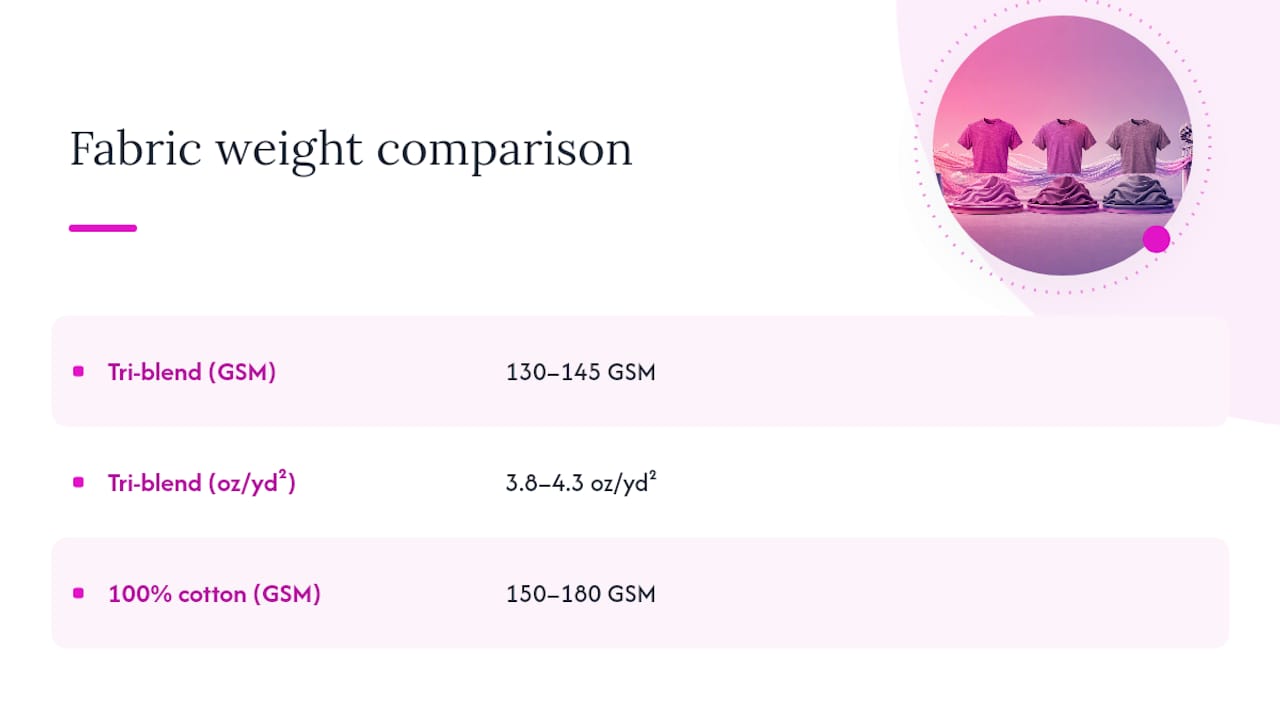
That lighter weight, combined with rayon’s smooth surface, produces the fluid drape people associate with tri-blend. It moves with the body instead of holding a stiff shape.
The heathered color effect isn’t dyed on. It happens because polyester, cotton, and rayon each absorb dye at different rates, creating a naturally mottled, slightly faded appearance straight off the production line. That’s also the mechanism behind tri-blend’s reputation as a premium, ultra-soft blank that costs more than CVC or 50/50 shirts.
The trade-off comes in two forms. Lighter weight means light colors, especially white and pastel tones, run semi-sheer under bright light. And fine yarn counts that create that soft hand are also more prone to pilling with heavy wear or rough washing.
What Happens When You Print on Tri-Blend Fabric?
If you’re ordering custom apparel, knowing how ink behaves on tri-blend saves you from a disappointing reveal. Prints on tri-blend fabric come out softer and slightly faded looking, because the fabric’s texture and low weight don’t carry thick, glossy ink the way heavier cotton does.
- Direct-to-garment (DTG) printing tends to suit tri-blend well, producing fine detail with a soft hand that matches the fabric’s character. Compare methods in more depth in this screen print vs. DTG breakdown.
- Screen printing with heavy, opaque inks reads less cleanly on tri-blend. The ink sits on a surface that wants to flex and drape, not stay rigid.
- For bold, high-contrast branding or corporate logos, a heavier cotton or 50/50 blank generally performs better.
Print vendors often steer premium retail lines toward tri-blend specifically because the soft-hand, vintage aesthetic is the point, not a limitation.
Pro Tip: If you’re designing a graphic for a tri-blend shirt, keep ink layers thin and avoid dense color blocking. The fabric rewards simple, single-tone artwork over heavily layered designs.
Does Tri-Blend Shrink, and How Should You Wash It?
Polyester’s presence means tri-blend shirts generally shrink less than a 100% cotton tee. But that protection isn’t absolute, because rayon loses strength when saturated and can shrink under agitation if you wash it aggressively.
- Wash cold on a gentle cycle. Hot water and rough agitation stress the rayon fibers most.
- Skip high heat drying. Air dry or use low heat to preserve drape and reduce pilling.
- Expect gradual, not dramatic, change. Shape retention stays good over time, but pilling risk increases with wear, and light colors may show a bit more sheerness as fibers relax.
For printed graphics specifically, gentle washing also protects ink and any applied patches, a principle covered well in this guide to washable patch care. Always check the garment’s own care label before deviating from these defaults; manufacturer instructions account for specific finishing treatments a general rule can’t predict.
How Do You Choose the Right Tri-Blend Shirt?
Buying a tri-blend shirt comes down to matching the fabric’s strengths to your actual use case, not just grabbing whichever one looks softest on the rack.
- Check the exact percentages on the label, not just the word “tri-blend.” Ratios vary between brands, and the first-listed fiber tells you which properties will dominate.
- Match weight to purpose. Lighter tri-blends suit casual, warm-weather wear; if you need more opacity or a sturdier hand, look for a heavier blank instead.
- Think about fit. Athletic or muscular builds often do better in a slightly more structured cut, since tri-blend’s drape can read as loose rather than fitted under strain, a nuance detailed in Warbeard Project’s athletic fit notes.
- Consider alternate blends when print brightness matters more than softness. A CVC or 50/50 blank resists sheerness and holds bold color better than tri-blend.
Why Warbeard Project Weighs Tri-Blend Against Other Fabrics
Fabric choice for veteran apparel isn’t just about softness. It’s about whether a shirt can carry a mission-driven design honestly and hold up over years of wear, not months.
Warbeard Project’s experience selecting fabrics for nonprofit and fundraising apparel comes down to a recurring trade-off: tri-blend’s soft hand and vintage drape look great, but bold logo work, especially insignia-style graphics common in veteran apparel, often reads better on a heavier cotton or CVC blank.
- Softness and drape win for everyday, casual pieces meant to feel broken-in from day one.
- Print brightness and opacity win when a design carries symbolic weight that needs to stay crisp.
- Pilling resistance matters more for pieces expected to see daily wear across seasons.
The Real Trade-Off Nobody Explains Clearly Enough
Most explainers treat tri-blend like it’s simply “the soft one” and cotton like it’s simply “the durable one.” That framing undersells what’s actually happening. Tri-blend isn’t softer because someone chose comfort over durability. It’s softer because rayon’s chemistry trades tensile strength for drape, and that trade shows up specifically when the fabric gets wet.
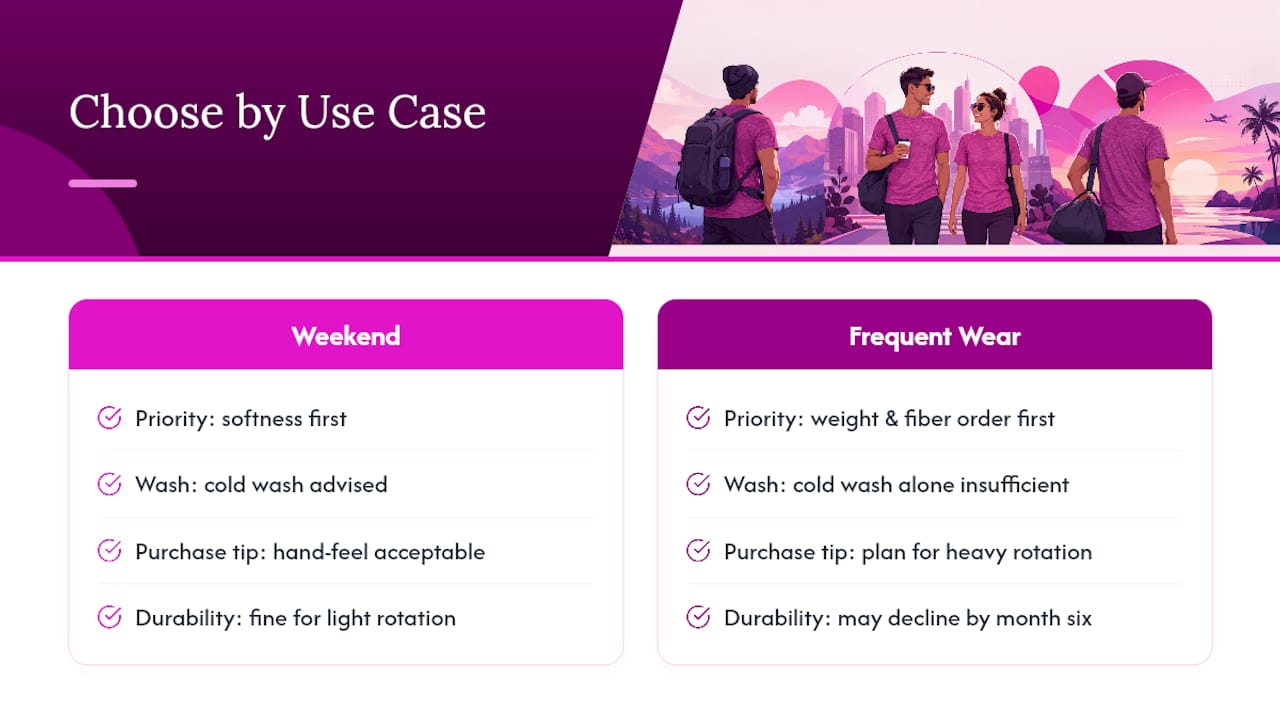
The conventional advice to “just wash it cold” is correct but incomplete. The bigger point people miss is that tri-blend rewards planning ahead of the purchase, not just careful laundering after it. If you know a shirt is going into heavy rotation, weight and fiber order should drive the decision before softness does. Buyers who prioritize hand-feel first and durability second often end up disappointed by month six, not because the fabric failed, but because it was never built for that job.
What should come first isn’t the fabric’s story, it’s your use case. A tri-blend tee for weekend wear and a tri-blend tee meant to survive weekly gym washes are two different purchases wearing the same label.
— Ian
Shirts Built for Comfort, Fit, and What Warbeard Project Stands For
The company designs shirts around fit and mission first, then lets fabric choice serve that purpose, giving tees that fit real bodies and support veteran outreach with every purchase.
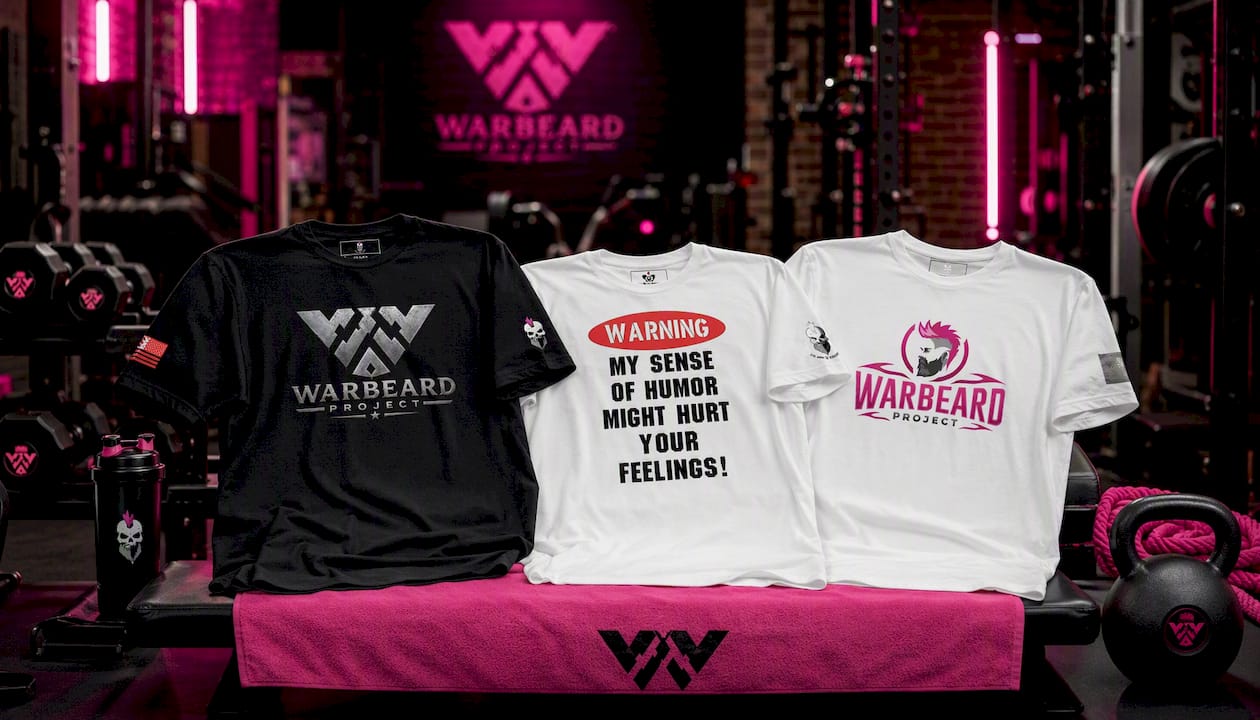
Three styles stand out for readers weighing comfort against durability. The Iron Logo Unisex classic tee suits anyone who wants a clean, everyday fit with graphic detail that holds up to regular wear. The Warning Classic Tee works for buyers who want a slightly bolder statement piece without sacrificing comfort. The New Logo Tee fits well for casual layering or everyday rotation where softness matters most.
Browse the full apparel collection to find the fit and fabric that match how you actually plan to wear it.
Sources
For manufacturer-level detail, see this tri-blend composition breakdown and Threadless’s fiber explainer, both covering blank specs and print behavior.
- What Is a Tri-Blend T-Shirt? Composition and Feel
- What Is a Tri-Blend T-Shirt
- What Does Triblend Mean? - Creative Resources - Threadless
FAQ
Is Cotton or Tri-Blend Better?
Neither wins outright. Cotton offers more durability and better opacity for bold prints, while tri-blend delivers a softer hand, lighter weight, and a heathered look that cotton alone can’t produce.
Are Tri-Blend Shirts Good Quality?
Tri-blend shirts are well made for their intended purpose: soft, comfortable everyday wear with a vintage aesthetic. They’re not built for the same heavy-duty durability as thicker 100% cotton or CVC blanks, so quality depends on matching the fabric to the right use case.
Is Tri-Blend the Same as Dri-Fit?
No. Tri-blend is a cotton, polyester, and rayon knit built for softness and drape, while moisture-wicking performance fabric, often branded as Dri-Fit, is typically 100% polyester engineered specifically to pull sweat away from skin during exercise.
Does Tri-Blend Fabric Shrink?
Tri-blend shrinks less than many 100% cotton shirts because polyester resists shrinkage, but the rayon content can still shrink and weaken if washed hot or agitated heavily. Cold water and a gentle cycle keep shrinkage minimal.