

What Does a Combat Patch Signify in Military Service?
A combat patch is defined as a permanent right-sleeve insignia worn by U.S. Army soldiers who have served in a designated hostile fire zone or qualifying combat area. Officially called the Shoulder Sleeve Insignia – Former Wartime Service (SSI-FWTS), it marks a soldier’s deployment to a specific unit in a combat theater. The patch stays on the uniform for the rest of a soldier’s career, making it one of the most visible and lasting symbols in American military service. Understanding what does combat patch signify gives you a clearer picture of how the Army honors collective operational experience.
What does a combat patch signify in the U.S. Army?
The combat patch signifies verified service in a hostile or combat-designated environment, not personal heroism. It tells anyone who reads a uniform that the wearer deployed with a specific unit to a qualifying theater of operations. That distinction matters. The patch is a collective marker, not an individual award.
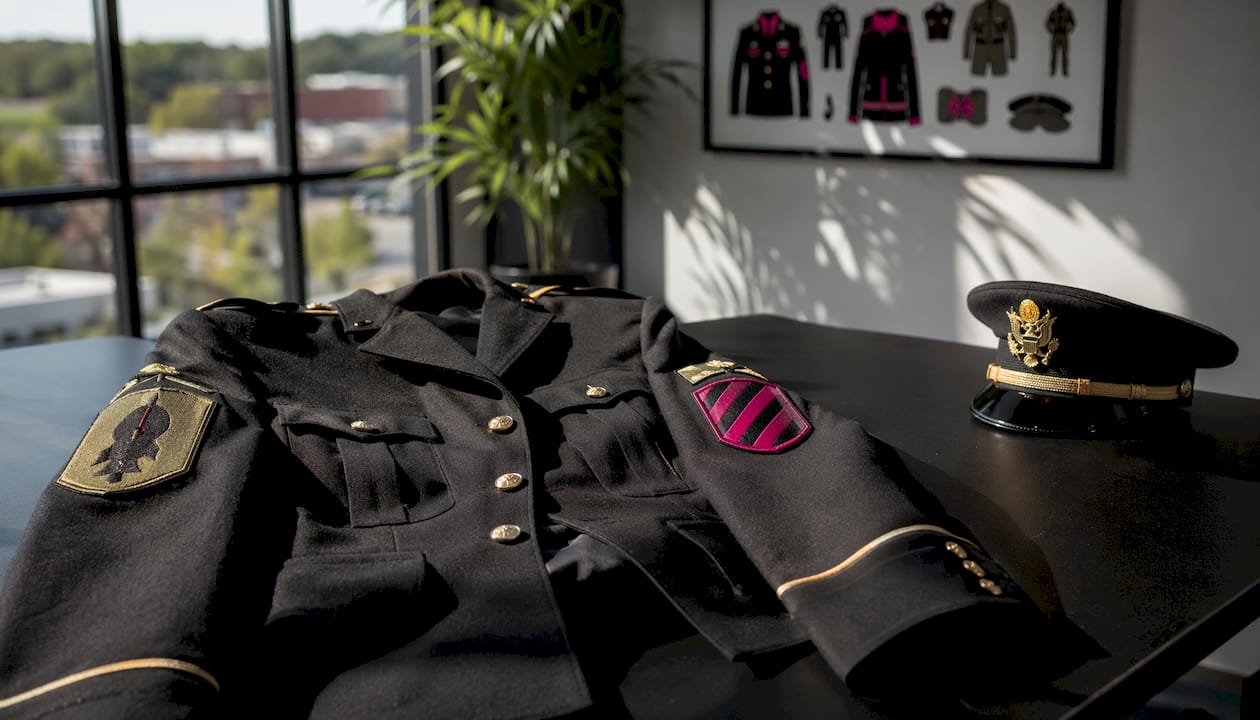
The Army governs patch placement through AR 670-1, the uniform regulation that defines authorized wear, placement on the right sleeve, and eligibility criteria. Only the U.S. Army uses this right-sleeve tradition as a formal symbol of former wartime service. No other U.S. military branch has an equivalent authorized practice.
The left sleeve carries the current unit patch. The right sleeve carries the combat patch from a past deployment. That physical separation on the uniform tells two different stories at a glance: where you serve now, and where you served under fire.
How did the combat patch tradition start?
The practice of wearing a combat patch originated informally during World War II, when soldiers in active combat zones began wearing their unit insignia on the right sleeve to distinguish themselves from troops who had not deployed. The Army had not yet formalized the rule, but the tradition spread organically because it filled a real need. Soldiers wanted a visible way to identify shared experience.
After World War II, the Army formalized the right-sleeve rule, turning an informal practice into a regulated part of the uniform code. That shift transformed the patch from a battlefield custom into an institutional symbol with defined eligibility and placement requirements.
- The patch permanently links a soldier to their deployed unit, not just their current assignment.
- It reflects shared hardship across an entire formation, not a single act of valor.
- Once earned, it stays on the uniform for the duration of a military career.
- The tradition connects generations of soldiers who served in the same units across different wars.
Pro Tip: If you are researching a veteran’s service history, the right-sleeve patch tells you which unit they deployed with and roughly which conflict era they served in. Cross-reference the unit insignia with Army deployment records for a more complete picture.
The permanence of the patch is what gives it weight. A soldier who earned a combat patch in Afghanistan in 2005 still wears that insignia in 2026. It is a career-long record stitched into the uniform itself.
Who qualifies for a combat patch under current Army policy?
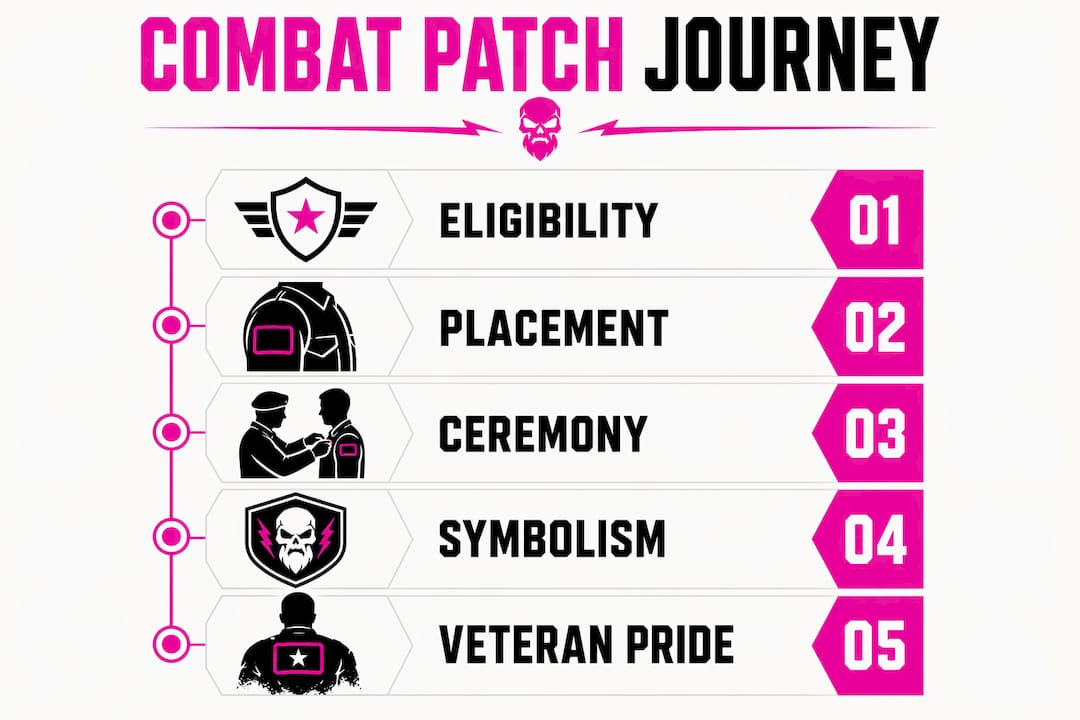
Eligibility for the SSI-FWTS is defined by AR 670-1 and requires service in a designated hostile fire or combat zone for a minimum qualifying period. The Army expanded eligibility criteria in 2026 to reflect the realities of modern warfare, where combat risk is often dispersed across wide operational areas rather than concentrated on a defined front line.
The 2026 expansion recognizes that soldiers in cyber, logistics, and support roles can face operational risk in hostile environments without ever engaging in direct combat. That recognition is a significant institutional shift. It means the combat patch now acknowledges a broader range of service than it did in previous decades.
- The soldier must serve in a unit assigned or attached to a qualifying combat or hostile fire area.
- Service must meet the minimum time threshold defined by current Army regulations.
- The unit must be officially designated as operating in a qualifying theater.
- Authorization comes through the chain of command, not self-designation.
- Wear on the Army Combat Uniform (ACU) or Operational Camouflage Pattern (OCP) uniform follows strict right-sleeve placement rules.
Pro Tip: Soldiers transitioning out of service should verify their SSI-FWTS authorization is documented in their official military records before separation. Correcting records after discharge is possible but takes significantly longer.
2026 policy update: The Army’s expansion of combat patch eligibility reflects a formal acknowledgment that modern combat zones do not always resemble the linear battlefields of World War II or Korea. Dispersed threats, cyber operations, and advise-and-assist missions now fall within the scope of qualifying service.
Unauthorized wear of a combat patch on an official uniform is a serious breach of military etiquette. It can constitute stolen valor, which carries both social and legal consequences. The patch is not a fashion choice. It is a regulated insignia with specific authorization requirements.
What does the combat patch symbolize beyond eligibility?
Military uniform historians describe the combat patch as a visible story of service chapters. Each patch names a unit and implies a theater, a time period, and a set of shared conditions. A soldier wearing the 101st Airborne Division patch on their right sleeve is communicating a specific operational history without saying a word.
The patch functions as institutional memory. Veteran organizations recognize the combat patch as a collective marker of high-stakes military effort, one that fosters unit pride and connects generations of soldiers who served under the same colors. That connection runs deep in military culture.
- The patch signals operational risk shared across an entire unit, not individual achievement.
- It holds prestige within military communities because it cannot be purchased or awarded for administrative service.
- Veterans and military collectors treat combat patches as historical artifacts that document specific deployments.
- The patch carries weight in veteran communities as proof of shared experience, not just rank or time served.
“The combat patch is the one piece of the uniform that tells you where a soldier has been, not just where they are. It is a permanent record of operational commitment that no promotion or reassignment can erase.”
The patch also plays a role in service branch pride among veterans long after they leave active duty. Many veterans incorporate their unit insignia into civilian life through apparel, displays, and collections. That practice reflects how deeply the patch connects to personal identity.
The combat patching ceremony formalizes the moment a soldier earns the right to wear the insignia. Commanders typically conduct the ceremony in theater, replacing the soldier’s left-sleeve patch with the right-sleeve combat patch in front of their unit. The ceremony serves as a morale event and a public affirmation of the soldier’s operational history.
How does a combat patch differ from individual combat badges?
The combat patch and individual combat badges like the Combat Infantry Badge (CIB) or Combat Action Badge (CAB) are not the same thing. Confusing them is one of the most common misunderstandings about military insignia.
The key distinction is this: the combat patch indicates presence in a qualifying combat zone, while individual badges require direct engagement with enemy forces. A soldier can earn a combat patch without ever firing a weapon or being fired upon. A soldier cannot earn the CIB or CAB without documented direct combat engagement.
| Insignia | What it requires | What it signifies |
|---|---|---|
| Combat patch (SSI-FWTS) | Service in a qualifying hostile fire zone | Deployment presence with a specific unit |
| Combat Infantry Badge (CIB) | Direct engagement with enemy forces | Personal combat action as an infantryman |
| Combat Action Badge (CAB) | Direct engagement with enemy forces | Personal combat action for non-infantry soldiers |
Uniform regulations place badges and patches in different locations and treat them as separate categories of recognition. Badges sit on the chest. The combat patch sits on the right sleeve. They answer different questions about a soldier’s service record.
The formal combat patch ceremony marks the moment eligibility is conferred. There is no equivalent ceremony for individual combat badges, which are processed through administrative channels after action review. That difference in how each is conferred reflects their different purposes.
Key Takeaways
The combat patch is a permanent, regulated insignia that marks collective deployment in a hostile zone, distinct from individual combat awards and governed by AR 670-1.
| Point | Details |
|---|---|
| Official designation | The combat patch is formally called SSI-FWTS and is authorized on the right sleeve only. |
| Eligibility standard | AR 670-1 defines qualifying hostile fire zones; the 2026 update expanded eligibility for modern warfare roles. |
| Collective vs. individual | The patch marks unit-level deployment presence, not personal combat action like the CIB or CAB. |
| Permanence | Once earned, the patch stays on the uniform for the soldier’s entire career. |
| Unauthorized wear | Wearing a combat patch without qualifying service violates military etiquette and may constitute stolen valor. |
Why the combat patch still carries weight in 2026
The combat patch is one of the few pieces of military insignia that gets more meaningful over time, not less. I have spent years around veterans and military collectors, and the right-sleeve patch consistently draws more genuine conversation than rank, ribbons, or even individual awards. It names a unit. It implies a place and a time. It opens a story.
What strikes me most about the 2026 eligibility expansion is that it reflects intellectual honesty from the Army. Modern warfare does not look like Normandy or the Ia Drang Valley. Soldiers in cyber units, logistics convoys, and advise-and-assist missions face real operational risk in dispersed environments. Acknowledging that risk through the combat patch is the right call. It keeps the insignia credible rather than letting it calcify into a relic of a different era of warfare.
The patch also matters because it resists inflation. You cannot earn it through time in service alone, and you cannot buy it. That scarcity is what gives it authority in military communities. When you see a combat patch on a veteran’s right sleeve, you know something specific and verifiable about where that person has been. That kind of clarity is rare in a world full of vague credentials.
Respect for the patch starts with understanding what it actually means. The role of military tradition in how veterans carry their service into civilian life is real and worth taking seriously.
— Ian
Veteran apparel that honors military insignia traditions
Warbeardproject builds apparel for veterans and military enthusiasts who take the history behind military symbols seriously.
The designs at Warbeardproject draw from the same respect for military heritage that makes the combat patch meaningful. Whether you are a veteran carrying your service history or someone who wants to honor that tradition, the collection reflects that commitment. The New Logo Yoga Leggings are one example of how Warbeardproject translates military-inspired identity into everyday wear. A portion of proceeds supports veteran-focused causes, connecting purchases to the community the brand represents.
FAQ
What is a combat patch in the U.S. Army?
A combat patch is the Shoulder Sleeve Insignia – Former Wartime Service (SSI-FWTS), worn on the right sleeve of the Army uniform. It marks a soldier’s deployment with a specific unit in a qualifying hostile fire or combat zone.
How does a soldier earn a combat patch?
A soldier earns a combat patch by serving in a unit assigned to a qualifying combat or hostile fire area for the minimum period defined by AR 670-1. The patch is authorized through the chain of command and conferred in a formal ceremony.
Does a combat patch mean a soldier saw direct combat?
No. The combat patch indicates service in a qualifying hostile environment, not direct engagement with enemy forces. Individual badges like the Combat Infantry Badge (CIB) or Combat Action Badge (CAB) require documented direct combat action.
Can veterans wear their combat patch after leaving the Army?
Veterans can display or reference their combat patch in civilian contexts, but wearing it on an official military uniform without authorization violates AR 670-1. Unauthorized wear on a uniform may constitute stolen valor.
What changed about combat patch eligibility in 2026?
The Army expanded SSI-FWTS eligibility in 2026 to recognize modern warfare’s dispersed operational environments. Soldiers in cyber, logistics, and support roles serving in qualifying hostile areas now meet the updated eligibility criteria.