

Combat Veteran Designation: What It Means for Your Benefits
Combat veteran designation is an official administrative status assigned by the Department of Veterans Affairs to veterans who meet specific service criteria tied to combat zone exposure, hazardous duty pay, or qualifying combat awards. It is not a measure of valor. It is a bureaucratic classification that unlocks enhanced benefits, legal protections, and priority healthcare enrollment unavailable to veterans without it.
Three criteria qualify a veteran for this designation. Meeting any one of them is sufficient:
- Receipt of hostile fire or imminent danger pay during active service
- Receipt of recognized combat service medals (such as the Combat Infantryman Badge or Purple Heart)
- Documented service in a theater of combat operations, recorded on the DD-214
The Veterans Benefits Administration and the VA jointly administer this status. The statutory foundation sits in 38 U.S.C. § 1710(e), which defines combat veterans as those who served in a theater of combat operations after the Persian Gulf War period and were discharged after September 11, 2001. The DD-214 discharge document is the primary record used to verify this status.
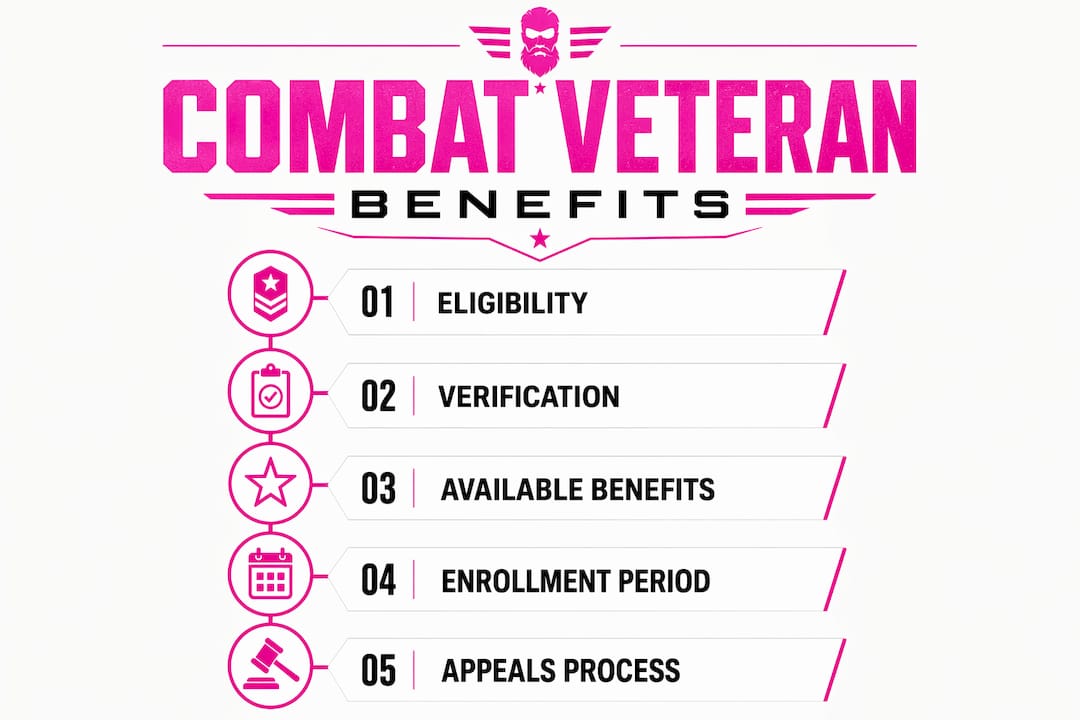
What are the official criteria and how do you verify your status?
The VA accepts three forms of evidence to establish combat veteran status, and only one is required. Military service documentation reflecting combat theater deployment, receipt of combat service medals, and receipt of combat tax exemption, imminent danger pay, or hostile fire pay all qualify independently.
On the DD-214, two blocks carry the critical information:
- Block 13 lists decorations, medals, badges, citations, and campaign ribbons
- Block 18 contains remarks, including notations about hazardous duty pay or combat zone service
Errors and omissions on DD-214 forms are common. If your combat service is not reflected accurately, you can request a DD-215 to correct or add missing combat annotations. This correction can be the difference between qualifying for Priority Group 6 healthcare and being assigned to a lower group based on income.
Pro Tip: Request your complete service records from the National Archives before filing any VA claim. Gaps in Block 13 or Block 18 are correctable via DD-215, and missing combat annotations can be added with supporting documentation such as unit orders, pay records, or award citations.

Recognized combat awards that establish designation include the Purple Heart, Combat Infantryman Badge, Combat Action Badge, Combat Medical Badge, and theater-specific campaign medals. The VA maintains an official list of qualifying locations and time periods in the appendices of VHA Directive 1601A.02.
How does combat veteran status differ from regular veteran status?
Basic veteran status requires only an honorable or general discharge from active military service. Combat veteran designation requires proof of qualifying service conditions, and that distinction carries real consequences for benefits access.
Veterans without combat designation are subject to income-based eligibility for VA healthcare. Combat veterans discharged after September 11, 2001, receive Priority Group 6 enrollment for 10 years post-discharge, regardless of income. That enrollment covers care and medications for conditions related to combat service at no cost.
Several misconceptions persist about who qualifies:
- Role does not determine eligibility. Medical personnel, logistics specialists, drone operators providing direct support in combat theaters, and other support roles legally qualify as combat veterans based on zone exposure, not job title.
- Combat designation is not the same as “engaged in combat.” Under 38 U.S.C. § 1154(b), the evidentiary standard for proving personal combat engagement differs from the zone-based standard used for healthcare enrollment.
- Wartime veteran status is a separate category. A veteran can be a wartime veteran without holding combat designation, and vice versa in some administrative contexts.
The legal advantage under 38 U.S.C. § 1154(b) is significant. Combat veterans who personally engaged enemy forces can submit credible lay evidence to establish service connection for disabilities, even without official records. This shifts the burden of proof in a way that no other veteran category enjoys.
What benefits are available specifically to combat veterans?

The benefits tied to combat designation go well beyond healthcare priority. The most immediate is the 10-year enhanced enrollment window under 38 U.S.C. § 1710(e), placing qualifying veterans in Priority Group 6 from the date of discharge.
Key benefits include:
- Cost-free VA care for any condition a VA provider determines may be related to combat service. The clinical standard requires only a possibility of association, not definitive proof.
- Combat-Related Special Compensation (CRSC): Tax-free payments to retired veterans with combat-related disabilities, available to those with a VA disability rating at a qualifying level and a reduction in military retirement pay due to VA disability offsets. a statute of limitations applies.
- Presumptive service connection: Certain conditions are presumed connected to combat service, removing the burden of proving causation for disability claims.
- Federal hiring preferences: Combat veterans receive additional points under the Veterans’ Preference system for federal employment.
- Education and housing programs: Combat veterans may access GI Bill benefits and VA home loan guarantees with fewer restrictions than non-combat veterans.
After the 10-year enhanced enrollment period ends, veterans remain enrolled in VA healthcare but are reassigned to the highest priority group their other eligibility factors support. Copayments may apply at that point for conditions unrelated to combat service.
How do you appeal a VA decision on combat veteran status?
Denials or disputes over combat designation typically stem from incomplete service records, missing DD-214 annotations, or insufficient documentation of qualifying pay or awards. The appeals process requires building an evidentiary record that directly addresses the gap the VA identified.
Steps to take when contesting a denial:
- Obtain a corrected DD-215 if Block 13 or Block 18 is missing combat notations
- Gather pay records showing receipt of hostile fire or imminent danger pay
- Collect award citations, unit orders, and after-action reports that document combat zone presence
- Submit a Notice of Disagreement with the VA regional office that issued the denial
Under 38 U.S.C. § 1154(b), credible lay evidence carries legal weight for veterans who personally engaged enemy forces. Buddy statements, personal statements, and unit histories can all support an appeal when official records are incomplete. The benefit-of-the-doubt rule under 38 U.S.C. § 5107(b) requires the VA to resolve approximate evidentiary ties in the veteran’s favor.
Consulting a Veterans Service Organization (VSO) or an accredited VA claims agent before filing an appeal reduces procedural errors. Legal representation is available at no cost through organizations accredited by the VA.
Understanding the broader context of combat veteran identity
Combat veteran designation means different things depending on which federal agency is applying it. The VA uses it for healthcare enrollment under 38 U.S.C. § 1710(e). The IRS applies it for combat pay tax exclusions. The DoD uses it for CRSC eligibility. A veteran may qualify under one agency’s definition and not another’s, which creates real confusion when navigating multiple benefit systems simultaneously.
The Vet Center program, administered by the VA, extends eligibility to veterans who served in any combat theater or area of hostility, covering conflicts from World War II through current operations. This includes unmanned aerial vehicle crew members who provided direct support in combat zones, reflecting how the definition has expanded with modern warfare.
Common misunderstandings among veterans include:
- Assuming that a non-combat MOS automatically disqualifies them from designation
- Believing that combat designation requires a Purple Heart or similar high-profile award
- Confusing combat veteran status with disabled veteran status, which has separate criteria
Nonprofit organizations and VSOs assist veterans with status verification, records correction, and benefits access. Warbeardproject recognizes the veteran transition process as one that extends well beyond discharge paperwork, and the veteran identity that comes with combat designation carries weight in civilian life that no administrative label fully captures.
Key Takeaways
Combat veteran designation is a specific administrative status under 38 U.S.C. § 1710(e) that requires proof of combat zone service, qualifying pay, or recognized combat awards, and it unlocks 10 years of Priority Group 6 VA healthcare enrollment post-discharge.
| Point | Details |
|---|---|
| One criterion is enough | Hostile fire pay, a combat medal, or documented theater service each independently establish designation. |
| DD-214 blocks 13 and 18 | These two blocks contain the awards and pay notations the VA uses to verify combat status. |
| healthcare eligibility window lasting a defined extended period post-discharge | Combat veterans discharged after September 11, 2001, receive Priority Group 6 enrollment for 10 years post-discharge. |
| 38 U.S.C. § 1154(b) advantage | Combat veterans can use credible lay evidence to establish service connection when official records are incomplete. |
| CRSC has a 6-year limit | Combat-Related Special Compensation claims must be filed within 6 years of a VA rating decision to receive full back payments. |