

Why Military Members Value Off-Duty Style
Off-duty style for military members is a purposeful expression of identity, not a casual afterthought. Service members spend the majority of their waking hours in uniform, operating under strict dress codes that eliminate personal choice. The moment that uniform comes off, clothing becomes one of the few spaces where individual identity can surface. Understanding why military members value off-duty style means recognizing that what they wear outside the gate carries psychological, cultural, and professional weight that most civilians never consider.
Why military members value off-duty style: the psychology behind it
Off-duty attire functions as a psychological reset for service members. The act of changing out of a uniform signals a mental shift from mission mode to personal time. That transition is not trivial. Military life demands constant role discipline, and clothing is one of the clearest external signals that a different mode is now active.
Special operations forces have long understood this principle. Elite operators historically favored non-regulation clothing to foster unique unit culture and morale, distinct from conventional force constraints. That practice was never purely aesthetic. It built camaraderie, reinforced unit identity, and gave operators a sense of autonomy within a rigid system. The style choice carried meaning that outsiders could not fully read.
This dynamic extends across all branches. Off-duty fashion choices serve as markers of belonging and shared experience. A veteran wearing a specific type of jacket or boot is not just making a style decision. That choice communicates history, values, and group membership to others who recognize the signals.
- Morale and unit cohesion: Shared style markers outside the uniform reinforce esprit de corps and group identity.
- Psychological transition: Changing clothes is a concrete, physical act that helps service members mentally leave the job behind.
- Personal autonomy: Off-duty clothing is one of the few areas where individual preference is fully permitted.
- Cultural shorthand: Specific garments signal shared experience to fellow veterans without a word spoken.
Pro Tip: If you struggle to mentally disconnect from work after duty hours, treat getting changed as a deliberate ritual rather than a routine task. The physical act of choosing what to wear reinforces the mental boundary between service and personal time.
How does off-duty style affect veterans’ integration into civilian life?
The transition from military to civilian life is one of the most demanding identity shifts a person can face. Clothing plays a larger role in that shift than most veterans expect. Veterans often underestimate their post-military wardrobe as a critical tool for civilian integration and professional credibility. That underestimation costs them in job interviews, networking events, and first impressions.
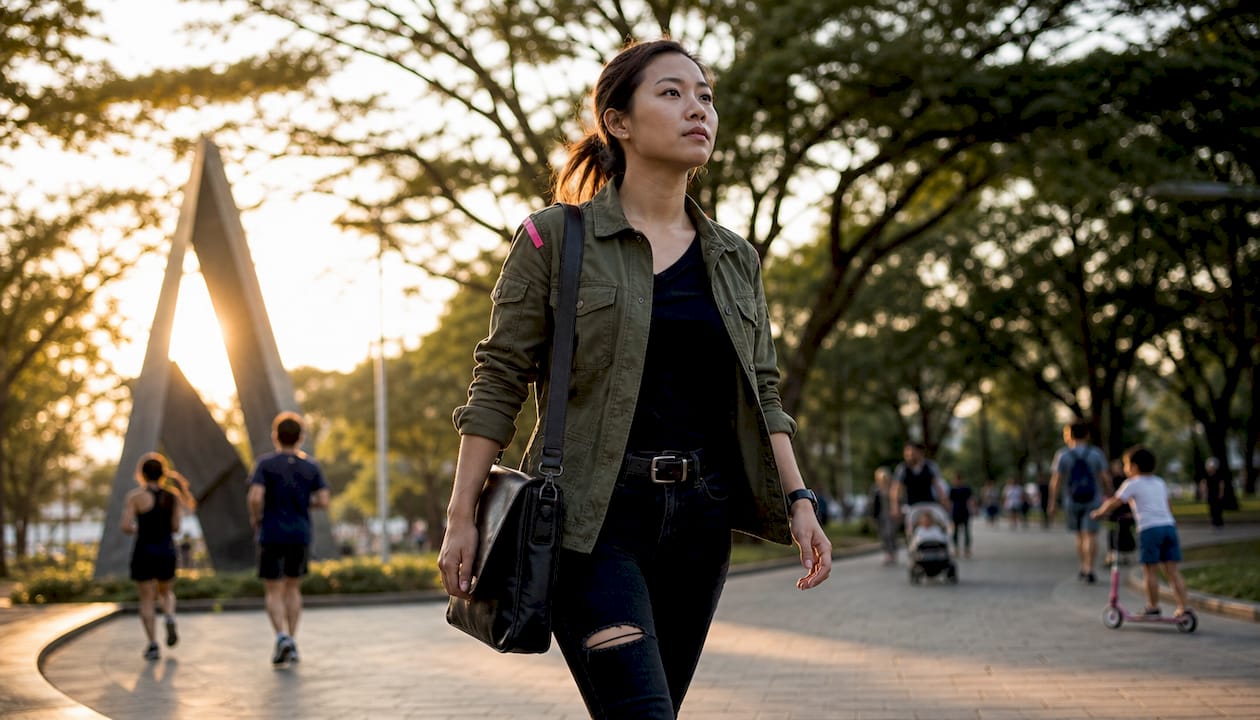
Civilian employers read appearance as a proxy for competence and reliability. A structured off-duty look acts as a visual shorthand for attention to detail in civilian workplaces. Veterans who carry their grooming discipline into civilian dress signal exactly the qualities employers want: reliability, self-management, and professionalism.
The challenge is that military culture rewards rank and hierarchy as the primary markers of status. Civilian environments value influence through relationships and expertise instead. That means the uniform, the insignia, and the rank structure no longer communicate what they once did. Veterans must build a personal brand through presentation, and clothing is the most visible layer of that brand.
Key areas where off-duty fashion significance directly affects civilian integration:
- Job interviews: A well-fitted, pressed outfit signals the same discipline as a sharp uniform.
- Networking: Intentional dress communicates that you take the environment seriously.
- Daily credibility: Consistent grooming and fit reinforce the professional presence veterans built in service.
- Personal confidence: Wearing clothes that fit your identity reduces the disorientation many veterans feel post-separation.
Leaving rank at the gate and building influence through personal presence is the civilian equivalent of earning respect through performance. Your wardrobe is part of that performance. The role of veteran transition in shaping clothing choices is well documented, and veterans who approach their wardrobe with the same intentionality they applied to their kit consistently report stronger civilian outcomes.
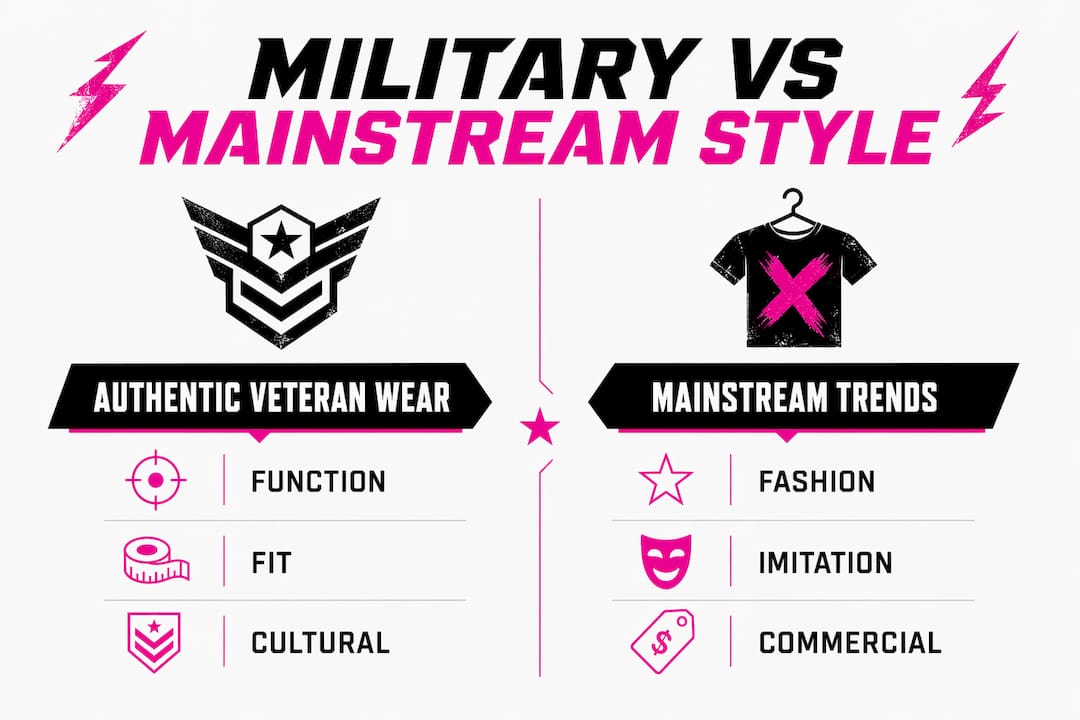
What separates authentic military fashion from mainstream military-inspired trends?
The military aesthetic has been commercially adopted by mainstream fashion for decades. Field jackets, cargo pants, and combat boots appear in retail catalogs every fall. For veterans, that adoption lands very differently than it does for civilian shoppers.
Commercialized military aesthetics can feel dismissive to those with service experience. The tension is not about gatekeeping style. It is about context. A field jacket worn by someone who spent months in one carries a different weight than the same jacket worn as a seasonal trend piece. Veterans recognize that difference immediately, even when civilians do not.
The historical adoption of military surplus clothing was organic and practical. Military surplus became mainstream due to durability and practicality, not aesthetic appeal. Field jackets and boots entered civilian wardrobes because they worked, not because they looked tactical. Modern “combat as accessory” marketing strips that functional origin and replaces it with imagery. That substitution is what veterans find reductive.
| Style category | Defining characteristic |
|---|---|
| Authentic veteran wear | Garments chosen for function, fit, and personal history |
| Military-inspired fashion | Aesthetic borrowing without functional or cultural context |
| Tactical lifestyle apparel | Purpose-built gear adapted for civilian use by those with service background |
| Mainstream military trend | Seasonal retail adoption of military silhouettes and colorways |
Pro Tip: When building your off-duty wardrobe, prioritize veteran-focused apparel designed with actual service context in mind. The difference in construction, fit, and cultural accuracy is immediately apparent.
What practical tips help military members build effective off-duty wardrobes?
Building a strong off-duty wardrobe follows the same logic as building a strong kit. You start with what works, you prioritize quality over quantity, and you maintain what you have. The discipline that makes a service member effective in uniform applies directly to personal style outside it.
-
Prioritize fit above all else. A well-fitted basic garment outperforms an expensive item that does not fit. Fit communicates intentionality. Baggy or ill-fitting clothes read as inattention, which contradicts the discipline veterans carry from service.
-
Invest in grooming as part of the outfit. Pressing shirts, shoe polishing, and grooming translate military discipline to civilian appearance and make a significant positive difference in professional environments. The clothes and the grooming work together.
-
Build a core wardrobe before adding variety. Start with neutral, versatile pieces that work across multiple contexts. Dark jeans, clean white or navy shirts, and leather or leather-look shoes cover most civilian situations. Add personality through accessories and outerwear once the foundation is solid.
-
Choose quality materials that hold their shape. Cotton twill, merino wool, and structured denim maintain their appearance through repeated wear. Cheap fabrics lose shape quickly, which undermines the polished look you are building.
-
Avoid over-indexing on tactical gear in civilian contexts. Tactical clothing has its place, and why veterans choose tactical clothing is a legitimate discussion. However, wearing full tactical kit to a civilian job interview or social event misreads the room. Context determines appropriateness.
-
Treat your wardrobe like your equipment. Inspect, maintain, and replace items on a schedule. Worn-out soles, frayed collars, and faded fabric signal neglect. The same attention you gave your gear applies here.
Key Takeaways
Off-duty style for military members is a functional identity tool, not a vanity exercise. It supports morale during service, psychological transition out of it, and professional credibility in civilian life.
| Point | Details |
|---|---|
| Psychological reset | Changing out of uniform is a deliberate mental transition, not just a clothing swap. |
| Civilian credibility | A structured, well-maintained wardrobe signals the same discipline employers value in veterans. |
| Authentic versus trend | Veterans distinguish earned military style from commercial aesthetic borrowing by context and function. |
| Grooming matters | Pressing, polishing, and grooming habits carry military discipline directly into civilian professional settings. |
| Fit is the foundation | Proper fit communicates intentionality and professionalism more effectively than brand or price point. |
Style as identity: what I’ve learned from watching veterans dress
The most consistent pattern I have observed among veterans who transition well is that they treat their wardrobe with the same seriousness they gave their uniform. Not rigidity. Seriousness. They know what they are communicating before they walk into a room, and they dress accordingly.
What surprises most people is how quickly civilian environments read clothing as a competence signal. Veterans already understand this instinctively from years of uniform standards. The problem is that many assume civilian dress is lower stakes. It is not. The stakes are just different. Rank insignia no longer does the work. Personal presentation does.
The veterans I have seen struggle most in civilian transition are often those who either abandoned all structure in their dress or overcorrected by wearing tactical gear everywhere. Both extremes misread the civilian environment. The answer is intentional middle ground: structured, personal, and context-aware.
Military symbolism in fashion deserves respect, and veterans are right to feel the tension when mainstream trends borrow aesthetics without understanding them. That tension is not bitterness. It is a reasonable response to seeing something meaningful reduced to a seasonal color palette. Wearing your history with intention is the best counter to that reduction.
— Ian
Gear built for veterans, not just inspired by them
Warbeardproject designs apparel specifically for veterans and active duty members who want off-duty clothing that reflects genuine service culture. The collection is not military-inspired in the commercial sense. It is built by and for people who understand what that background actually means.
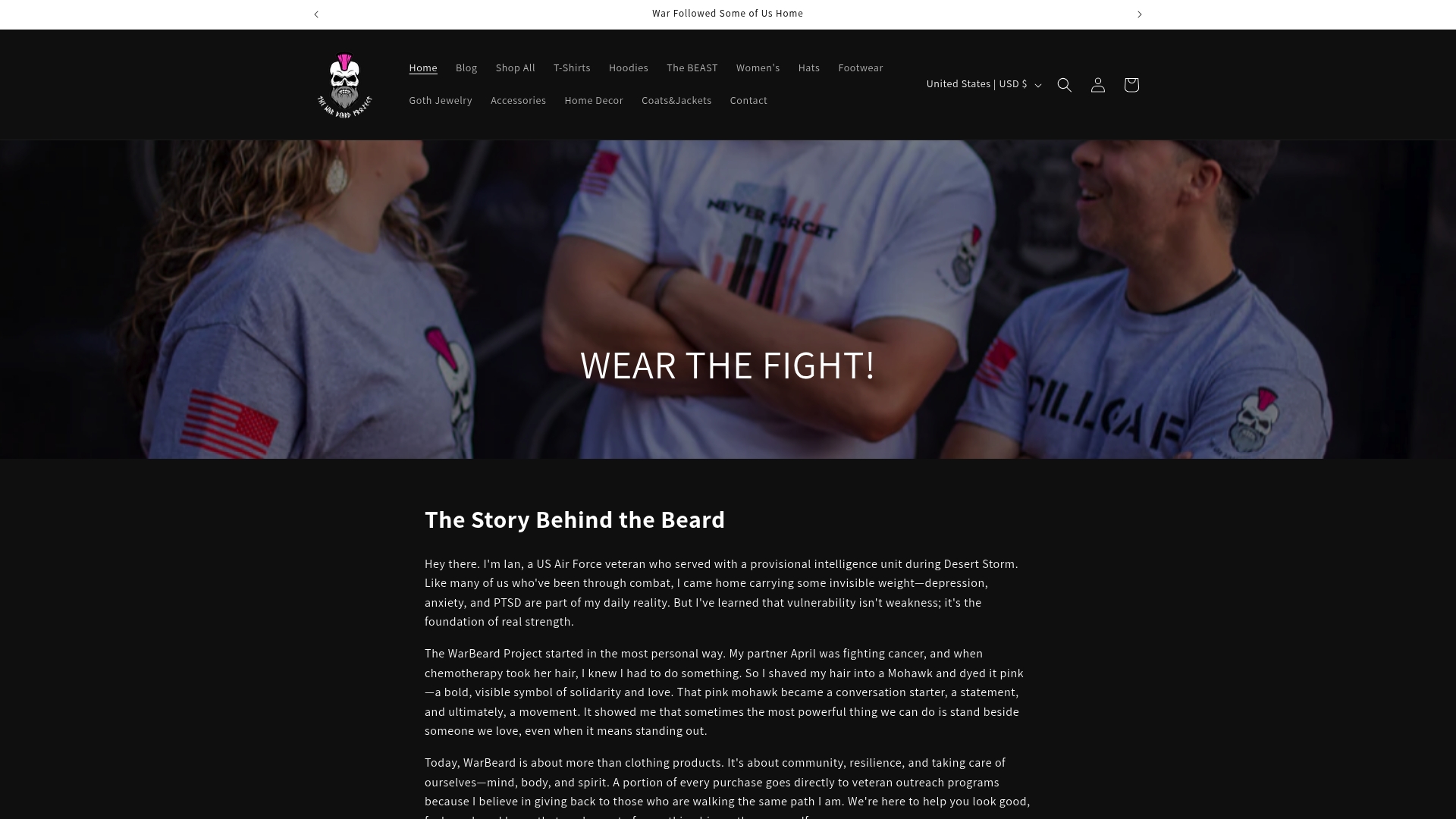
Every piece in the Warbeardproject catalog is chosen for fit, durability, and cultural accuracy. If you are building a post-service wardrobe or looking for casual wear that carries real meaning, the collection gives you a starting point grounded in veteran lifestyle rather than retail trend cycles. Browse the full range at Warbeardproject and find pieces that match how you actually live.
FAQ
Why do military members care about off-duty style?
Off-duty style gives service members a space for personal expression that the uniform does not allow. It also serves as a psychological signal that separates duty time from personal time.
How does off-duty fashion help veterans in civilian careers?
A structured, well-maintained civilian wardrobe signals reliability and attention to detail. Veterans who apply their grooming discipline to civilian dress consistently make stronger first impressions in professional settings.
What makes veteran fashion different from military-inspired trends?
Veteran fashion is grounded in function, personal history, and cultural context. Mainstream military-inspired trends borrow the aesthetic without the meaning, which veterans recognize and often find reductive.
How should veterans approach building a civilian wardrobe?
Start with fit, invest in quality basics, and maintain grooming habits from service. Prioritize versatile, neutral pieces before adding personality through accessories or outerwear.
Is tactical clothing appropriate for everyday civilian wear?
Tactical clothing suits specific civilian contexts but misreads most professional or social environments. Context determines appropriateness, and veterans benefit from distinguishing between functional tactical use and everyday civilian dress.