

Backwards Flag Meaning for Civilians and Veterans
The backwards American flag on a military uniform is intentional. It is the officially sanctioned “reverse side” display, required so the star field faces forward and the flag appears to stream behind the wearer as they advance. This is not a printing error or a sign of disrespect. The National Air and Space Museum confirms the reversed appearance on uniforms, aircraft, and spacecraft is deliberate: the flag must always look as though it is flying forward from the platform’s perspective.
Three authoritative sources govern this: Army Regulation 670-1, the U.S. Flag Code (Title 4, U.S. Code §8), and the National Air and Space Museum’s published explanation. AR 670-1 is binding on service members. The Flag Code is etiquette guidance, not a criminal statute.
Pro Tip: If you see a flag patch with the stars on the right side of the patch, you are looking at the right sleeve of a uniform. Stars on the left side means the left sleeve, standard orientation.
Key Takeaways
The reverse flag on a military uniform is a regulation-required display that keeps the star field facing forward, representing the flag advancing as the wearer moves.
| Point | Details |
|---|---|
| Reverse flag is intentional | AR 670-1 mandates the star field faces forward; the right sleeve requires a reverse-side patch. |
| Right vs. left sleeve | Right sleeve carries the reverse flag; left sleeve carries the standard orientation. |
| Flag Code vs. AR 670-1 | The U.S. Flag Code is nonbinding etiquette guidance; AR 670-1 is binding on Army personnel. |
| Not disrespectful or illegal | The reverse display is regulation-compliant; Supreme Court rulings protect flag expression under the First Amendment. |
| Civilian use guidance | Follow military placement when referencing uniform tradition; otherwise use standard orientation. |
Table of Contents
- What does the backwards flag meaning look like in practice?
- Where does the reverse flag tradition come from?
- How do AR 670-1 and the U.S. Flag Code each apply?
- Which sleeve shows the reverse flag, and what does the patch look like?
- Is a backwards flag disrespectful or illegal?
- When civilians wear reversed flags on clothing and gear
- What veterans understand about the reverse flag
- An editorial take on what the reverse flag actually tells you
- Sources
What does the backwards flag meaning look like in practice?
The reverse flag appears in several specific contexts, each governed by the same visual principle.
- Right sleeve of military uniforms: The reverse-side flag patch places the star field (union) on the observer’s right, so it faces forward as the wearer moves.
- Left sleeve: Standard orientation, star field on the observer’s left.
- Aircraft and spacecraft: The reverse flag appears on the right (starboard) side so it looks like it is flying forward from the vehicle’s direction of travel.
- Sports and tactical gear: Organizations such as Team USA follow Army Institute of Heraldry guidance, placing a reverse flag on the right sleeve with stars facing forward.
The phrase troops use for this orientation is “assaulting forward.” It captures the idea that the flag is always moving toward the objective, never retreating.
The U.S. Flag Code provides etiquette for respectful display but carries no criminal enforcement mechanism for uniform appearance. AR 670-1 is the binding document for service members.
Where does the reverse flag tradition come from?
The visual logic traces directly to mounted standard bearers on the battlefield. A cavalry soldier carried the flag on a pole. As the horse moved forward, the canton (star field) stayed closest to the pole while the stripes streamed back in the wind. Anyone watching from the side saw the stars leading and the stripes trailing.
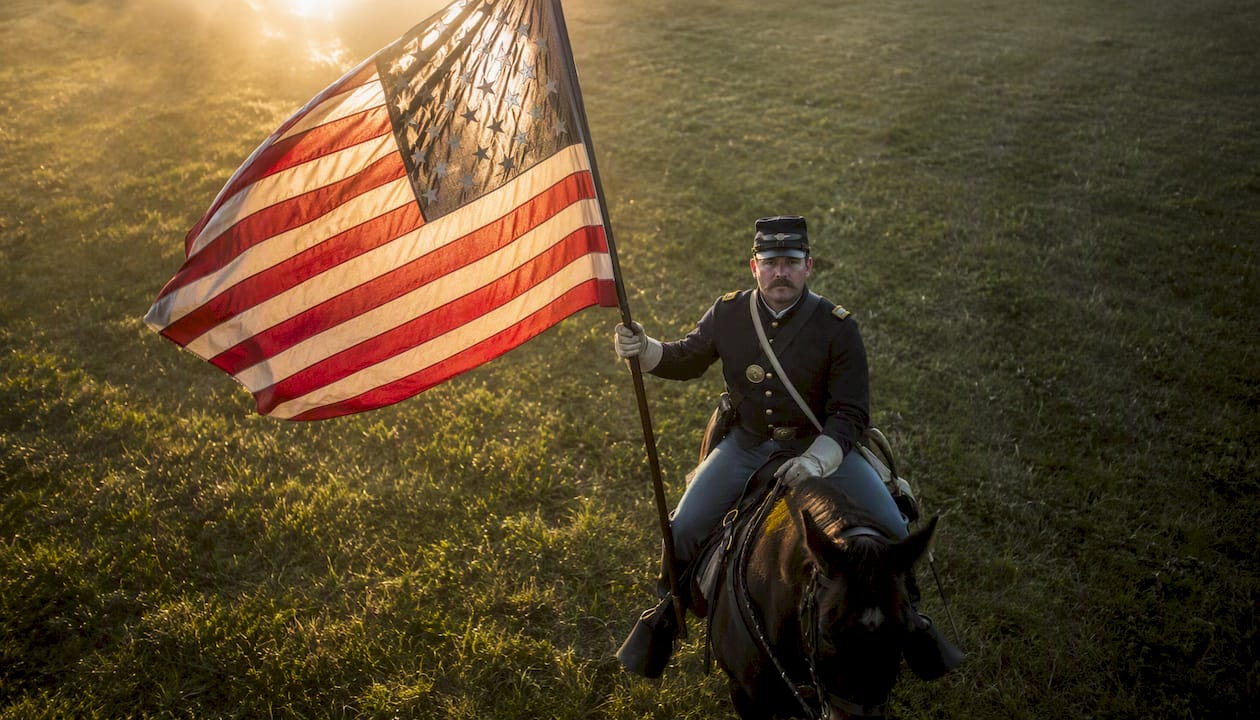
That image became the template. When the Army formalized flag patches on uniforms, it preserved the same visual: stars forward, stripes back. The patch on the right sleeve had to be manufactured in reverse to replicate what a moving flag actually looks like.
The phrase “assaulting forward” comes from this same tradition. Troops use it to describe the orientation as an expression of military forward motion, not a decorative choice. The flag advances with the soldier. That is the entire point.
How do AR 670-1 and the U.S. Flag Code each apply?
These two documents serve different functions and carry different legal weight.
U.S. Flag Code (Title 4, U.S. Code §8): Sets etiquette standards for displaying the flag with respect. It covers positioning, handling, and display in civilian contexts. It is largely nonbinding guidance. No federal criminal penalty attaches to most violations of the Flag Code by civilians.
Army Regulation 670-1: This is binding on all Army personnel. It specifies that the U.S. flag cloth replica is worn so the star field faces forward. On the right sleeve, that requirement produces a reverse-side flag. On the left sleeve, the standard orientation satisfies the same rule.
AR 670-1 instructs that the flag is worn with the star field facing forward; on the right sleeve, this requires a reverse-side flag so the union leads as the wearer moves forward. — Army Regulation 670-1
The same forward-facing principle applies to aviation and space platforms. On aircraft, the reverse flag appears on the starboard side. On spacecraft, the same rule holds. The National Air and Space Museum notes this is consistent across all moving platforms operated by U.S. forces.
Which sleeve shows the reverse flag, and what does the patch look like?
The right sleeve carries the reverse-side flag. The left sleeve carries the standard flag. This is not interchangeable.
- Right sleeve patch: Star field on the observer’s right, stripes streaming left. Manufactured specifically for right-sleeve placement.
- Left sleeve patch: Star field on the observer’s left, standard orientation.
- Color variations: Full-color patches for dress uniforms; subdued (olive drab or gray-tone) patches for combat and tactical environments.
- Manufacturing: Reverse patches are purpose-built authorized items, not standard patches flipped horizontally. Stars and Stripes confirmed that uniform supply chains stock the correct orientation for each sleeve separately.
Placement on aircraft follows the same logic. The reverse flag appears on the right (starboard) side of the fuselage so it reads as advancing when the aircraft moves forward. On tactical gear and vehicles, the same convention applies.
Pro Tip: When buying a flag patch for a right-sleeve application, confirm the product is labeled as a reverse or right-sleeve patch. A standard patch placed on the right sleeve will show the stars retreating, which contradicts the regulation’s intent.
Is a backwards flag disrespectful or illegal?
No. The reverse flag on a military uniform is regulation-compliant and specifically required by AR 670-1. Calling it disrespectful misreads the regulation’s purpose.
Common misconceptions, clarified:
- “The backwards flag means disrespect.” False. AR 670-1 mandates the reverse orientation on the right sleeve. It is a display of forward motion and service.
- “It violates the U.S. Flag Code.” The Flag Code is etiquette guidance, not a criminal statute. The Flag Code does not prohibit the reverse display used on uniforms.
- “It’s the same as an upside-down flag.” No. An upside-down flag is a recognized distress signal. A reverse flag is a lateral mirror image, not an inversion.
- “It’s illegal to display the flag this way.” Supreme Court rulings protect flag-related expression under the First Amendment. Criminal prosecution for flag display has constitutional limits, as Mental Floss notes in its legal context summary.
The U.S. Flag Code provides etiquette for respectful display but is nonbinding guidance rather than an enforceable criminal code for uniform appearance. — 4 U.S. Code § 8
The upside-down flag and the reverse flag are two distinct orientations with different meanings. Conflating them is the most common error civilians make.
When civilians wear reversed flags on clothing and gear
Civilians, sports teams, and apparel brands increasingly use the reverse flag on right-sleeve patches, following military placement. That practice is considered respectful when it deliberately references the uniform tradition.
- Respectful uses: Right-sleeve patches with stars forward, modeled on AR 670-1 placement; tactical apparel that follows military patch etiquette; sports jerseys that copy the Army Institute of Heraldry standard.
- Uses that cause confusion: Placing a reverse flag on the left sleeve (where standard orientation belongs); using the reverse image on front-of-garment graphics without any uniform reference; applying it to products in a way that degrades or distorts the flag’s appearance.
For apparel brands and consumers: follow military placement when deliberately referencing uniform tradition. Otherwise, use standard orientation. The role of the American flag in veteran apparel carries specific weight in the veteran community, where accuracy in placement signals respect.
Veteran communities describe the reverse flag as an expression of action and forward motion; using this symbol in apparel should be accompanied by respectful design choices in placement, color, and context. — Gettysburg Flag Works
For gift ideas that use patriotic symbols correctly, veteran-focused gift resources offer guidance on products that honor the convention rather than replicate it carelessly.
What veterans understand about the reverse flag
Veterans do not see the reverse flag as a technicality. They see it as a statement of direction. The flag moves forward because the soldier moves forward. That is the entire logic of the display, and it connects directly to why veterans embrace patriotic symbols in ways civilians sometimes miss.
The reverse flag is not a quirk of uniform regulations. It is a visual commitment: the flag advances, it does not retreat.
Warbeardproject applies this understanding to its apparel. Flag imagery on veteran-focused gear carries meaning that goes beyond decoration. Placement, orientation, and color all signal whether a brand understands the tradition or is simply borrowing its aesthetic.
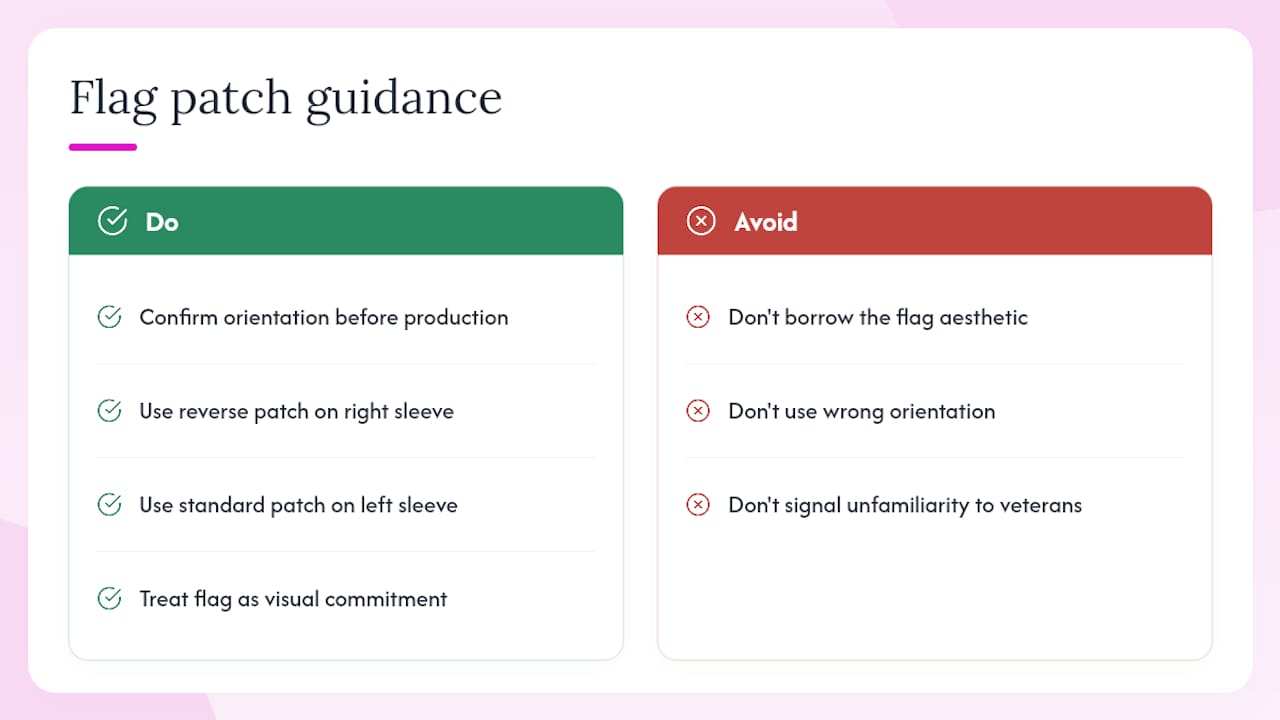
Pro Tip: For any apparel using a flag patch, confirm the orientation before production. Right sleeve requires a reverse patch. Left sleeve requires a standard patch. Getting this wrong signals unfamiliarity with the tradition to the veteran community.
Military tradition in apparel is not just visual style. For veterans, it is a shorthand for whether a brand has done its homework.
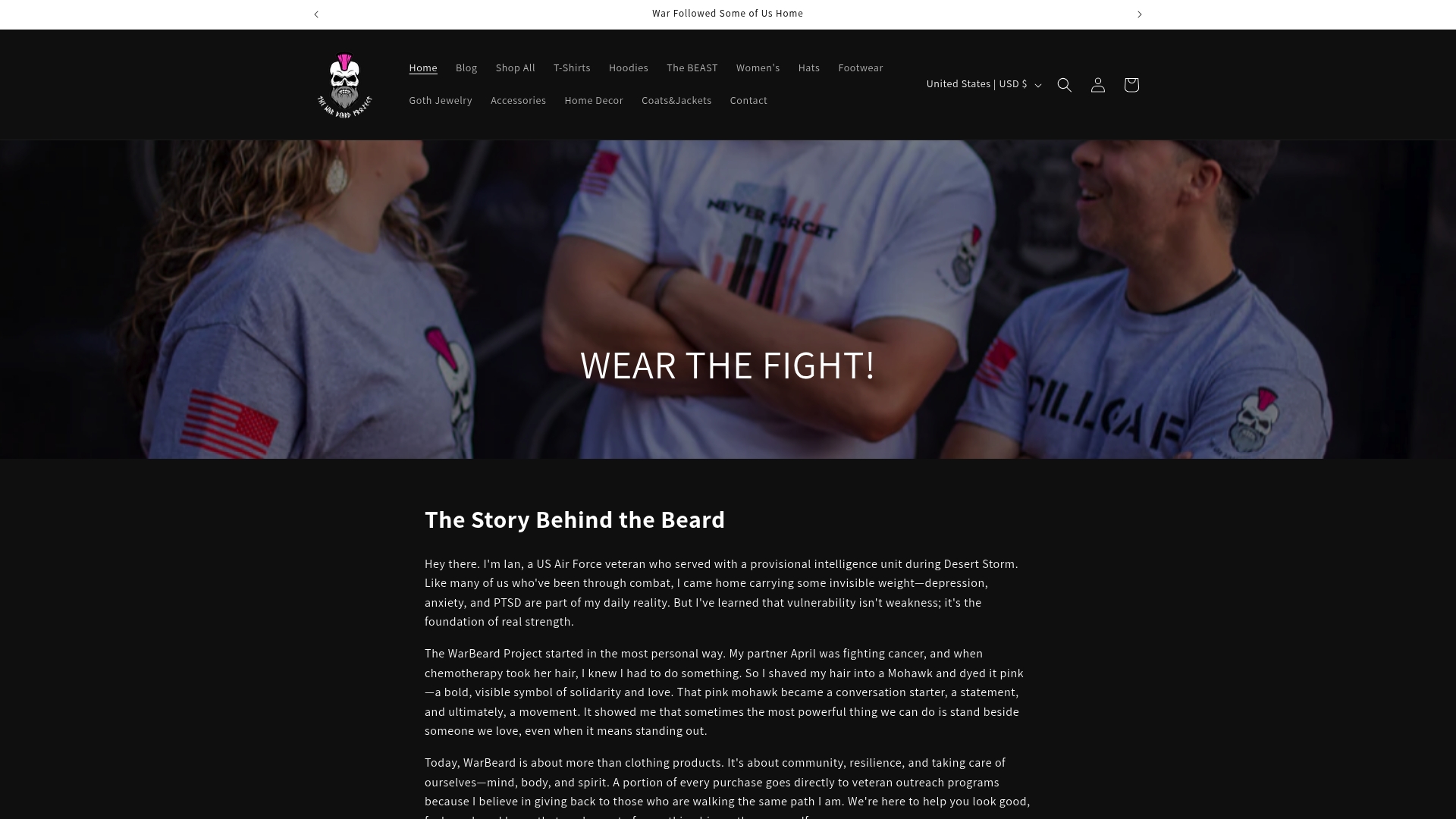
Warbeardproject builds apparel for veterans and the military community, with a portion of every sale supporting veteran outreach programs. Browse the collection at Warbeardproject and wear the tradition correctly.
An editorial take on what the reverse flag actually tells you
Most public confusion about the reverse flag comes from one gap: people know the Flag Code exists but do not know it is nonbinding. They assume any deviation from standard orientation is a violation. It is not. AR 670-1 is the operative document for service members, and it requires the reverse display. The Flag Code does not override it.
The more interesting point is what the convention reveals about how the military thinks about symbols. The flag is not just an emblem to be displayed correctly at rest. It is a moving object, and its orientation is calibrated to what it looks like in motion. That is a precise, functional approach to symbolism, not a ceremonial one.
Civilian apparel brands that copy the reverse flag without understanding the placement rule tend to get it wrong in one consistent way: they apply the reverse image to the left sleeve or to front graphics where no uniform reference exists. That is not respectful use. It is borrowed aesthetic without the underlying logic.
For veterans, the distinction is immediate. For civilians shopping for patriotic gear, the rule is simple: right sleeve, reverse patch; left sleeve, standard patch. Everything else follows from that.
Sources
- Army Regulation 670-1
- 4 U.S. Code § 8 - Respect for flag
- Here’s Why The US Flag Sometimes Appears Backwards | National Air and Space Museum