

Military Leaders: Turn Esprit de Corps Into a Force Multiplier
Esprit de corps literally translates to “spirit of the body” or “spirit of the group,” and inside a military unit it means the shared pride, loyalty, and identity that binds individual troops into a single fighting force. It is not a synonym for morale or camaraderie. It is the deeper, institutional layer beneath both, and military leaders treat it as a genuine force multiplier that helps units hold together and perform under stress when equipment, numbers, or luck run out.
TL;DR:
- Esprit de corps remains strong even when equipment or resources fail, as it sustains operational capacity longer than material readiness.
- Building esprit de corps involves anchoring identity in history, using rituals, leading with empathy, maintaining standards, and leader visibility during hard times.
- Erosion signs include dropped peer support, skipped rituals, exclusion of newcomers, and general disengagement, requiring prompt leadership action to restore cohesion.
- Apparel and symbols support existing unit identity but cannot substitute for leadership that actively fosters shared purpose and history.
- Consistent small actions like daily recognition, storytelling, and mentorship reinforce esprit de corps more effectively than grand gestures or gear.
Table of Contents
- Esprit De Corps Meaning: Definition, Origin, and What Makes It Different
- Why Esprit De Corps Is a Force Multiplier in Military Operations
- How Leaders Build and Sustain Esprit De Corps
- Signs Esprit De Corps Is Eroding, and How to Fix It Fast
- Symbols, Patches, and the Limits of Apparel in Building Unit Identity
- A Weekly Checklist for Strengthening Unit Cohesion
- Why Unit Identity Still Matters More Than Gear
- Wear the Identity You Built Together
- Sources
Esprit De Corps Meaning: Definition, Origin, and What Makes It Different
The phrase entered English from French in the late 18th century, and its literal sense has not shifted much since. “Corps” refers to the body, in this case the collective body of the unit, and “esprit” is the animating spirit that gives that body its character. Vocabulary defines it as pride, fellowship, shared purpose, and loyalty within a group, which is exactly how it gets used in military speech today.
Where people get tripped up is treating esprit de corps as interchangeable with morale or camaraderie. Morale is a mood, it rises and falls with sleep, chow, and mail call. Camaraderie is friendship between individuals. Esprit de corps is bigger than both because it survives a bad week. It is tied to the unit’s history, its name, its colors, and the idea that being part of this outfit means something specific.
Dictionary authorities back up the distinction:
- Merriam-Webster and Oxford Reference both emphasize pride, fellowship, and common loyalty as the core elements.
- Collins Dictionary lists team spirit, solidarity, and camaraderie as related terms, but keeps esprit de corps as the term implying group identity and institutional continuity.
- Cambridge Dictionary frames it in usage examples tied specifically to teams and organizations with a shared mission, not casual friend groups.
Someone can have high morale on a good payday and zero esprit de corps if they feel disconnected from the unit’s identity. That gap is the whole reason the term earns its own place in military vocabulary instead of getting folded into “good vibes.”
Why Esprit De Corps Is a Force Multiplier in Military Operations
A force multiplier is any factor that lets a smaller or less-equipped force achieve results a straightforward head count would not predict. Esprit de corps qualifies. When troops identify strongly with their unit, they take initiative without being told, cover for each other under pressure, and keep functioning after the plan falls apart.
Naval professional writing makes this explicit. Proceedings, the U.S. Naval Institute’s flagship journal, argues that esprit de corps transforms individuals into cohesive units capable of performing beyond their technical capabilities in high-stress conditions. That is not a soft claim about feelings. It is an operational one.
Esprit de corps outlasts equipment. The same Proceedings analysis notes that unit spirit tends to hold up longer than material readiness when conditions degrade, meaning it can preserve operational capacity even after gear fails or resources thin out.
What that looks like in practice:
- Troops volunteer for hard tasks instead of waiting to be assigned.
- Units self-correct mistakes internally before problems reach leadership.
- Personnel report higher resilience and mutual care during extended deployments.
- New members get absorbed into unit norms faster because the identity is strong enough to teach.
Cohesion is the multiplier. Everything else, from equipment to training hours, works better on top of it.
How Leaders Build and Sustain Esprit De Corps
Esprit de corps does not appear because a unit exists. Leaders build it on purpose, and the practices that work are repeatable, not mysterious.
- Anchor identity in history. Tell the unit’s story, its battles, its founders, its nicknames. Practitioner leadership material from the Command and General Staff College treats grounding a unit in shared history and past accomplishments as a primary tool for turning individuals into a resilient team.
- Use rituals and ceremonies deliberately. Change-of-command formations, unit runs, mess-night traditions, all of it signals continuity across generations of troops who never met each other.
- Lead with empathy, not just authority. Army University Press identifies empathy, leaders genuinely understanding personnel stressors, as a critical component of building cohesion. Belonging comes from being understood more reliably than from being lectured.
- Keep standards shared and visible. When leaders hold themselves to the same physical and professional standards as the troops, the unit’s identity feels earned rather than imposed.
- Show up. Leader visibility during hard training, not just award ceremonies, is what troops actually remember.
Pro Tip: Storytelling works best in small doses during real moments, a two-minute unit history recap before a hard training event lands harder than a formal briefing ever will.
Signs Esprit De Corps Is Eroding, and How to Fix It Fast
Cohesion loss shows up before it becomes a crisis, if leaders know what to watch for.
- Peer support drops off; troops stop checking on each other outside of duty hours.
- Unit rituals and traditions get skipped or treated as optional.
- New members feel excluded rather than onboarded into the unit’s identity.
- Complaints shift from specific gripes to general disengagement.
Practitioner leadership analysis treats this erosion as an early warning sign of leadership failure, not just a morale dip. Fixes need to be fast: restore the rituals that got dropped, put leaders back in visible, shared-hardship roles, and reset expectations openly instead of pretending nothing changed. If a peer-led restoration effort does not move the needle within a few weeks, that is the point to loop in higher-level leadership rather than let the gap widen.
Symbols, Patches, and the Limits of Apparel in Building Unit Identity
Warbeard Project’s own reporting on veteran identity found that brotherhood symbols work because they compress a shared story into something wearable. A patch, a unit motto on a shirt, a design tied to a specific era of service, these are shorthand for belonging that troops and veterans recognize instantly.
Brotherhood symbols endure among veterans because they carry meaning that words alone struggle to convey, a visual shorthand for shared hardship and shared pride.
That insight, drawn from Warbeard Project’s look at why veterans embrace brotherhood symbols, is worth taking seriously. But it comes with a caveat leaders should not skip: apparel and insignia reinforce identity that already exists. They do not create it. A patch on a jacket cannot fix a leadership failure, and no amount of unit merchandise substitutes for a sergeant who shows up and listens.
A Weekly Checklist for Strengthening Unit Cohesion
Esprit de corps builds through small, repeated actions more than grand gestures. Here is a working rhythm:
- Daily: Open formation or shift briefs with a thirty-second acknowledgment of something a team member did well the day before.
- Weekly: Run a short after-action recap, not just what went wrong, but what the unit did that reflected its identity.
- Weekly: Pair newer members with experienced ones in a battle-buddy style rotation so mentorship happens naturally instead of by accident.
- Monthly: Retell one piece of unit history, an old deployment, a founding story, during a training break.
- Ongoing: Protect existing rituals fiercely. Skipping them once makes skipping them twice feel normal.
None of this requires a budget. It requires consistency, which is harder to fake than enthusiasm.
Why Unit Identity Still Matters More Than Gear
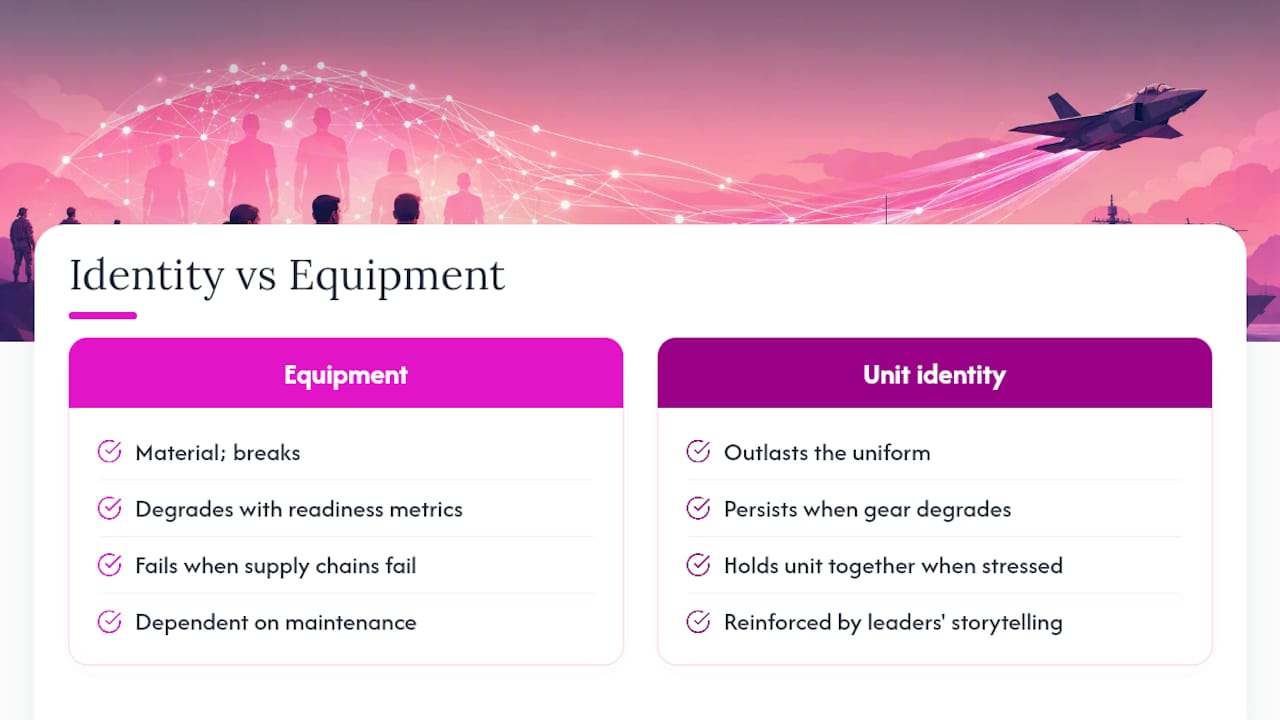
Esprit de corps gets treated as a soft topic in a field obsessed with hard metrics, readiness percentages, equipment specs, training hours logged. That is backwards. The Proceedings analysis on force multipliers makes a point that deserves more attention than it gets: unit spirit tends to outlast equipment readiness when things degrade. Gear breaks. Supply chains fail. What holds a unit together when both of those happen is whether troops still believe in who they are together.
Warbeard Project exists because that belief needs outlets between deployments and after service ends. Apparel and symbols will never replace a leader who tells the unit’s story or shows up during the hard training day. But dismissing symbols as trivial misses why veterans keep gravitating toward brotherhood-themed gear years after their service ends. The identity outlasts the uniform. Leaders who understand that, and who build cohesion deliberately instead of hoping it appears, get units that hold together when it counts.
— Ian
Wear the Identity You Built Together
Unit identity does not stop mattering after the ceremony ends or the deployment wraps. Warbeard Project makes apparel and gear that let veterans and active-duty troops carry that identity into daily life, respectfully, without pretending a shirt replaces leadership.
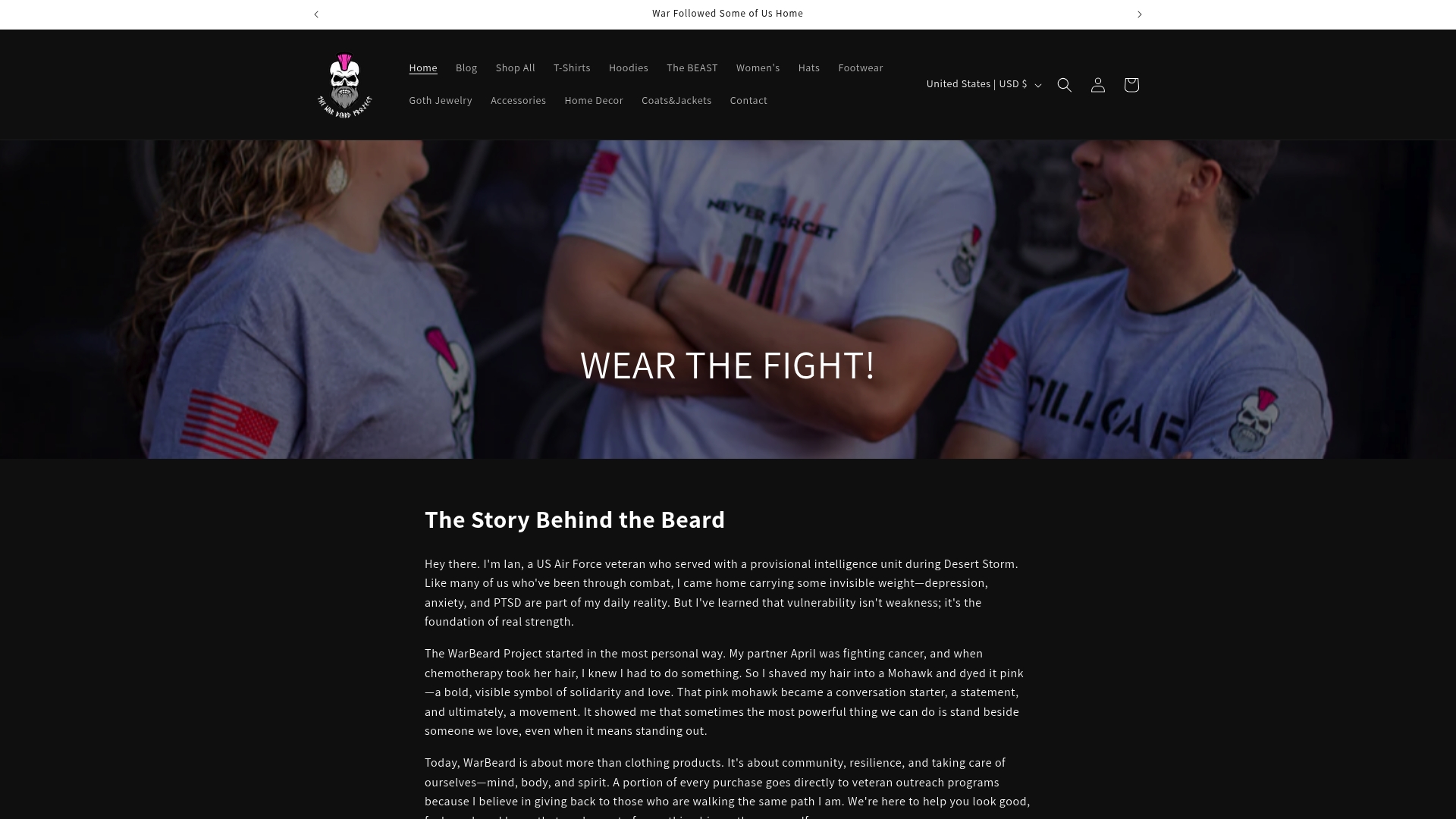
The lineup includes pieces built around specific service eras and themes, like the VietNam Classic tee, the Special Edition VAWP2607 Unisex classic tee, and the Fortune Favors Unisex classic tee, alongside mission-driven pieces like the PTSD classic tee that support mental health advocacy. For unit-specific insignia, the embroidered patches can be added to jackets like the OG Logo Premium recycled bomber jacket or the OG Logo Unisex Denim Sherpa Jacket. A portion of every sale goes back to veteran support programs, so wearing the gear does double duty. Browse the embroidered patches collection and find the piece that matches your unit’s story.
Sources
- Vocabulary
- Esprit de Corps Is a Force Multiplier | Proceedings (USNI)
- CGSC practitioner leadership material (esprit de corps discussion)
- esprit de corps — Oxford Reference